


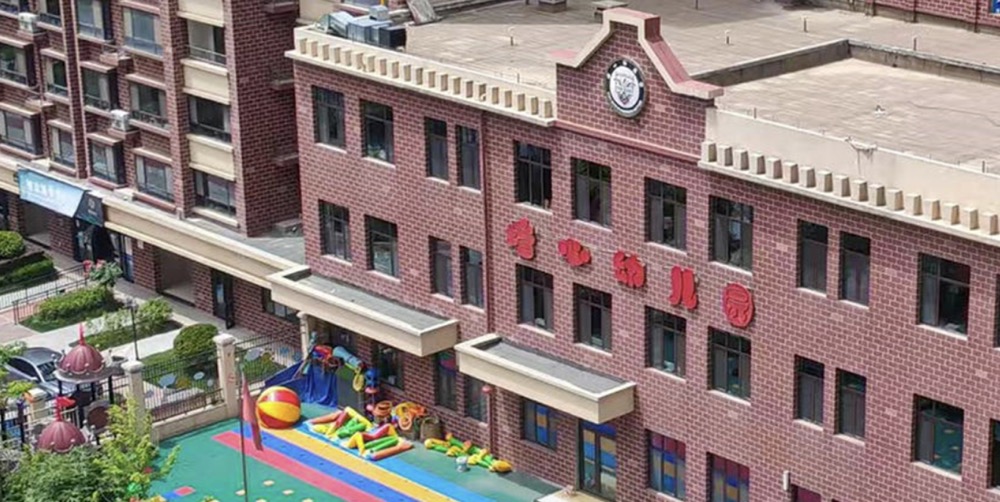
Picture from the Internet
AsianFin -- Starting July 3, children from the Heshijiang Peixin Kindergarten in Maiji District, Tianshui, Gansu Province, began flooding into the Xi’an Central Hospital. The hospital’s six-floor inpatient building quickly filled, and later-arriving children were admitted to the neurology ward of the outpatient building.
The facility, renowned in Northwest China for treating occupational toxic exposures, now faced a crisis of unprecedented scale: more than 100 children aged 3 to 6 diagnosed with lead poisoning. “The doctors said they’ve never seen this many such young patients,” one parent said.
The hospital corridors echoed with the laughter and chatter of children, seemingly oblivious to the IV needles taped to their tiny hands. The presence of their classmates offered a strange comfort.
On July 8, an official investigation confirmed the mass lead poisoning. Of 251 enrolled children, 233 were found to have abnormal blood lead levels. Tests on food samples retained for 48 hours showed that the red date rice cakes and corn sausage rolls served for breakfast and dinner respectively contained lead levels of 1,052 mg/kg and 1,340 mg/kg.
Authorities revealed that the school principal, Zhu Jinglin, and investor Li Huifang had approved the use of colorful industrial pigments purchased online to enhance food appearance. The remaining pigments confiscated from the school were labeled “non-edible” and contained lead. Eight people, including Zhu and Li, were placed in criminal detention on suspicion of producing toxic and harmful food. Two others were released on bail pending investigation.
Conflicting Test Results
Parents said that prior tests in Tianshui reported “normal” or “slightly elevated” lead levels, often below 200 µg/L. However, after arriving in Xi’an, children were diagnosed with lead poisoning, with some results double those previously reported. “We can no longer trust the local authorities,” a mother said.
Many parents questioned why the test results from two cities varied so widely, when the contamination began, and what motivated the use of toxic pigments in children’s food. The long-term impact on their children’s health remains their greatest concern.
Black Gaps in Baby Teeth
State broadcaster Xinhua released surveillance footage showing a cook mixing a yellow powder into flour, which matched the color of the red date cakes on the school’s menu. Some children exhibited classic symptoms of lead poisoning, including black stains in their teeth. According to national health guidelines, blood lead levels above 200 µg/L are classified as lead poisoning, with levels over 450 µg/L deemed severe.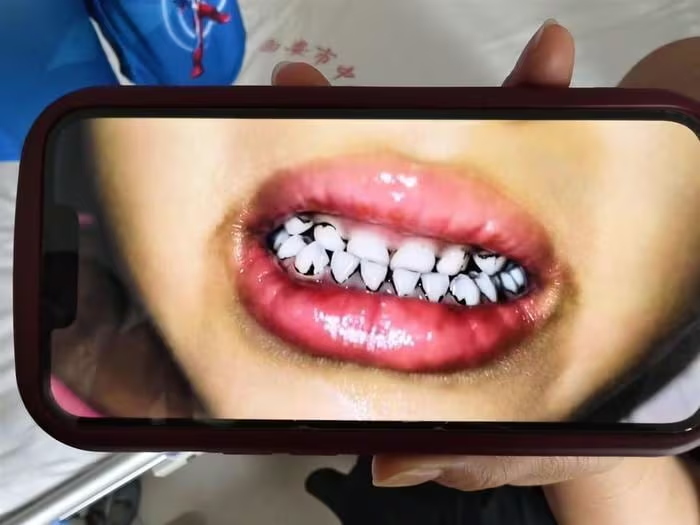
A parent shows the black substance appearing between their child’s teeth.
Parent Mr. Li discovered his daughter’s blood lead level was 284.9 µg/L after noticing black material between her teeth. Her younger brother, not enrolled at the kindergarten, tested at only 20.62 µg/L. Experts note that a normal child’s blood lead should be around 20 µg/L. Shanghai-based pediatric toxicology expert Yan Chonghuai previously cited research showing developmental harm even at levels below 100 µg/L.
The school, established in 2022 as a private non-profit, is located in Heshijiang Mansion in Maiji District. The legal representative is Zhu Jinglin; the controlling shareholder is Li Huifang. Parents from another kindergarten owned by Li in Weibei rushed to Xi’an for testing after hearing the news. Initial results from those children remained below the 50 µg/L threshold, suggesting the contamination was localized.
Teachers Also Affected
Several teachers who lived and dined with the children also showed abnormal blood lead levels, one testing as high as 518 µg/L. Parents claimed the teachers were barred from admission at the hospital and told to return to Gansu for treatment.
The kindergarten teachers who got into a dispute with hospital security.
A correlation emerged: children who spent more time eating at school had higher blood lead levels. In one class, a child who only occasionally ate breakfast at school tested at 191 µg/L, the lowest in the class. Another, who consumed regular meals at school, tested at 528 µg/L.
Distrust in Local Health Authorities
Parents who traveled to Xi’an accused local authorities of providing misleading test results. Several reported receiving calls from officials encouraging them to return to Tianshui for treatment, with promises of free care and multi-provincial expert teams. None agreed.
One parent recounted that after arriving in Xi’an and learning her child had a lead level of 379 µg/L, she received a call from a Tianshui official insisting the level was 23 µg/L and “within normal range.” In some cases, parents who had not even participated in local blood tests received reports showing low results.
The scandal also drew back parents of children who had graduated a year earlier. Some exhibited elevated lead levels up to 114 µg/L. Their families suspect long-term exposure through contaminated foods like rainbow-colored cakes that had appeared on school menus since 2023.
One father recalled repeated stomachaches, CT scans, and unexplained absences during his son’s time at the kindergarten, totaling 68 missed school days. Only after transferring to primary school did his son’s health improve significantly.
The Pigment Puzzle
Many parents questioned whether the red date cakes and corn rolls alone caused the poisoning. Why, they asked, were other potential sources like water and utensils not investigated? Some pointed out that industrial pigments are more expensive and harder to mix into food than edible colorants.
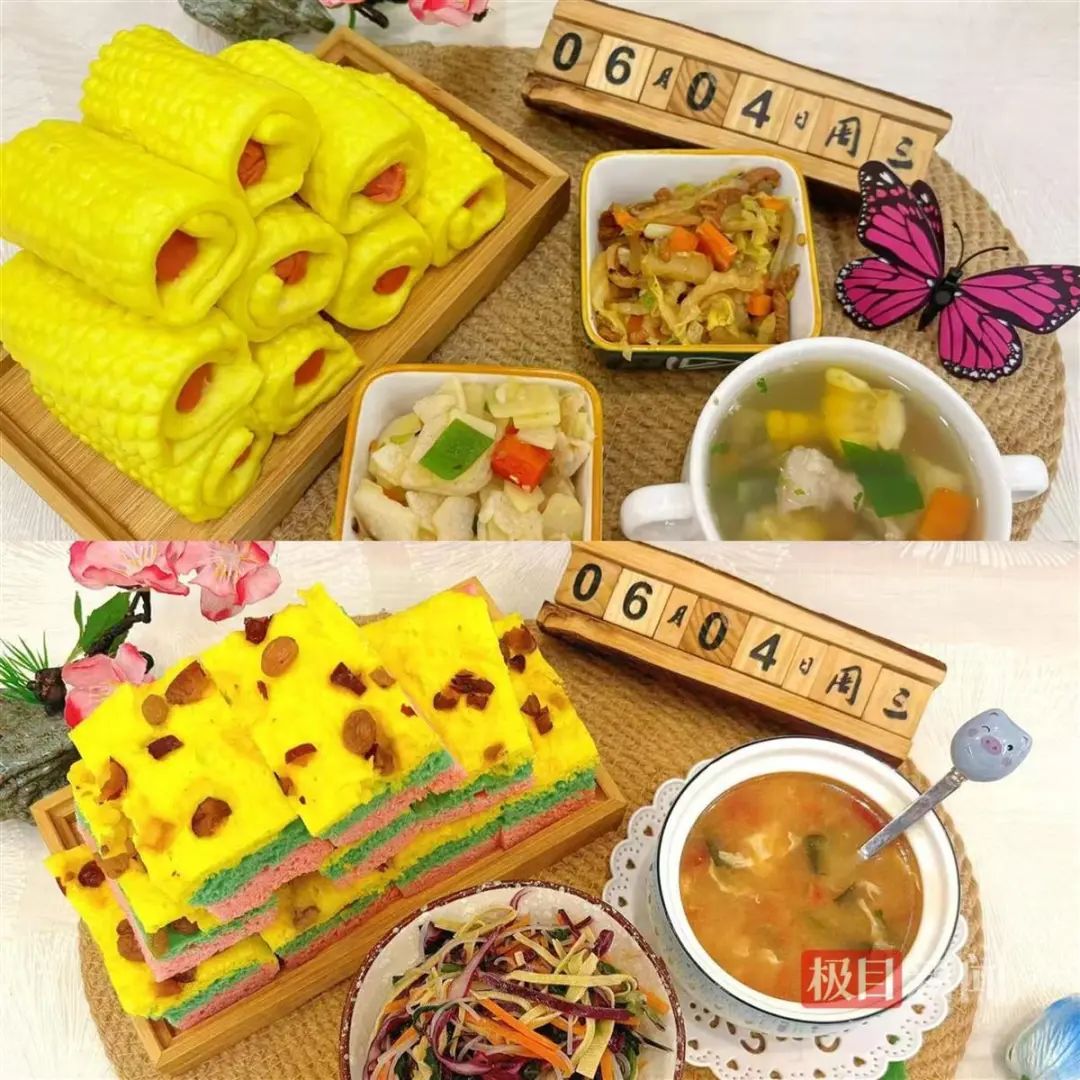
The tainted foods supplied by the kindergarten were tricolor red date rice cakes and corn sausage rolls.
Despite earlier praise for the kindergarten’s hygiene and caring teachers, parents now question the motive behind using toxic pigments. “Why would they take this risk?” one asked, citing annual tuition fees of RMB 12,000 as being above average.
Lingering Uncertainty and Fear
In Xi’an, the sweltering hospital air-conditioning offered little relief. Some parents camped on foldable beds while tending to their children. With few clear answers, they worry about the long-term consequences.
“My child was smart and lively. Now he reacts slower, struggles with pronunciation, and can’t concentrate,” said one mother. Another described the harshness of blood draws and chelation therapy, which can deplete the body of essential nutrients.
Doctors advised 10-day treatment cycles: three days of intravenous chelation, four days of micronutrient supplements, followed by another three days of chelation. Parents signed consent forms, unsure what to expect.
Plans for summer vacations were canceled. Hotel fees and medical bills piled up. “We brought healthy, clever children to that school,” said one mother. “What if they suffer for life?”
The children laughed and played in the hospital yard, unaware of the lead coursing through their bodies.
(Parents and children mentioned are referred to by pseudonyms.)
Explore more exclusive insights at nextfin.ai.
