

AsianFin -- U.S. President Donald Trump on Tuesday floated more deals that could be made after he announced a trade pact with Indonesia.
Credit:China Central Television
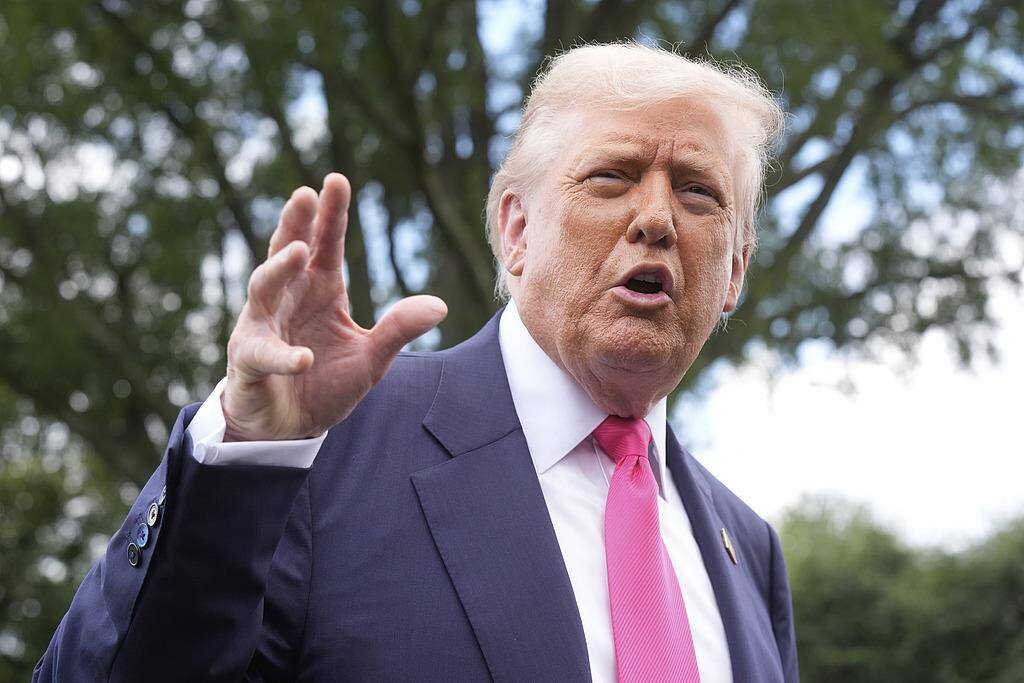
“We’re working on probably five or six, five or six [trade deals], I'm not sure I really want to do them,” Trump told reporters when asked how many more deals would come before the August 1 deadline for reciprocal tariffs.
Trump continued that his administration could reach two or three of the deals by the deadline. “You know, you want somebody that knows how to negotiate, but we'll probably have two or three. You know, we insist on opening up the country, which is a big deal,” he said.
Earlier Tuesday, Trump said he reached a trade deal with Indonesia that will charge a 19% tariff on the Southeast Asian economy, and stressed the United States exports will be offered unprecedented access. “We will pay no tariffs. So they are giving us access into Indonesia, which we never had,” Trump spoke with reporters outside the White House. “That’s probably the biggest part of the deal. And the other part is they are going to pay 19%,” he said.
In a subsequent post on his social media platform Truth Social, Trump said Indonesia will pay the U.S. a 19% tariff on all goods exported to the U.S., while U.S. exports to the country “are to be Tariff and Non Tariff Barrier FREE.” “If there is any Transshipment from a higher Tariff Country, then that Tariff will be added on to the Tariff that Indonesia is paying,” he added.
Trump in the post revealed he finalized the deal after speaking with Indonesia’s president Prabowo Subianto, and Jakarta agreed to open up its “entire market” to the U.S. “This landmark Deal opens up Indonesia’s ENTIRE MARKET to the United States for the first time in History,” Trump wrote in the post.
As part of the deal, Indonesia “has committed to purchasing $15 Billion Dollars in U.S. Energy, $4.5 Billion Dollars in American Agricultural Products, and 50 Boeing Jets, many of them 777′s,” Trump said in the post. He touted the full access to the Indonesian market that the U.S. farmers will enjoy. “For the first time ever, our Ranchers, Farmers, and Fishermen will have Complete and Total Access to the Indonesian Market of over 280 million people,” the president said.
The Indonesian government has not confirmed the aforementioned trade deal yet. If it is accurate, Indonesia would become the first trading partner receiving the Trump administration’s cut in planned tariffs through trade negotiations by August 1. The 19% tariffs are inevitably lower than those Trump threatened last week.
Trump on July 7 shared screenshots of form letters to the leaders of 14 countries, dictating new reciprocal tariffs starting August 1. Trump notified them of 25% tariffs on all the imports from Japan, South Korea, Kazakhstan, Malaysia and Tunisia, 30% tariffs on imports from South Africa and Bosnia and Herzegovina, 32% tariffs on Indonesia, 35% tariffs on Bangladesh and Serbia, 36% tariffs on Thailand and Cambodia, 40% tariffs on Laos and Myanmar. The 32% tariff rate was higher than the current baseline 10% level and the same with the reciprocal tariffs for Indonesia Trump announced on April 2, a date the president proclaimed “Liberation Day”.
Trump on July 7 also signed an executive order, delaying the tariff deadline on July 9,Wednesday, to August 1. That order effectively won more time for U.S. trade negotiations with trading partners. In the aforementioned letters, Trump said he would consider “an adjustment” to the letter if the countries cooperate. “These Tariffs may be modified, upward or downward, depending on our relationship with your Country,” the president wrote.
Indonesia is one of the world’s major copper producers. It is not clear how the trade deal Trump revealed on Tuesday will affect the upcoming copper tariffs. Trump on July 9 said he would impose a 50% tariff on all copper imports into the United States, effective August 1.
Explore more exclusive insights at nextfin.ai.


