

AsianFin -- U.S. President Donald Trump on Wednesday previewed letters dictating tariffs on a large number of countries.
Credit:China Central Television
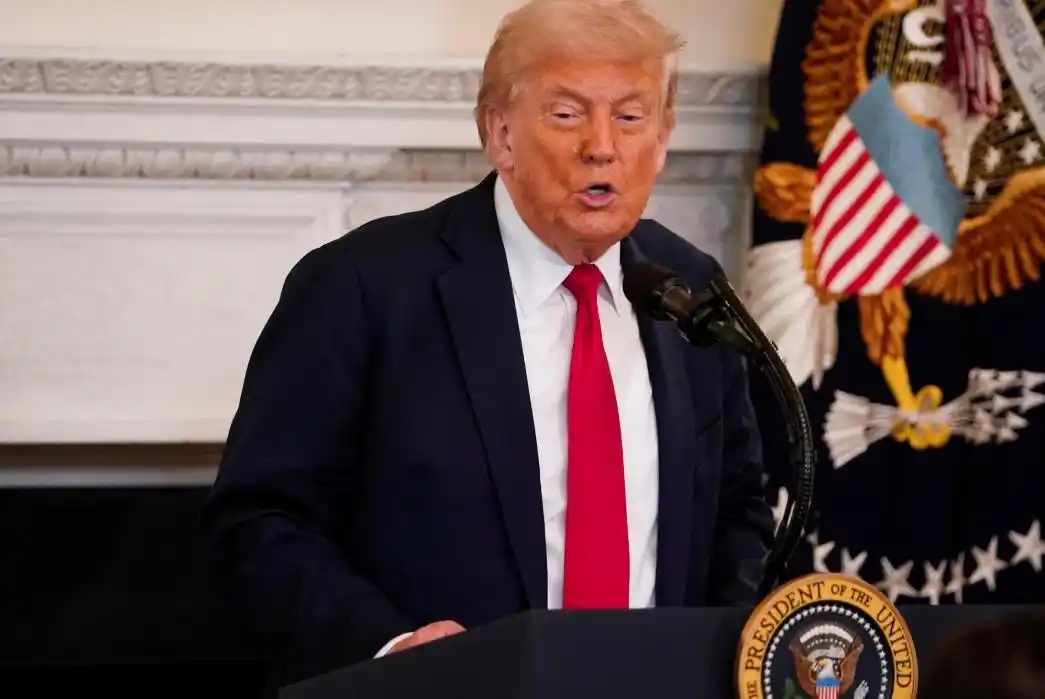
Trump at the White House said he would send letters to more than 150 countries, informing them of U.S. tariffs. “We’ll have well over 150 countries that we’re just going to send a notice of payment out, and the notice of payment is going to say what the tariff” rate will be, Trump told reporters. He added that countries receiving these letter were “not big countries, and they don’t do that much business.”
Trump suggested sending the aforementioned letters can save the time for his administration to be engaged in negotiations on tariffs as the recipient countries are those U.S. trading partners with relatively smaller trade volumes. "The big one really is going to be on the 150 countries that we're really not negotiating with, and they're smaller — we don't do much business with," he said.
Trump revealed later Wednesday that he would probably directly setting 10% or 15% tariffs for these countries. “We’re going to put out one number” to nearly 150 countries, and the tariff rate would “be probably 10 or 15%, we haven’t decided yet,” Trump said in an interview with Real America’s Voice broadcast.
Trump on Tuesday has said that the United States would soon inform a group of minor trading partners of tariffs higher than 10%. “We’ll be releasing a letter soon talking about many countries that are much smaller, where you might not do an [individual] letter,” Trump said after returning from Pittsburgh.
"We'll probably set one tariff for all of them," Trump said, adding that the tariff rate could be "a little over 10% tariff" on goods from at least 100 nations.
U.S. Commerce Secretary Howard Lutnick interjected that the nations with goods being taxed at these rates would be in Africa and the Caribbean, places that generally do relatively modest levels of trade with the U.S. and would be relatively insignificant for addressing Trump's goals of reducing trade imbalances with the rest of the world.
Trump on Tuesday also disclosed he could impose impose tariffs on pharmaceuticals by August 1 and that levies on semiconductors could come soon as well. “Probably at the end of the month, and we’re going to start off with a low tariff and give the pharmaceutical companies a year or so to build, and then we’re going to make it a very high tariff,” Trump said.
Trump said his timetable of the semiconductor tariffs was similar to the drug tariffs, and it was “less complicated” to impose levies on chips.
Trump has so far released letters to heads of more than 20 U.S. trading partners, dictating new tariffs starting August 1.
Trump on July 7 disclosed tariffs on 14 countries in a series of social media posts, hitting imports from Japan, South Korea, Kazakhstan, Malaysia,Tunisia, South Africa, Bosnia and Herzegovina, Indonesia, Bangladesh, Serbia, Thailand, Cambodia,Laos and Myanmar with tariffs ranging from 25% to 40%.
Trump on July 9 posted letters to the leaders of eight countries on his social media platform Truth Social, informing all the goods imported from the Philippines, Brunei, Moldova, Algeria, Iraq, Libya, Sri Lanka and Brazil will face tariffs ranging from 20% to 50%. A day later, Trump announced in the letter that he would slap Canada with 35% tariffs, and said 15% or 20% blanket tariffs would be imposed on all the remaining countries. Trump on July 12 sent letter informing the European Union and Mexico of 30% tariffs.
Explore more exclusive insights at nextfin.ai.


