

AsianFin -- U.S. President Donald Trump is reported to pushing for an in-person meeting with Chinese leader and a trade deal with China as the export curbs on American artificial intelligence (AI) chip makers imposed have been eased these days.
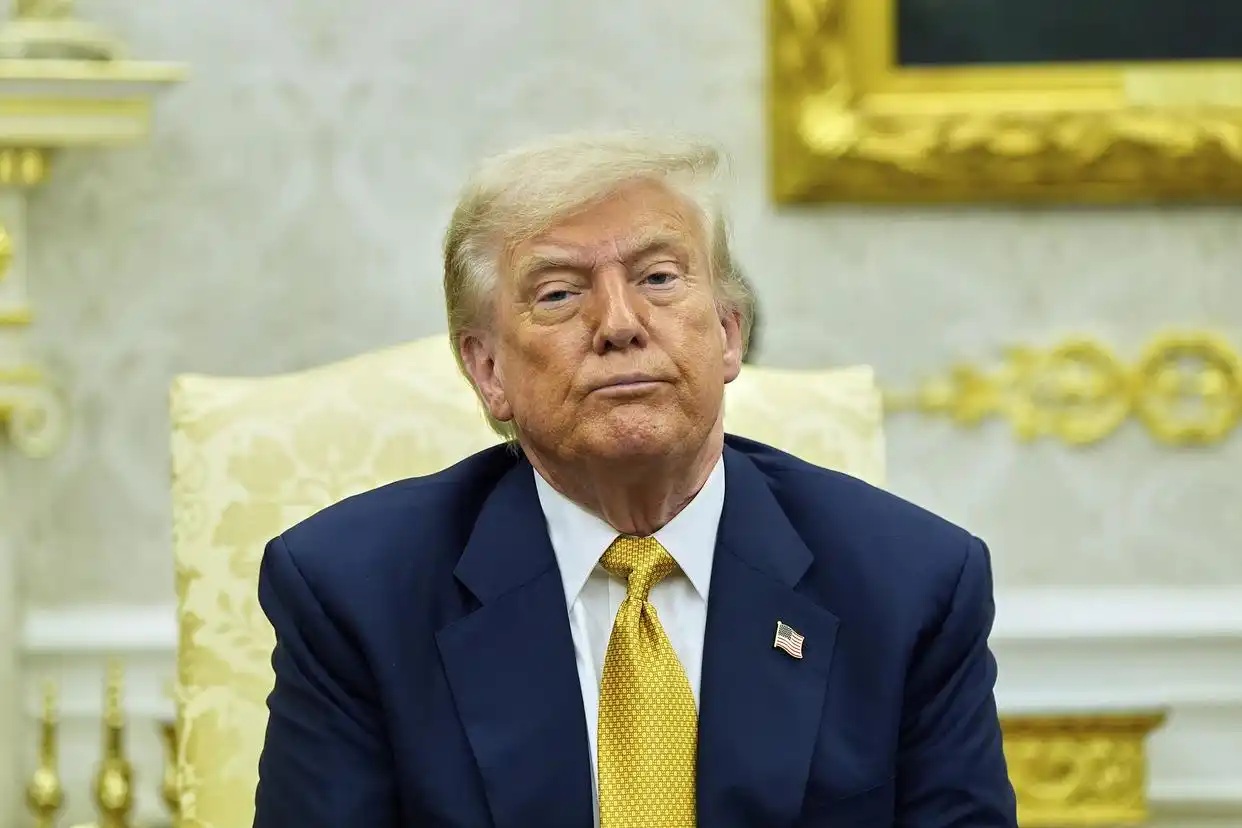
Credit:China Central Television
Donald has dialed down his confrontational tone with China in an effort to secure a summit with Chinese President Xi Jinping and a trade deal with one of the world’s top economies second to the U.S., Bloomberg cited people familiar with internal deliberations. The people said Trump in the meeting with his staff on Tuesday said he would be fighting China “in a very friendly fashion” and he showed the least hawkish voice in the room.
Trump is now focused on cutting purchase deals with Beijing and celebrating quick wins rather than addressing root causes of the trade imbalances, according to the people. It was said that Trump's gentler handling of China is causing a rift among his advisers, with some members of his trade team wanting to hold a tough line against Beijing. This week saw concerns over Trump’s departure from promised hawkish policies from some members of his administration exacerbated as Nvidia Corporation was granted approval for exports of its AI chip H20 to China.
Nvidia Corporation CEO Jensen Huang on Tuesday said that the U.S. government has approved Nvidia’s filling for export licenses so that the company can start shipping and selling H20 chips to the Chinese market. Huang during his trip to China also told reporters Nvidia is announcing a new graphics processing unit (GPU) called RTX Pro, which is very important because it is designed for computer graphics, digital twins and AI.
In a statement from Nvidia on Tuesday, the California-based company confirmed it would consume H20 chip sales to China and announcement of RTX Pro, a new, fully compliant GPU for China. Huang in Beijing also provided an update to customers, noting that Nvidia is filing applications to sell the H20 GPU again, and “the U.S. government has assured NVIDIA that licenses will be granted, and NVIDIA hopes to start deliveries soon,” the company said in the statement.
U.S. Treasury Secretary Scott Bessent on Tuesday tied the export decisions to progress made in recent trade talks between Washington and Beijing in London, calling it part of a “chips-for-rare-earths” framework.
Bessent also implied in an interview with Bloomberg that the reason of approval for H20 sales to China is that Huawei Technologies Co., Ltd. and other Chinese peers can already make equivalent chips. “So, if there is an equivalent chip, then the Nvidia H20 could be sold,” he said.
U.S. Commerce Secretary Howard Lutnick on Tuesday explained the strategy in blunt terms: “We don’t sell them our best stuff — not our second best, not even third. Fourth-best is where we’ve landed, and we’re cool with that.”
Lutnick said the aim is to sell just-good-enough technology to Chinese firms to keep them “hooked” on the U.S. tech stack. “You want to sell the Chinese enough that their developers get addicted to the American technology stack,” he said. “That’s the thinking.”
Some Trump officials have privately objected to granting such export licenses and claimed the move will only embolden China’s tech champions, while others argued successfully that allowing Nvidia to compete with Huawei on its own turf is essential to winning the AI race with China, Bloomberg cited sources. And the latter view, advocated by Jensen Huang, has gained traction inside the Trump administration.
"A wide range of bargaining chips are on the table now for a potential US-China tech grand bargain" including semiconductor manufacturing equipment, rare earths, and AI chips, said Kevin Xu,a tech investor and founder of US-based Interconnected Capital who formerly worked in the Obama administration. Xu called the loosening of export control on H20 chips a possible“sign of things to come.”
Explore more exclusive insights at nextfin.ai.


