

AsianFin -- U.S. Treasury Secretary Scott Bessent on Tuesday said the United States and China will continue talks over maintaining a trade and tariff truce and President Donald Trump will make a final call as Beijing hinted potential of the truce extension.
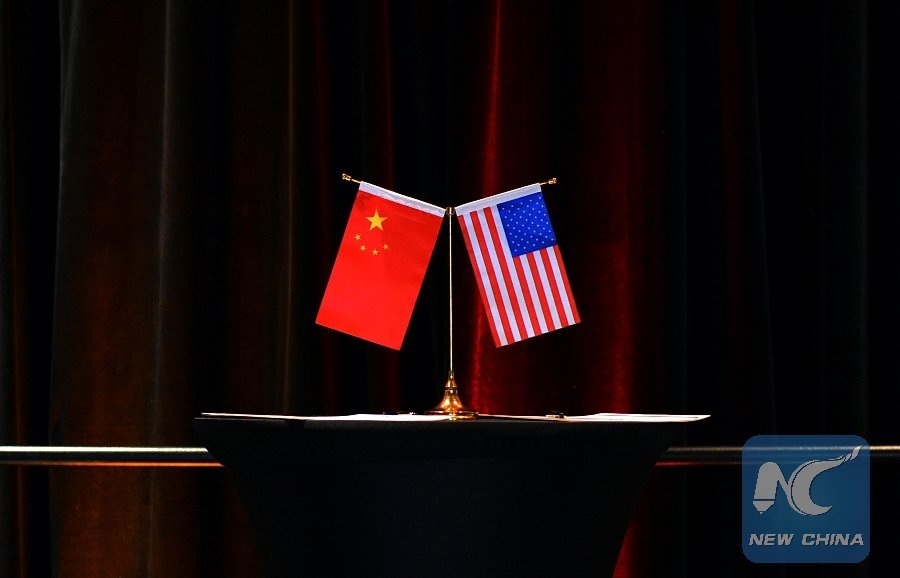
Credit:Xinhua News Agency
“It’s pending President Trump’s approval. He has final say on all the trade deals,” Bessent said, when asked if the U.S. and Chinese negotiators agreed on a truce extension in an interview with CNBC following a two-day meeting in Stockholm, Sweden. Pressed on whether he’d recommend Trump extend the truce, Bessent said Trump will decide after his report of the facts.
U.S. Trade Representative Jamieson Greer, another negotiator, told reporters the U.S. delegatioin would return to Washington, D.C., and “talk to the president about whether that’s something that he wants so do.”
Trump on Air Force One around the same time said U.S. negotiators would brief him on Wednesday on the latest talks with Chinese, opening the door for an extension. “I just had a phone call from Scott Bessent. They had a very good meeting with China, and it seems that they’re going to brief me tomorrow,” Trump said. “We’ll either approve it or not,” he continued.
Washington and Beijing on May 12 reached an agreement on their trade war truce for 90 days, with the U.S. and China agreeing to each lower tariffs by 115%. From mid-May, the U.S. dropped its tariffs on most Chinese goods to 30% from 145%, while China cut its 125% levies to 10%. The tariff suspension is set to expire on August 12.
China and the U.S. will continue pushing for the continued extension of the pause on 24% of reciprocal tariffs of the U.S. side, as well as counter measures of the Chinese side, said Chinese vice minister of commerce Li Chenggang when briefing the press following the talks in Stockholm on Tuesday.
The state news agency Xinhua echoed Li’s remarks. Based on the meeting consensus, both sides will continue pushing for the continued extension by 90 days of the pause on 24% of reciprocal tariffs of the U.S. side, as well as counter measures of the Chinese side, Xinhua reported.
During the economic and trade talks, the two sides held candid, in-depth and constructive discussions on China-U.S. economic and trade relations, macroeconomic policies, and other trade and economic issues of mutual interest, according to the report. It cited Chinese Vice Premier He Lifeng, leader of the Chinese delegation, that the U.S. should work with China to continue to enhance consensus, reduce misunderstandings, strengthen cooperation, further deepen dialogue and consultations, and strive for more win-win outcomes.
Bessent following the talks told reporters that “there’s still a couple of technical details to work out.” “I think our Chinese counterparts have jumped the gun a little and said that we do have an extension [of tariff pause],” Bessent told CNBC later Tuesday. ”I can say that the meetings were very far reaching, far reaching, robust and highly satisfactory.”
Bessent in a press along with Greer said that U.S. negotiators in the meeting expressed their concern about Chinese overcapacity globally and China’s purchases of sanctioned Iranian oil. They also expressed their regret for they believed China had sold Russia about 15 billion of dual-use technologies. “But the overall tone of the meeting was very constructive,” he added.
Bessent said the U.S. delegation reiterated they don’t want to decouple from China and they just need to de-risk with certain strategic industries, such as the rare earth and semiconductors.
Greer said the U.S. officials confirmed the implementation of what was agreed in London in terms of accelerating the flow of rare earth magnets from China to U.S. companies, and then they’re able to further discuss how to make sure the entire U.S. supply chain, including those going through third countries could be accelerated.
Explore more exclusive insights at nextfin.ai.


