

AsianFin -- U.S. President Donald Trump on Wednesday announced another trade deal with an Asian ally before his self-imposed August 1 deadline for reciprocal tariffs.
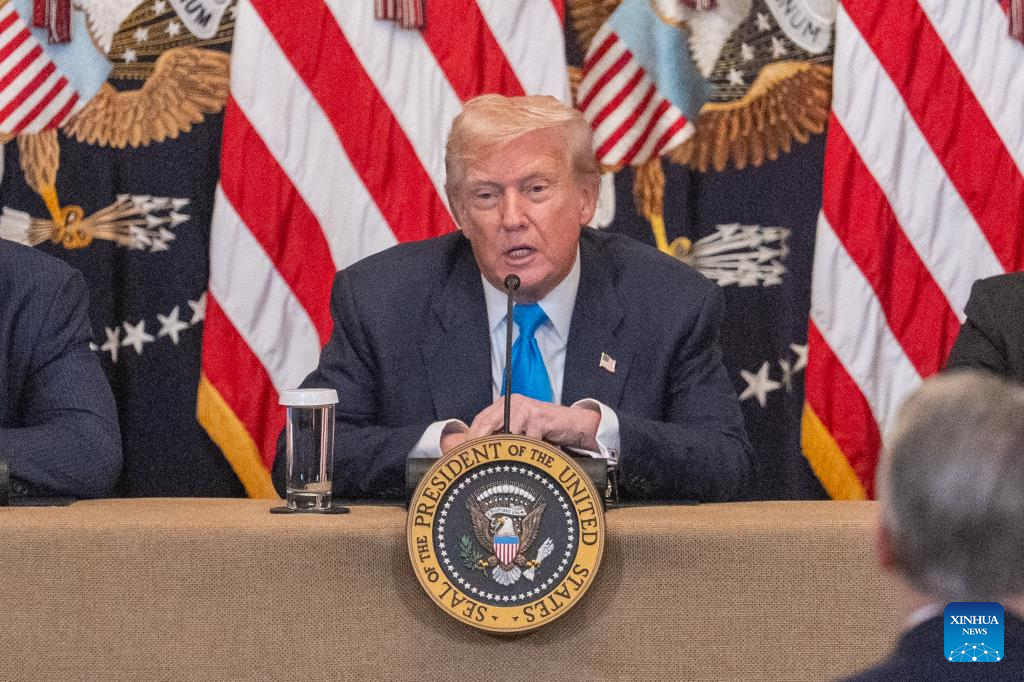
Credit:Xinhua News Agency
The United States has reached “a Full and Complete Trade Deal” with Seoul, and agreed to set a blanket 15% tariff rate for South Korea, while “America will not be charged a Tariff”, Trump said in a post on his social media platform Truth Social. The announcement made South Korea another major U.S. trading partner receiving the U.S. cut in planned tariffs through negotiations.
The new tariff of 15% is still higher than the 10% baseline tariffs that goods from most U.S. trading partners including South Korea have charged since April. But the deal effectively dipped U.S. tariffs on South Korea to 15%, instead of 25% Trump earlier this month threatened from August 1. and the 25% U.S. levies on South Korean cars and car parts will also be reduced to 15%.
Just as its neighbour Japan, which secured a 15% U.S. tariff rate through a trade agreement that was unveiled last week, South Korea under the deal has committed to invest hundreds of billions of dollars in the U.S. The deal will see South Korea “give to the United States $350 Billion Dollars for Investments owned and controlled by the United States, and selected by myself, as President,” Trump posted on Wednesday. He said South Korea will also purchase $100 billion worth of liquefied natural gas (LNG) or other energy products from U.S.
In addition, Trump said South Korea “has agreed to invest a large sum of money for their Investment purposes”, adding that the sum will be announced in the next two weeks when South Korea’s President Lee Jae-myung visits the White House. U.S. Commerce Secretary Howard Lutnick later said that “90% of the profits” from that $350 billion investment will be “going to the American people.”
Lee confirmed South Korea had concluded tariff negotiations with the U.S. The president praised the deal as it would put his country on an equal or better footing compared with other countries, though his interpretation of how the committed investment would be leveraged appears different from the Trump administration.
In Lee’s post on Facebook, the $350 billion fund “will play a role in facilitating the active entry of Korean companies into the US market in industries where we have strengths, such as shipbuilding, semiconductors, secondary batteries, biotechnology, and energy.” Lee said $150 billion of that allocation will be for shipbuilding cooperation providing strong support for Korean companies entering the US shipbuilding industry,” and stated it’s important to achieve mutually beneficial outcomes, rather than to seek unilateral pains.
South Korean news media outlets last week reported Seoul was exploring a proposal to invest at least $100 billion in the United States as part of trade talks with the Trump administration, and the proposed investment package would include potential commitments from major South Korean conglomerates, including Samsung Group, SK Group, Hyundai Motor Group, LG Group, POSCO Group and Hanwha Group. It reported that the proposed package could get bigger in value if it includes possible procurement by the government.
Washington and Seoul have discussed creating a fund to invest in American projects as part of a trade deal, similar to that U.S. and Japan struck, Bloomberg quoted people familiar with the matter on July 24. The U.S.- South Korea talks were said to focus on reaching a 15% tariff rate, including the current auto levies, just like the U.S.-Japan deal dictates.
Explore more exclusive insights at nextfin.ai.


