

AsianFin -- U.S. President Donald Trump on Wednesday unveiled new sector tariffs, triggering a crash in the copper market.
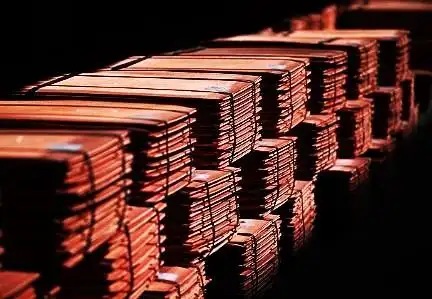
Credit:China Central Television
U.S. copper futures tumbled as much as around 20% in after-hours following an announcement of adjusting imports of copper into the United States. If the copper futures maintain Wednesday’s after-hours fall through Thursday’s session, the metal would see its biggest daily decline in records dating back to 1968.
Trump signed a proclamation,imposing a 50% tariff on semi-finished copper products, intensive copper derivative products, and certain other copper derivatives on August 1. Unlike Trump’s threat earlier this month, the order on Wednesday didn’t affect the raw material itself.
That means it excluded copper scrap and copper input materials, and only apply to copper products such pipes, tubes and other semi-finished copper products, as well as products that copper is heavily used to manufacture, including cable and electrical components. The copper tariff won’t be added to auto levies.
Trump on July 8 first teased a 50% tariff on all copper imports into the U.S. “Today, we’re doing copper,” Trump said during a Cabinet meeting at the White House. “I believe the tariff on copper, we’re going to make it 50%.” Futures contracts for the meta closed 13% higher to record high close on July 8, the largest single-day price gain in records dating back to 1968, according to Dow Jones Market Data.
Wednesday’s proclamation of copper tariffs resulted from a Section 232 investigation. Trump on February 25 signed an executive order to direct the U.S. Commerce Secretary Howard Lutnick to probe into the effects of copper imports on national security under Section 232 of the Trade Expansion Act of 1962.
Based on the facts considered in that investigation, Lutnick found and advised Trump of his opinion that copper is being imported into the U.S. in such quantities and under such circumstances as to threaten to impair the national security of the U.S., according to the proclamation.
In reaching this conclusion, Lutnick found copper is essential to the manufacturing foundation on which United States national and economic security depend. Copper is the second most widely used material by the Department of Defense and is a necessary input in a range of defense systems, including aircraft, ground vehicles, ships, submarines, missiles, and ammunition. Copper also plays a central role in the broader United States industrial base, per the proclamation.
Lutnick also found that United States dependency on foreign sources of copper is a national security vulnerability that could be exploited by foreign countries, weakens U.S. industrial resilience, exposes the American people to supply chain disruptions, economic instability, and strategic vulnerabilities, and jeopardizes the U.S. defense industrial base.
“The United States is now dangerously dependent on foreign imports of semi-finished copper, intensive copper derivative products, and copper-containing products, and imbalances in the global markets make domestic investment increasingly unviable,” wrote the order.
In light of Lutnick’s report, Trump determined it is necessary to impose 50% tariffs on copper products so that such imports will not threaten to impair the national security of the U.S. he also asked Lutnick to take actions to implement a domestic sales requirement for copper input materials starting at 25% and a domestic sales requirement of 25% for high-quality copper scrap.
Trump believes the proclamation will help increase domestic production of semi-finished copper products and intensive copper derivative products, thereby reducing the U.S. reliance on foreign sources. It will also ensure that domestic fabricators are able to supply sufficient copper products essential for infrastructure, defense systems, and advanced manufacturing, according to the order.
The order aids manufacturers, but does little to boost the constrained U.S. copper mining industry, Reuters commented. It noted the move is essentially a boost for Chile and Peru, two of the world's largest copper miners and major suppliers to the U.S.
Explore more exclusive insights at nextfin.ai.


