

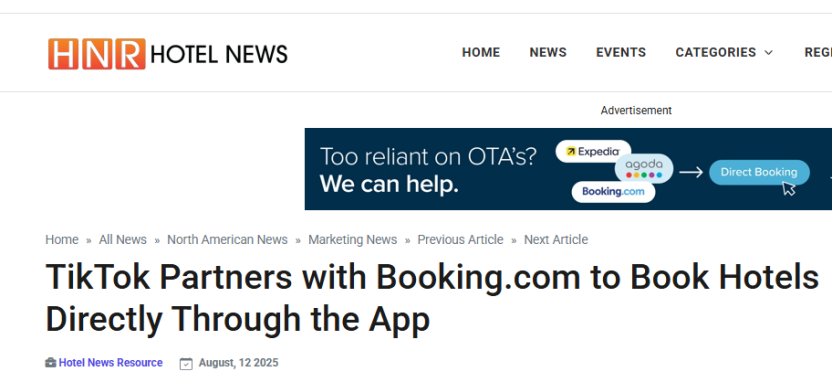
AsianFin -- TikTok is stepping further into the U.S. local lifestyle services sector, joining the ranks of companies that blend social media, e-commerce, and offline services. According to a U.S.-based hotel information platform, the social media giant has recently formed a strategic partnership with Booking.com, one of the world’s largest online travel booking platforms.
The partnership allows TikTok users to search and book hotel rooms directly from the app. Users can enter check-in and check-out dates, access individual hotel landing pages, and view key information including prices, amenities, reviews, nearby attractions, and even TikTok videos related to the property. The move signals TikTok’s ambitions to expand beyond entertainment and social engagement, venturing into local lifestyle services in the U.S. market.
Back in March, Axios reported that TikTok had begun recruiting staff in Seattle, Los Angeles, and New York, focusing on connecting businesses with content creators. Roles centered on travel, food, and lifestyle services were designed to help TikTok explore monetization opportunities while expanding its local service offerings.
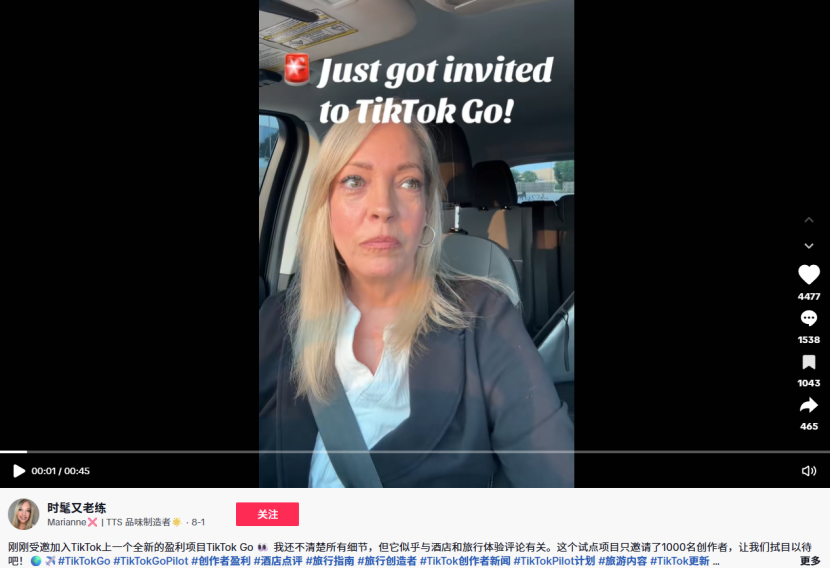
Alongside the Booking.com integration, TikTok has launched a new program called TikTok Go, a creator monetization initiative aimed at linking influencers with local businesses. Under this model, content creators earn commissions by promoting hotels, guesthouses, and other local service providers. Essentially, the program operates on a “visit and earn” framework, incentivizing creators to generate content that drives real-world engagement.
Semafor reported that TikTok Go is part of a broader push to support online and offline businesses across sectors including food and beverage, retail, and tourism. TikTok has also filed a trademark for TikTok PayLater, an installment payment solution that allows users to pay for purchases over time. These initiatives underscore the company’s goal to expand its advertising and e-commerce ecosystem while integrating offline services.
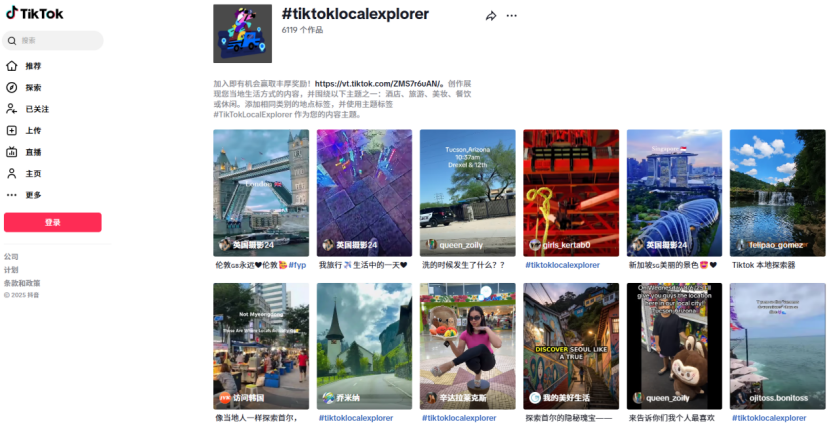
A key pillar of TikTok’s strategy in local lifestyle services is its ability to leverage geolocation and content discovery. Since 2022, TikTok has been testing features like Nearby in Southeast Asia, which allows users to find local shops and attractions shared by other users in their city. Creators can tag their videos with locations, enhancing discoverability and giving the platform a competitive edge against rivals like Snapchat’s Snap Map and Instagram’s searchable maps.
In April 2025, TikTok enhanced its search experience by introducing a Reviews tab within location-tagged videos. The tab aggregates star ratings, written reviews, and photos, allowing users to access comprehensive feedback without leaving the platform. Gamified features such as the local explorer badge encourage users to create content around nearby attractions, helping the platform maintain a self-sustaining ecosystem of content creation and discovery.
Before the Booking.com partnership, TikTok had already experimented with ticketing integrations through platforms like Ticketmaster and Fandango. Expanding into hotel bookings represents a natural next step, with potential to extend into dining, retail, and broader tourism services.
The local lifestyle services market is substantial both in the U.S. and globally. According to Fortune Business Insights, the global localized services market is projected to grow from $3.7 trillion in 2024 to nearly $10 trillion by 2032, a compound annual growth rate (CAGR) of 13.32%. In China, local lifestyle services are also booming. iResearch data predicts the online penetration rate of China’s market will reach 30.8% by 2025, with an estimated market size of 2.5 trillion yuan.
Chinese platforms like Douyin, Kuaishou, Meituan, JD.com, and Taobao are aggressively expanding their local lifestyle offerings, spanning food delivery, retail, hospitality, and leisure. Douyin alone reported a gross merchandise volume (GMV) of approximately 560 billion yuan in 2024, an 81% year-over-year increase, covering 370 cities and over 6.1 million offline stores. Small and medium-sized businesses operating on the platform reached 3.2 million, with order volume up 69% year-over-year. Influencer-generated content contributed over 133.3 billion yuan in economic benefits for merchants, driving a 53% increase in revenue from store-visit videos and livestreams.
TikTok, as Douyin’s overseas counterpart, is now attempting to replicate similar success in the U.S., starting with the travel and hospitality sector. However, industry insiders note that expanding local lifestyle services abroad comes with unique challenges. Supply chains, delivery infrastructure, and merchant digital systems are less mature in regions like Southeast Asia. In contrast, the U.S. market benefits from more developed infrastructure and established consumer habits, potentially giving TikTok a smoother entry point.
TikTok’s foray into local lifestyle services is part of a broader trend among social media and e-commerce giants seeking to integrate online and offline services. Domestically, platforms such as Douyin and Meituan have established a near-duopoly in local in-store services. Internationally, players like Yelp and Uber Eats dominate food delivery, while TikTok seeks first-mover advantages in sectors like hotels, tourism, and local retail.
The combination of TikTok Go and the Booking.com integration allows the company to leverage its social media reach and creator ecosystem to capture a share of the trillion-dollar local lifestyle market. By offering both content-driven discovery and transactional capabilities, TikTok is positioning itself as a hybrid platform bridging social media, e-commerce, and offline services.
The success of TikTok’s U.S. expansion in local lifestyle services will likely hinge on its ability to scale merchant partnerships, maintain robust user engagement, and integrate payments and booking capabilities seamlessly. If successful, the platform could expand beyond hospitality into dining, entertainment, retail, and tourism, creating a comprehensive local lifestyle ecosystem overseas.
With growing global demand for personalized, content-driven shopping and service experiences, TikTok’s strategy of merging influencer-driven monetization, geolocation-enabled discovery, and transactional functionality represents a bold step toward capturing a new frontier in social commerce.
While domestic platforms like Douyin have already demonstrated the potential of this model, TikTok’s overseas journey is only beginning. Investors, merchants, and users alike will be watching closely to see whether TikTok can successfully translate its social media dominance into tangible economic impact in local lifestyle services worldwide.
Explore more exclusive insights at nextfin.ai.


