

AsianFin -- Meituan’s stock tumbled on Thursday after China’s biggest food delivery platform warned of losses this quarter, triggering a broad selloff that erased roughly $27 billion in combined market value from the country’s top internet commerce players.
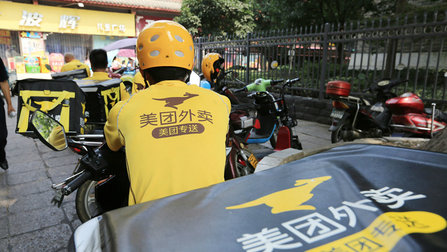
Shares in Meituan plunged as much as 13% in Hong Kong, their sharpest intraday drop since April, before paring some losses. Alibaba and JD.com each slid about 5%. The declines dragged the Hang Seng Tech Index down as much as 2.3%, leading losses across Asia.
The rout came after Meituan executives cautioned investors that an escalating price war with rivals Alibaba Group Holding’s Ele.me service and JD.com’s on-demand unit would push its core local commerce business into “significant losses” in the current quarter. The comments, delivered on a post-earnings call late Wednesday, unnerved investors already worried about mounting costs in China’s internet sector.
“We expect there will be continued fierce competition in the near term,” Chief Financial Officer Chen Shaohui said. “That will bring negative impact on our financial results.”
Meituan said “irrational competition” wiped out much of its profit in the June quarter, with operating margins in its core commerce unit collapsing to 5.7% from an average near 19% over the past four years. Analysts warned the company may now face a “new normal” of weaker profitability, given the intensity of competition from two deep-pocketed rivals.
The Beijing-based firm had long dominated China’s meal delivery market. But in 2025, JD.com — under pressure to find new growth engines during a broader consumption downturn — and Alibaba’s Ele.me reignited the battle for market share by offering steep discounts and subsidies to budget-conscious consumers. That forced Meituan to match the offers, slashing profitability and raising concerns about the sustainability of its business model.
The subsidy war has also dragged down competitors’ earnings. JD.com reported its quarterly net income halved earlier this month, while Alibaba has posted muted revenue growth and is set to report earnings on Friday.
The three companies have poured billions of dollars into consumer incentives and delivery rider recruitment since the start of the year. But investors appear unconvinced that aggressive spending will deliver long-term gains. The combined market value of Meituan and JD.com has at times fallen by as much as $100 billion during this price battle, highlighting skepticism about the strategy.
In August, China’s market regulators stepped in, warning the platforms against “disorderly competition.” The companies subsequently pledged to avoid a self-defeating price war. Still, analysts say the damage to margins may take quarters to reverse, and higher costs could linger even if subsidies ease.
Promotion and user incentives jumped 49% year-on-year in the first half of 2025, outpacing revenue growth of 15% during the same period. Logistics spending also climbed, accounting for 39% of sales compared with 37% a year earlier, underscoring the strain on profitability.
With its home market under pressure, Meituan is accelerating international expansion. Its food delivery arm Keeta has entered Saudi Arabia’s largest cities and launched in Qatar last week. The company has also pledged $1 billion over five years to build a presence in Brazil.
That push has had some success: Meituan’s aggressive pricing helped drive Deliveroo to exit Hong Kong after a decade of operations. But overseas growth is also adding to financial strain. Cost of revenues rose 27% in the June quarter, partly due to international expansion efforts.
Analysts say Meituan faces its toughest challenge in years as it defends its dominant position against resurgent competitors at home while footing the bill for global ambitions. Whether regulators enforce a truce in the subsidy war may determine how quickly margins recover.
For now, investors are bracing for more volatility. “The competitive intensity in China’s food delivery space is at unprecedented levels,” said one Hong Kong-based fund manager. “Until the subsidies stop, profitability across the sector will remain under pressure.”
Explore more exclusive insights at nextfin.ai.


