

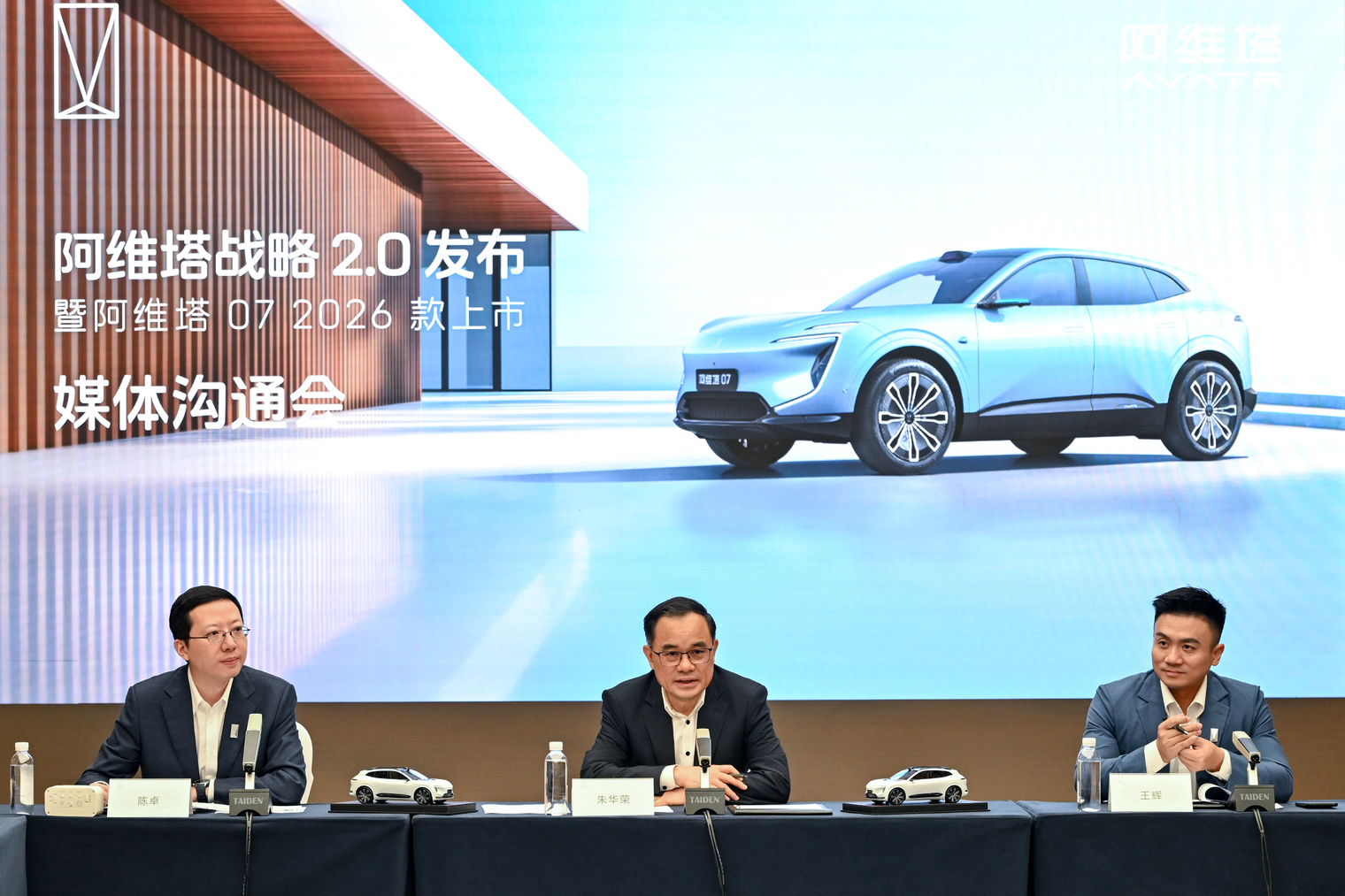
Image source: On-site photo
AsianFin -- As China’s electric vehicle price war intensifies, most automakers are slashing stickers and stripping features to survive. Avatr Technology is taking the opposite approach.
On Sept. 20, under the leadership of newly appointed chairman Wang Hui, Avatr unveiled its ambitious “Strategy 2.0” and launched the 2026 Avatr 07. The midsize SUV starts at 219,900 yuan ($30,300) and comes “fully loaded” with premium features such as Huawei’s advanced driver-assistance system, power-assisted doors, and zero-gravity seats—all standard from the base trim.
In an industry where entry-level models are typically stripped down, Avatr’s contrarian bet is drawing attention. But the high-profile rollout also comes at a precarious moment: sales so far this year have met just 36% of the company’s annual target, while the leadership transition from veteran chairman Zhu Huarong to Wang Hui underscores the urgency of accelerating growth.
Zhu stepped down due to compliance rules at centrally owned enterprises, which bar senior group executives from holding leadership positions at multiple subsidiaries. He will remain engaged as director of Avatr’s work research committee, pledging to give the brand his “direct and only” focus.
Industry observers see Wang Hui, 44, as well-suited to lead Avatr’s next phase. A Changan Auto veteran since 2003, Wang has managed strategy, overseas operations, and joint ventures, while spearheading collaborations with Huawei and CATL. He also helped secure Avatr’s investment in Huawei’s automotive business. Zhu himself praised Wang as “the right person to lead Avatr’s dedicated development.”
Wang takes the reins at a time when Avatr has recorded strong growth off a low base. The company sold nearly 80,000 vehicles in the first eight months of 2025, a 140% year-on-year jump, but well short of its 220,000-unit annual goal. To catch up, Avatr must sell more than 35,000 units per month through year-end—an uphill climb in a crowded market.
Avatr’s Strategy 2.0 lays out bold milestones: 400,000 units in annual sales by 2027, 800,000 by 2030, and 1.5 million by 2035. The plan emphasizes four “upgrades”: products, technology, services, and globalization.
The Avatr 07 is the first test of that approach. Available in six trims, the model’s biggest selling point is its all-inclusive feature set. Unlike rivals that lure buyers with low base prices but upsell key functions, the Avatr 07 includes advanced driver-assistance, nine airbags, a British Meridian sound system, and luxury seating across the lineup.
The range-extended version offers a large 52 kWh battery option with a 333 km electric-only range and ultra-fast 5C charging, designed to cover a week of commuting for most urban drivers.
“This strategy is designed to create blockbusters,” Wang said at the launch. “Whether it’s future flagship products or mainstream models in the 250,000–350,000 yuan segment, both must be built to blockbuster standards.”
He acknowledged that while Avatr’s product strength already outpaces peers, brand recognition and marketing remain weak spots. Strengthening those will be his next focus.
Avatr’s bold move is possible thanks to the backing of Changan Auto, Huawei, and other state-linked partners. Zhu highlighted that the brand is benefiting from unprecedented resources under the “New Changan” umbrella, including ecosystem support from major financial institutions. That cushion allows Avatr to compete on value rather than resorting to stripped-down survival tactics.
Still, Wang faces steep challenges. He has framed Avatr’s immediate tasks as three battles: boosting marketing and services, driving product innovation, and accelerating globalization.
On the sales front, Avatr has posted six straight months above 10,000 units. The next milestones are 15,000 and 20,000 monthly sales, executives said, as the company builds organizational muscle.
International expansion is also a priority. Avatr is now in 25 countries with 55 sales channels and aims to reach 50 countries by 2025 with sales of 15,000 units. Entry into Europe is slated for 2026, with a 60,000-unit overseas target by 2027. Early traction has been promising: in Bhutan, annual targets were met within a week after the king purchased an Avatr, executives said.
But overseas markets come with varied regulations and consumer tastes. Wang has stressed that expansion must balance speed with strategy to avoid spreading resources too thin.
Product expansion is also on the agenda. Avatr plans to launch 17 new models by 2030, spanning sedans, SUVs, MPVs, and sports cars. Maintaining brand coherence across such a diverse lineup will be another test.
The unveiling of Strategy 2.0 marks Avatr’s transition from heavy reliance on parent-group support toward independent execution. For Wang, success will require more than just deep-pocketed backers—it will demand proving that Avatr can carve a lasting position in China’s brutally competitive EV landscape.
Sales momentum, global reach, and brand recognition will determine whether Avatr can deliver on its bold volume targets. As Wang put it: “The road may be tough, but as long as we move forward, we will reach our destination.”
Avatr’s “fully loaded from entry-level” gamble could reshape consumer expectations in the market. If the strategy resonates, it may not just mark a breakthrough for the brand, but also redefine how Chinese automakers compete in the next phase of the EV race.
Explore more exclusive insights at nextfin.ai.


