

AsianFin -- As generative AI rapidly shifts from theoretical models to real-world applications, the automotive industry is experiencing a profound transformation. Large AI models are no longer just experimental—they are increasingly being integrated into production vehicles, reshaping both driving and in-car experiences.
According to publicly available data, by the first half of 2025, over 50 domestic Chinese car brands had equipped more than 130 vehicle models with AI large models as standard, with an installation rate approaching 16%. In the same period, the penetration rate of L2+ intelligent assisted driving in new energy passenger vehicles surpassed 80%, while the city NOA (Navigate on Autopilot) function coverage exceeded 50% in vehicles priced above 200,000 RMB and is expanding into the 150,000 RMB segment. Clearly, AI is accelerating the transformation of automotive driving and cockpits toward connectivity, intelligence, and human-like interaction.
The global intelligent connected vehicle market is projected to reach $1.5 trillion in 2025 and is expected to rise to $6.7 trillion by 2032, underscoring the vast economic potential of AI-powered vehicles.
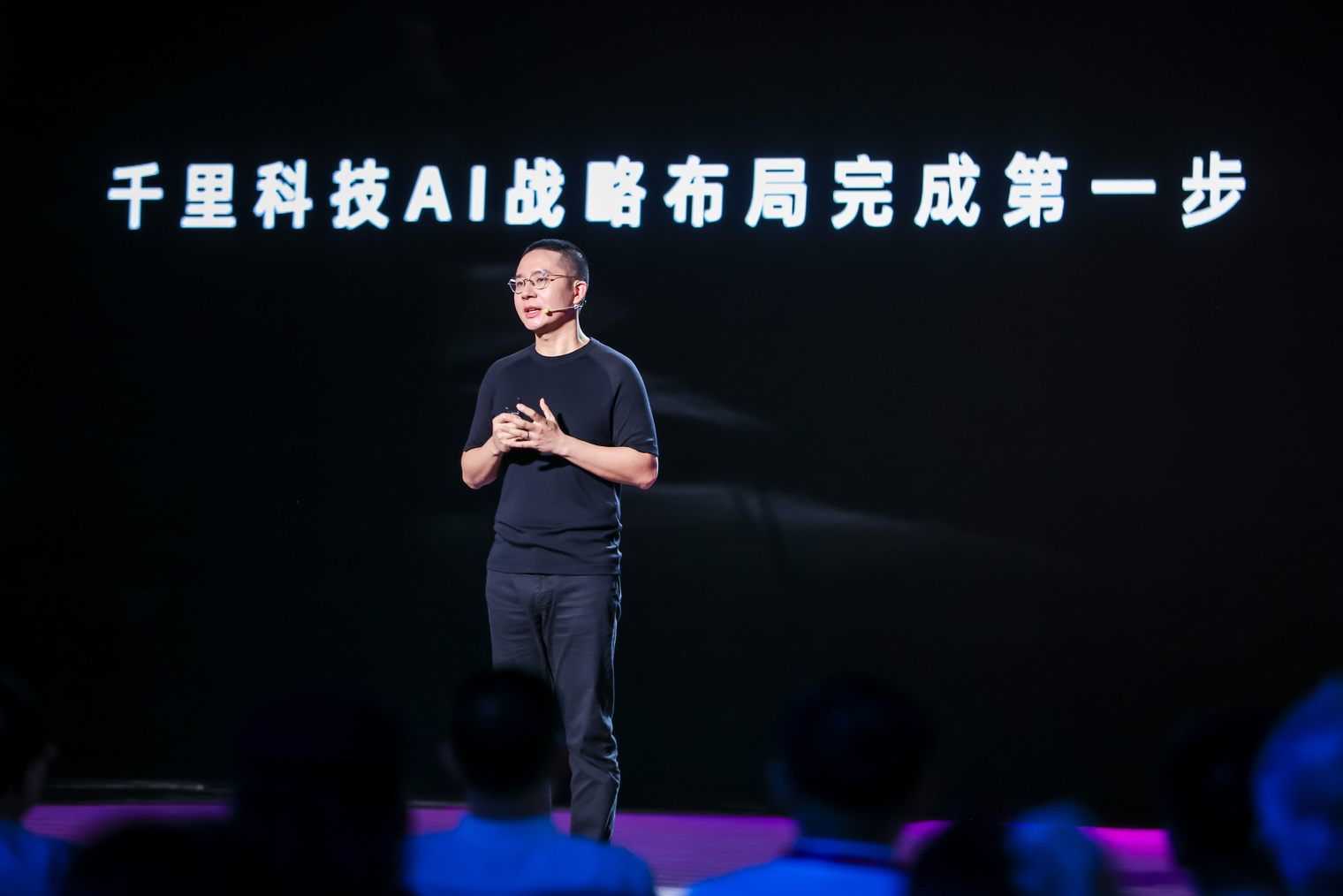
At the AI Chongqing Smart Driving Night and Qianli Technology Brand Launch on September 28, Qianli Technology (601777.SH) officially unveiled its “AI + Vehicle” strategy, focusing on three core areas: intelligent driving, smart cockpits, and intelligent mobility. The company plans to build an open AI mobility platform, delivering L2+ to L4-level intelligent vehicles and natural, human-like cockpit interactions, with gradual expansion into the Robotaxi sector.
Yin Qi, Chairman of Qianli Technology, emphasized that future vehicles will not be limited to driving functions but will become humanity’s first true robot carriers equipped with “the most powerful brain.” He believes the automotive industry’s exploration of the “AI + Car” track has only just begun, promising immense market opportunities and accelerating the arrival of the industry’s “ChatGPT moment.”
Qianli Technology’s recent financial performance reflects its strategic progress. In the first half of 2025, the company achieved operating revenue of 4.184 billion RMB, up 40.04% year-on-year, while net cash flow from operating activities surged 396.29% to 1.315 billion RMB. Revenue growth was driven primarily by passenger vehicles and related parts, which accounted for 59.95% of total revenue.
In March 2025, Qianli Technology partnered with Geely, Maichi, and Lotus to establish Chongqing Qianli Intelligent Driving Co., Ltd., marking the company’s formal entry into the intelligent driving sector. Plans for an overseas H-share IPO and Hong Kong Main Board listing further underscore its ambition to expand globally.
Qianli Technology has rapidly developed its intelligent driving solutions. On June 23, 2025, it launched the Qianli Intelligent Driving 1.0 platform for third-party vehicle manufacturers, available in Basic, Professional, and Flagship editions, covering high, mid, and entry-level configurations.
The flagship edition delivers up to 700 TOPS computing power, supporting multi-scenario autonomous decision-making, complex interactions, and point-to-point parking. By the end of 2025, the company plans to release L3-level Qianli Intelligent Driving 2.0, aiming to redefine the benchmark for intelligent assisted driving and transform vehicles into intelligent, proactive “third mobile spaces.”
Central to the AI strategy is a high-modulus, general-purpose AI intelligent assisted driving solution. The system integrates multi-modal data and proprietary driving data, enabling deep understanding and generalized reasoning about complex environments. Leveraging reinforcement learning, it predicts the behavior of vehicles, pedestrians, and other dynamic agents, significantly improving safety, decision-making, and human-like driving capabilities.
Qianli Technology’s system achieves urban NOA without reliance on high-definition maps, enabling point-to-point autonomous navigation across narrow roads, unmarked sections, construction zones, and underground parking—solving traditional “last mile” challenges.
Looking forward, Qianli Intelligent Driving 3.0 L4-level autonomous driving for Robotaxis is scheduled for 2026, covering the full spectrum from advanced assisted driving to full autonomy.
Qianli Technology is also advancing smart cockpit innovations. The Smart Cockpit Agent OS delivers ultra-natural interaction, integrated memory, and a fully integrated digital mapping experience. Partnering with StepStar, Qianli has developed the RLM large model, ensuring a safer, more comfortable user experience. Multi-modal and voice large models are enabling next-generation smart cockpits, turning the car into a super intelligent agent.
Yin Qi notes that AI is transitioning from the “Reasoner” stage (L2) to the “Agent” stage (L3), with 2025 marking the breakout year for Agent applications in vehicles, signaling a paradigm shift from mobility tools to intelligent mobility lifeforms.
Qianli Technology envisions rapid adoption of Robotaxis within three years. Its 18-month roadmap includes building a full-chain system encompassing technology, products, and services. Collaborations with Geely will yield dedicated Robotaxi models, while partnerships with global mobility providers will establish large-scale operational platforms.
Plans include deploying over 1,000 Robotaxis in single cities worldwide, marking a significant commercialization milestone. Yin Qi emphasizes that integrating large-model technology, scenario definition, and software-hardware synergy is crucial to the acceleration of the AI + Car era.
A decade ago, Elon Musk predicted Tesla’s self-driving cars would transform the industry. Tesla’s Cybercab concept relies on AI and cameras for navigation without lidar, aiming to lower operational costs to $0.20 per mile. However, commercialization challenges remain, including regulatory approval and technical hurdles.
Meanwhile, China’s Qianli Technology is steadily advancing its AI-driven vehicles, leveraging both technical expertise and market insights. Between January and July 2025, new passenger car sales with combined driving assistance reached 7.76 million units, representing a 62.6% penetration rate—a 40-point increase from 2021—illustrating the growing importance of AI-driven features.
IDC China predicts that as vehicles evolve, they will become the “third space” after home and office. By 2028, global AI-equipped vehicle sales are expected to exceed 21.2 million units, highlighting the immense growth potential of AI in the automotive sector.
Qianli Technology is positioning itself at the forefront of the AI + Car revolution, focusing on intelligent driving, smart cockpits, and Robotaxis. With robust technology platforms, strategic partnerships, and ambitious commercialization plans, the company is accelerating the transformation of vehicles from mobility tools into intelligent, interactive life spaces.
As AI integration deepens, Qianli Technology aims to capture a leading role in China’s automotive landscape, driving innovation, enhancing user experience, and unlocking the full potential of autonomous, intelligent, and connected vehicles in the coming years.
Explore more exclusive insights at nextfin.ai.


