

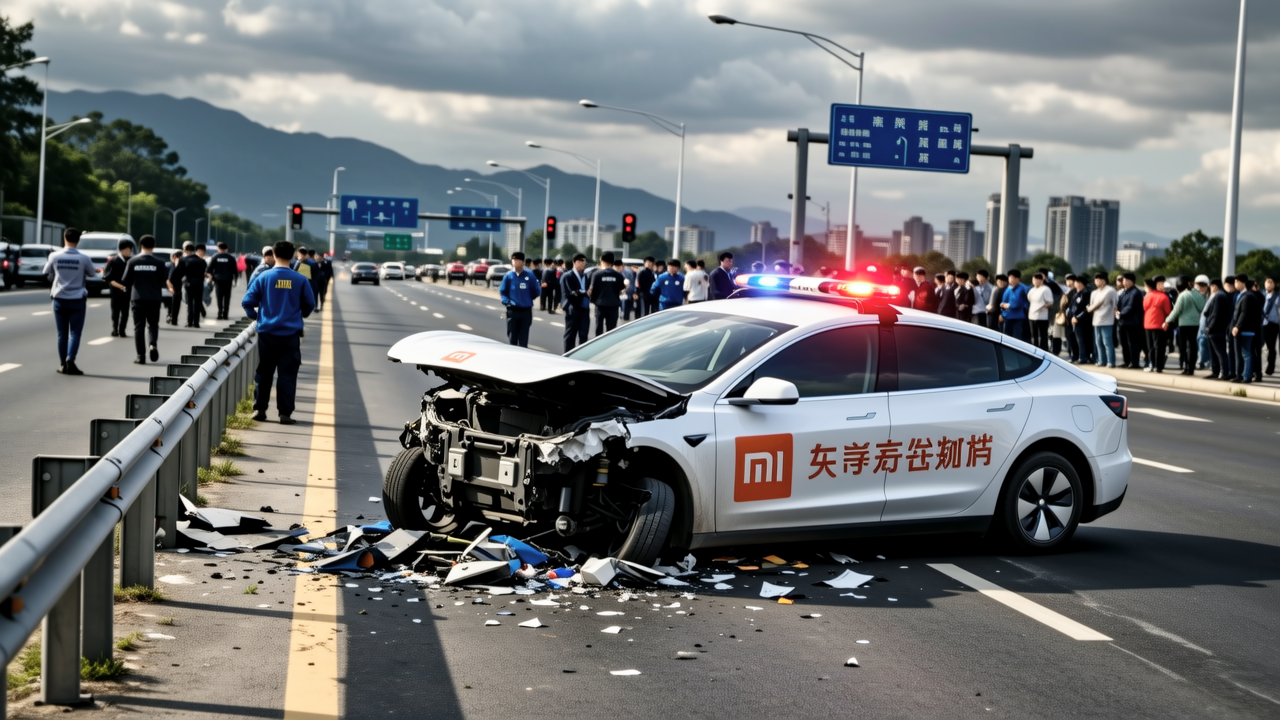
AI-generated image
Xiaomi Corp. shares plunged the most since April after reports surfaced that the door of one of its SU7 electric sedans failed to open following a fiery crash in Chengdu, southwest China, trapping at least one occupant inside.
Videos and photos circulating on Chinese social media platforms, including Weibo, showed the charred remains of the vehicle after it reportedly veered off the road and burst into flames early Monday. Bystanders were seen attempting to pry open the doors but were unable to rescue the trapped individual.
According to the National Business Daily, the driver was stuck inside the vehicle, while local authorities have yet to confirm casualties or injuries, Dahe Daily reported.
Shares of Xiaomi fell as much as 8.7% on Monday in Hong Kong, marking their sharpest single-day decline in six months. The company did not immediately respond to requests for comment.
The incident adds to mounting scrutiny of Xiaomi’s fledgling electric vehicle business, which entered mass production of the SU7 sedan earlier this year as part of the tech giant’s high-stakes expansion into smart mobility. In April, a fatal SU7 crash on a Chinese expressway triggered widespread debate over the reliability of Xiaomi’s intelligent driving software, causing a temporary slump in its stock.
The latest crash may also reignite concerns about the safety of electronically operated or retractable door handles, which have become increasingly common in modern EVs. Tesla popularized the feature, but similar incidents involving doors failing to open after crashes have prompted safety investigations.
In September, the U.S. National Highway Traffic Safety Administration (NHTSA) launched a defect probe into certain Tesla Model Y vehicles over potential issues with their door handles. Around the same time, Chinese regulators were reportedly weighing a potential ban on fully concealed or power-operated door handles amid growing safety concerns.
The renewed controversy comes at a sensitive time for Xiaomi, which has invested heavily in its EV ambitions and aims to challenge established automakers in China’s competitive new energy vehicle market. Analysts say that any erosion of consumer trust could slow the company’s momentum just as it begins scaling up production and deliveries.
Explore more exclusive insights at nextfin.ai.


