

AsianFin -- Nvidia Corp. for the first time presented its next-generation Vera Rubin Superchip at GPU Technology Conference (GTC) AI conference in Washington D.C. on Tuesday, and expressed upbeat on sales of the Superchip and theBlackwell processors, its latest flagship artificial intelligence (AI) accelerator.
Credit:Nvidia
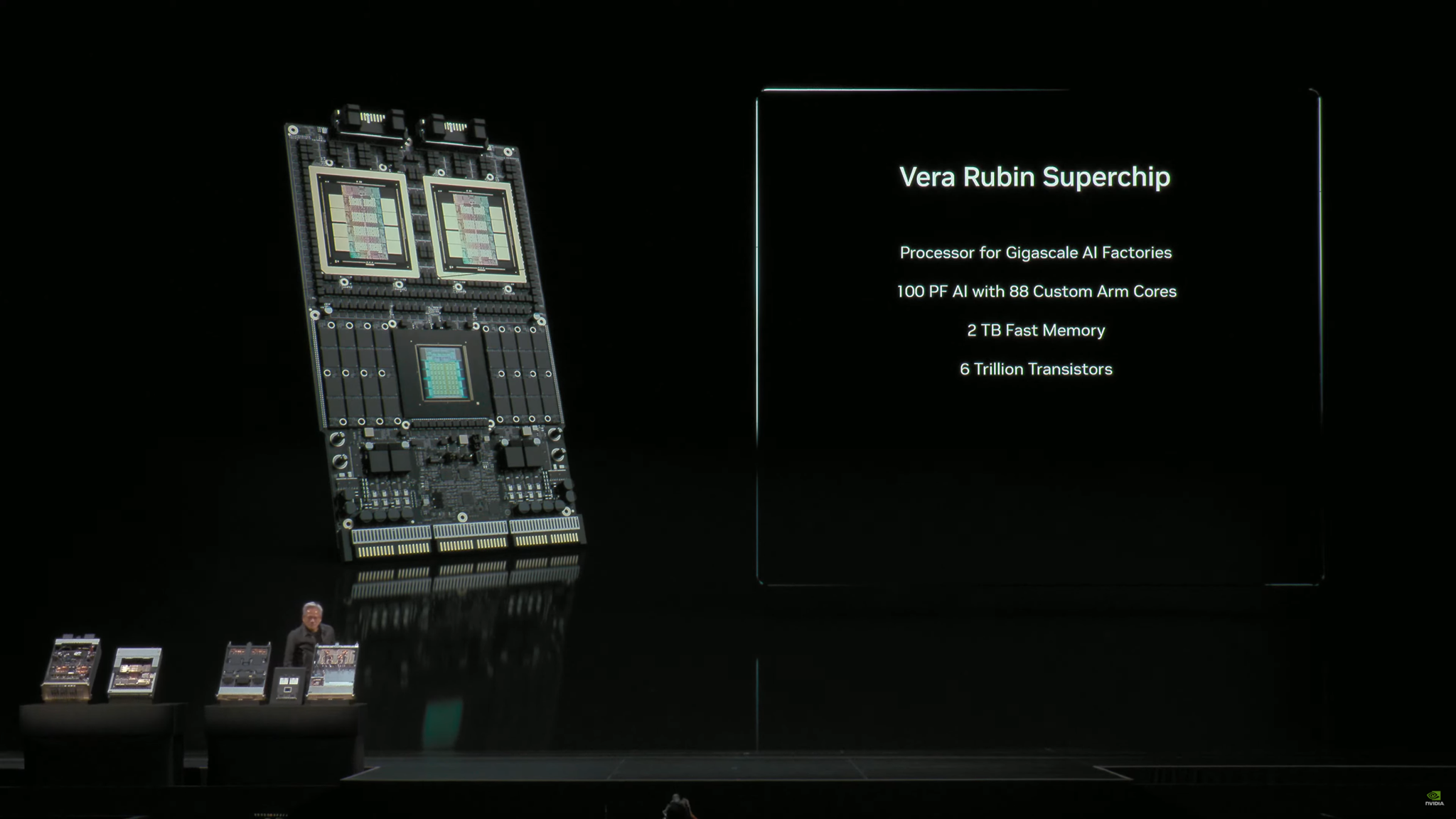
Nvidia CEO Jensen Huang during his keynote at the event showed off an an actual sample of the motherboard, or Superchip of Vera Rubin. Vera Rubin is a combination of two Rubin graphic processing units (GPUs), the successor to Blackwell GPUs, and the Vera CPU, Nvidia’s first custom central processor unit.
The motherboard-sized prototype integrates low-power double-data-rate (LPDDR) system memory along with next-generation HBM4 memory featured on the Rubin GPUs. The full Vera Rubin NVL144 platform consists of two new chips. Each Rubin GPU, with two Reticle-sized dies, delivers up to 50 PFLOPs of FP4 performance and 288GB of HBM4 memory. The accompanying 88-core Vera CPU a custom Arm architecture, 176 threads, and up to 1.8 TB/s of NVLINK-C2C interconnect.
Huang said the Rubin GPUs are back in the labs, suggesting these are the very first samples produced at Taiwan Semiconductor Manufacturing Co. (TSMC)’s facilities. He expected the GPUSs to start mass production around the same time next year or earlier, which means the third or fourth quarter of 2026.
Nvidia will launch the second platform, called Rubin Ultra, in the second half of 2027. The platform will scale the NVL system from 144 to 576. it will host the Rubin Ultra GPU featuring four reticle-sized chips, offering up to 100 PFLOPS of FP4 and a total HBM4e capacity of 1 TB scattered across 16 HBM sites.
Huang said Nvidia has shipped 6 million Blackwell GPUs in the past four quarters, highlighting the high demand, and the delivery is expected to be 20 million units. In comparison, Hopper, the previous generation GPU, only accounted for 4 million units in its whole lifetime, according to Huang.
The Blackwell processor and the newer Rubin model are fueling an unprecedented surge of sales growth through 2026, Huang said. He disclosed Nvidia expected $500 billion in combined GPU sales between the Blackwell generation and the Rubin chips, adding that the sales forecast didn’t include sales from China.
Huang said Blackwell GPUs are now in full production in Arizona. That marks the first production of Nvidia’s fastest AI chips in the United States since the advanced chips previously have been only manufactured in Taiwan. Huang emphasized the importance of building AI infrastructure in the U.S. and having the rest of the world build on the U.S. tech stack throughout his talk.
Earlier this month, the company said it and TSMC had produced the first Blackwell wafer - the semiconductor material that chips are etched on - in the U.S. at the Taiwanese chip maker's fabrication facility in Phoenix.
Huang in his keynote said U.S. President Donald Trump had asked nine months ago to bring chip manufacturing back to U.S. "The first thing that President Trump asked me for is [to] bring manufacturing back," Huang said. "Bring manufacturing back because it's necessary for national security. Bring manufacturing back because we want the jobs."
Trump said on Tuesday that he plans to meet with Huang on Wednesday.
Nvidia on Tuesday moved closer to a $5 trillion market value as the stock hit its close record, advancing nearly 5% to $201.03. That brought the stock rally over the past four sessions to 11.5%, logging the best four-day run since May 15. Nvidia shares need to close at $205.76 to hit the $5 trillion mark for the first time.
Explore more exclusive insights at nextfin.ai.


