

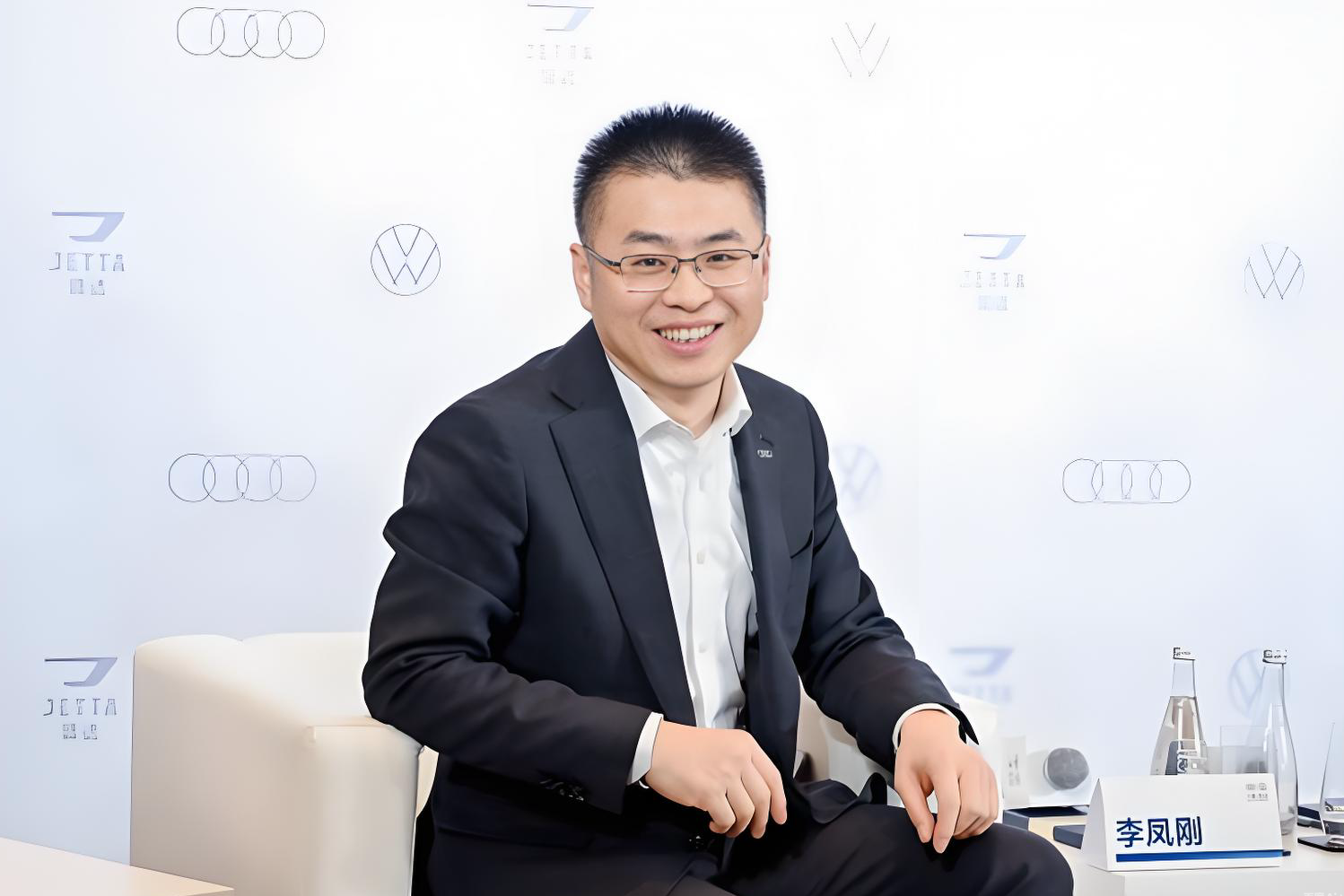
Li Fenggang, General Manager of Beijing Hyundai
Beijing Hyundai has appointed Li Fenggang as its new General Manager, marking the first time a local Chinese executive representing the Korean side has taken the helm at the long-standing joint venture.
The move, announced on Monday, underscores Hyundai’s deeper commitment to localizing its operations and reviving its fortunes in the increasingly competitive Chinese auto market.
Li, a graduate of Tsinghua University with a degree in Mechanical Design and Automation, brings more than two decades of industry experience to the role. He spent 20 years at FAW-Volkswagen, where he oversaw key areas such as R&D, strategic planning, and operations.
In 2023, Li was named Executive Deputy General Manager of FAW-Audi Sales Co., Ltd., leading the brand’s dual-track oil-electric strategy. Under his leadership, Audi regained the top spot in China’s luxury gasoline vehicle segment in 2024 and accelerated its shift toward electrification with the launch of the Q6L e-tron.
Now, Li faces an even greater challenge—revitalizing Beijing Hyundai’s performance in a market increasingly dominated by domestic EV makers.
Once a major player in China’s auto industry, Hyundai has seen its market share erode sharply over the past decade. In 2024, Hyundai sold just 157,000 vehicles in China, while its partner Kia sold 166,000, giving the two Korean brands a combined market share of barely 1%. This is a stark contrast to their global performance, with combined worldwide sales of 7.23 million vehicles last year.
Hyundai’s struggles in China are not new. In 2008, Korean automakers sold more than 1 million vehicles in the country. By 2016, sales peaked at nearly 1.8 million units—8.8% of China’s total market—with Beijing Hyundai selling 1.14 million vehicles and Dongfeng Yueda Kia contributing 650,000.
While Hyundai remains among the world’s top five automakers by global sales—behind Toyota, Volkswagen, Ford, and BYD—its presence in China has faltered. Beijing Hyundai sold just 100,000 vehicles in the first half of this year, and October sales were slightly above 20,000.
Industry analysts say the traditional joint-venture model—where the foreign partner handles strategy and the Chinese side focuses on execution—has lost relevance in China’s rapidly evolving new energy vehicle (NEV) market. The pace of technological change now requires faster local decision-making and a deeper understanding of consumer preferences.
By appointing Li Fenggang, Hyundai is signaling a shift toward localized leadership. The move aligns with Beijing Hyundai’s “Smart Vision 2030” strategy, which emphasizes the motto “In China, For China, To the World.” The idea is to empower local executives who can align Hyundai’s global technologies with China’s fast-changing market needs.
This approach mirrors the playbook of successful joint ventures such as FAW-Volkswagen and GAC Toyota, both of which have benefited from giving local managers more strategic authority.
The appointment also comes as Beijing Hyundai pushes deeper into the electric vehicle space. Its newly launched EO Yi’ou SUV is the company’s first model built on Hyundai’s dedicated E-GMP electric platform. The vehicle’s development—spanning product definition, design, and validation—was led entirely by the Chinese team, marking an important milestone in the brand’s localization strategy.
Despite the optimism, Li faces considerable headwinds. Hyundai aims to lift annual sales in China to 500,000 units by 2030 while pursuing a “dual-track” strategy that balances internal combustion and electric vehicles. The company plans to roll out 20 new models over the next five years, including seven ICE models and 13 NEVs.
Another pillar of Hyundai’s strategy involves building an export system capable of shipping over 200,000 vehicles annually by 2030. The company hopes to leverage its Chinese production base to supply vehicles globally under the banner “Built in China, Sold Globally.”
However, the domestic market remains fiercely competitive. Chinese brands now dominate the 100,000–150,000 yuan ($14,000–$21,000) price range—the same segment targeted by Beijing Hyundai’s EO Yi’ou, which starts at 119,800 yuan ($16,600). Whether Li can steer Hyundai’s latest EV into this crowded field remains an open question.
Beijing Hyundai’s revitalization efforts are being supported by both its parent companies. Late last year, BAIC Group and Hyundai Motor jointly announced a capital injection of about $1.1 billion (8 billion yuan) to strengthen the joint venture’s competitiveness in China and accelerate its transformation.
Li Shuangshuang, Executive Vice General Manager of Beijing Hyundai, said earlier this year that 2025 marks a critical inflection point for joint-venture automakers navigating China’s shift toward electrification and intelligent vehicles. “There is no way out for joint-venture brands in new energy vehicles except to localize,” she said. “We must build on our joint-venture advantages while embracing local R&D and technologies to create a new model of Joint Venture 2.0.”
Analysts describe this “Joint Venture 2.0” phase as one defined by local leadership, customer-centric innovation, and the integration of global technology with local ecosystems.
The shift toward Chinese executives leading multinational joint ventures is gaining traction. Recent examples include Li Hui’s appointment as General Manager of Toyota China and Duan Jianjun’s promotion to General Manager of Mercedes-Benz China. Li Fenggang’s arrival at Beijing Hyundai continues that trend, signaling greater confidence in local management talent.
The next three to five years will likely determine whether Beijing Hyundai can reinvent itself in China’s crowded automotive landscape. Success will depend on how quickly the company can improve product competitiveness, rebuild brand appeal, and win back consumers.
Still, Li’s appointment has already sent a strong signal that Hyundai has no intention of retreating from the world’s largest car market. Instead, the automaker appears determined to deepen its localization drive, strengthen local leadership, and leverage China as a strategic hub for both innovation and exports.
For Hyundai—and for Li Fenggang—the challenge now is to turn that commitment into tangible results.
Explore more exclusive insights at nextfin.ai.


