

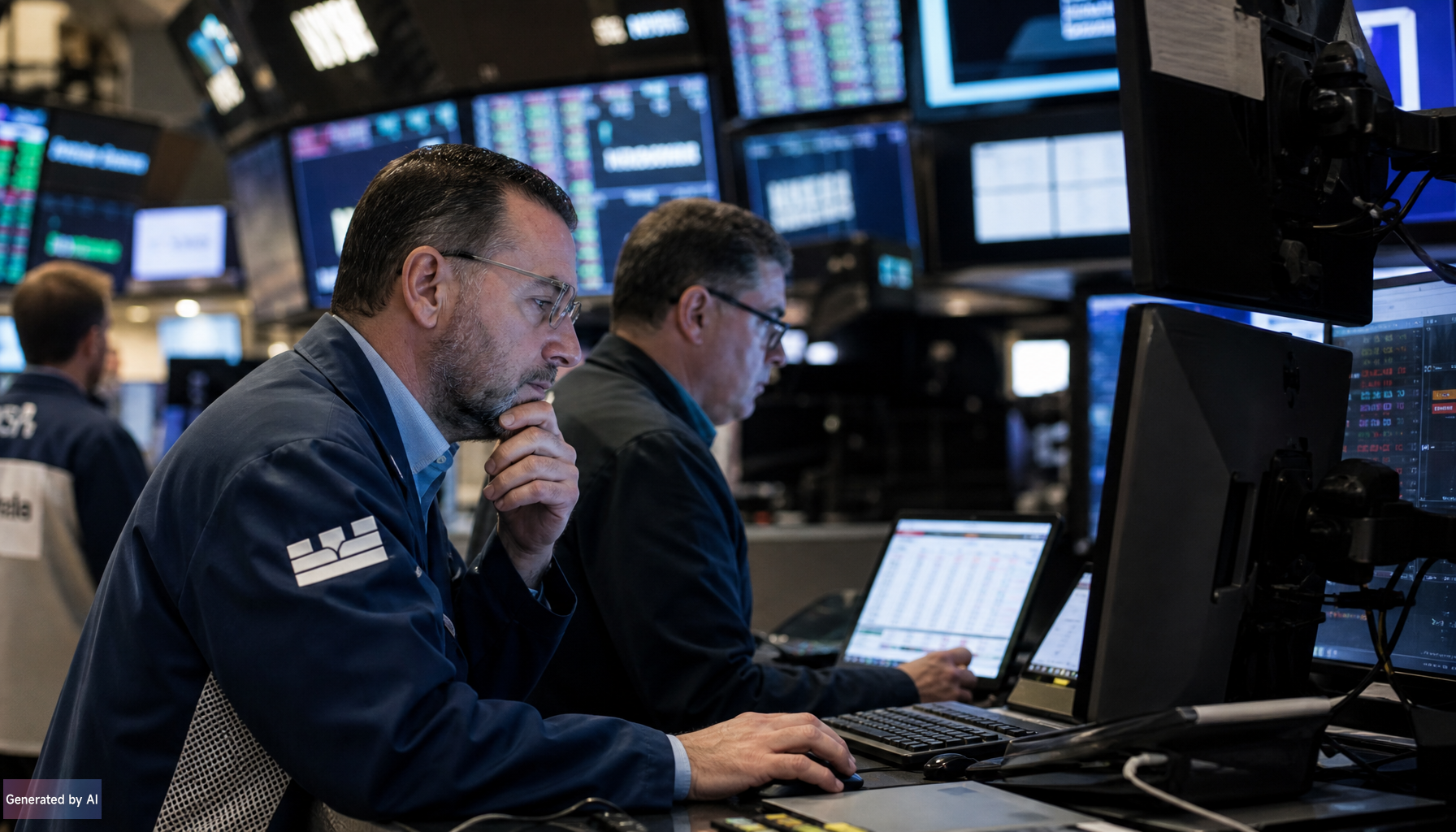
NextFin WeekAhead - This week asks whether the consumer can keep carrying the tape while inflation, Treasury yields, and oil remain the market’s binding constraints. U.S. and U.K. equities are closed Monday, May 25 for Memorial Day and the U.K. Spring Bank Holiday; Tuesday is the first full cash-equity session, with Thursday’s PCE/GDP cluster and Costco, Best Buy, and Dollar Tree earnings as the main tests.
Data as of 2026-05-22 16:00 ET. All prices reference Friday’s regular-session close unless noted. Sources cited inline.
Markets & Macro
Executive Summary
- Thursday is the macro hinge - April core PCE consensus is +0.3% m/m, Q1 GDP gets its second estimate after the advance +2.0% print, and personal spending is expected at +0.5% m/m.
- Consumer confidence opens the week - Tuesday’s Conference Board index is expected at 91.9 versus 92.8 prior; a print below 90 would sharpen concern that high gasoline prices are leaking into discretionary demand.
- Retail earnings become the consumer stress test - Costco, Best Buy, and Dollar Tree report Thursday, giving investors a clean split between warehouse value, electronics discretion, and lower-income basket pressure.
- Treasury yields remain the valuation governor - 10Y yield closed at 4.56% and 30Y at 5.07%, below midweek stress levels but still high enough to keep term-premium and auction-size anxiety alive.
- Iran de-escalation is the oil swing factor - U.S.-Iran talks are moving toward a 60-day ceasefire extension and broader negotiations, but the deal was not fully finalized as of Saturday; WTI’s -8.37% weekly move shows how much risk premium can come out quickly.
Macro Pulse - The Backdrop
The market enters a compressed four-day week with liquidity thinner than usual and the calendar back-loaded. Nasdaq lists Memorial Day, Monday May 25, as a full U.S. market closure, while the London Stock Exchange lists the same date as a non-trading day for the Spring Bank Holiday (Nasdaq; LSE). The practical effect is that Tuesday’s open has to digest weekend Iran headlines, last week’s Treasury stress, and a full slate of macro data without Monday price discovery in cash equities.
The forward question is whether the inflation-consumer mix is improving fast enough to keep the Fed on hold without reviving hike risk. April FOMC minutes showed that a majority of participants saw policy firming as potentially appropriate if inflation remained persistently above target, a sharper framing after energy prices and tariffs raised pass-through concerns (Axios, May 20). Thursday’s PCE, GDP revision, durable goods, income, spending, and jobless claims cluster is therefore one event: if inflation is sticky while spending stays firm, the 10Y can move back toward 4.70%; if PCE cools and spending slows, duration gets relief but retailers may lose the growth argument.
Cross-Asset Performance - Last Week
| Asset | Close | Week % | YTD % |
|---|---|---|---|
| S&P 500 | 7,473.48 | +0.88% | +8.97% |
| Nasdaq 100 | 29,481.64 | +1.22% | +16.96% |
| Dow Jones | 50,579.70 | +2.13% | +4.54% |
| Russell 2000 | 2,869.23 | +2.72% | +14.39% |
| MSCI EAFE | 103.98 | +2.22% | +7.15% |
| US 10Y Yield | 4.56% | -3 bps | [N/A] |
| US 2Y Yield | 4.13% | +4 bps | [N/A] |
| DXY | 99.186 | -0.02% | +0.99% |
| WTI Crude | $96.60 | -8.37% | +67.50% |
| Brent Crude | $103.54 | -5.24% | +69.40% |
| Gold | $4,523.20 | -0.85% | +3.11% |
| Bitcoin | $75,443.91 | -4.57% | -14.98% |
| Ethereum | $2,063.39 | -7.18% | -31.23% |
| VIX | 16.70 | -9.39% | - |
| MOVE | 78.43 | -1.80% | - |
Sources: FMP, FRED supplemental CSV, CoinGecko. May 22 close unless noted.
Key Levels & Triggers - This Week
| Asset | Bullish above | Bearish below | Key event this week |
|---|---|---|---|
| S&P 500 | 7,525 | 7,350 | Tue confidence, Thu PCE/retail earnings |
| 10Y Yield | - | 4.45% bullish for duration | PCE/GDP Thu, coupon supply focus |
| DXY | - | 98.50 | PCE and Fed speakers |
| WTI | $100 | $93 | Iran deal headlines, EIA Thu |
| Gold | $4,600 | $4,450 | Real-yield and dollar reaction |
| BTC | $78k | $74k | ETF flow stabilization |
| VIX | - | 20+ stress close | PCE or retailer miss |
Levels are approximate support/resistance zones derived from recent price action, not precise technical targets.
US Equities
Equities absorbed Treasury-yield anxiety better than the bond market did. The S&P 500 rose 0.88%, the Nasdaq 100 gained 1.22%, and the Russell 2000 outperformed with a 2.72% rise, while VIX fell to 16.70 (FMP, May 22 close). Sector leadership was defensive but not risk-off: Utilities gained 3.37%, Health Care 3.30%, Real Estate 3.08%, and Technology 2.34%; Communication Services was the only clear laggard at -0.53% (FMP, May 22 close).
This week’s equity test is less about index momentum than consumer quality. Costco, Best Buy, Dollar Tree, Dick’s Sporting Goods, Salesforce, Dell, and HP all report in a compressed post-holiday window. Costco’s estimated $69.6B revenue makes it the cleanest high-income and value-club read, while Best Buy’s estimated $8.8B revenue is a discretionary electronics check at a time when gasoline and insurance costs are competing for wallet share (FMP earnings calendar). Dollar Tree reports Thursday before the open, with company guidance of Q1 sales around $4.9B-$5.0B and EPS of $1.45-$1.60, making traffic and shrink commentary the lower-income stress signal (Dollar Tree IR/MarketBeat, May 2026).
Earnings spotlight - this week:
| Date | Ticker | Time | Why it matters |
|---|---|---|---|
| Wed May 27 | HPQ | AMC | PC and enterprise hardware demand; consensus EPS $0.72, revenue $13.99B (FMP). |
| Wed May 27 | CRM | AMC | Software spending and AI monetization; consensus EPS $3.12, revenue $11.05B (FMP). |
| Wed May 27 | DKS | BMO | Sporting goods and discretionary basket health; consensus EPS $2.87, revenue $5.06B (FMP). |
| Thu May 28 | COST | AMC | Warehouse traffic, membership renewal, and food inflation; consensus EPS $4.98, revenue $69.61B (FMP). |
| Thu May 28 | DELL | AMC | AI server demand and margin mix; consensus EPS $2.95, revenue $34.97B (FMP). |
| Thu May 28 | BBY | BMO | Electronics demand and big-ticket consumer stress; consensus EPS $1.22, revenue $8.82B (FMP). |
| Thu May 28 | DLTR | BMO | Low-income consumer, traffic, shrink, and freight; Q1 guidance sales $4.9B-$5.0B (Dollar Tree IR). |
Macro & Treasuries
The Treasury market remains the central risk asset even after yields eased into Friday. The 2Y closed at 4.13%, +4 bps w/w, while the 10Y closed at 4.56%, -3 bps, and the 30Y at 5.07%, -5 bps (FMP treasury-rates, May 22). The FRED 2s10s spread finished at +43 bps, down from +50 bps the prior Friday, while 10Y breakevens fell to 2.40% and the real 10Y yield was 2.18% as of May 21 (FRED supplemental CSV, May 21-22).
The market’s Treasury problem is not one auction; it is the combination of sticky inflation, fiscal supply, and a high real yield. Treasury’s May refunding statement kept nominal coupon sizes steady at $69B for 2Y, $70B for 5Y, $44B for 7Y, $42B for 10Y, and $25B for 30Y issuance in May, while also projecting a late-July TGA peak near $1T (U.S. Treasury, May 6). A core PCE print above +0.3% m/m would keep the 10Y in the 4.60%-4.75% zone. A +0.2% print with softer spending would open a path toward 4.45%, though that would be a growth signal as much as yield relief.
CME FedWatch - implied probabilities (latest reliable public references):
| FOMC Meeting | Hold | -25 bps | +25 bps |
|---|---|---|---|
| Jun 17 | ~93%-96% | Low single digits | Low single digits |
| Jul 29 | Hold remains dominant | Low-to-mid single digits | Low single digits |
Source: CME FedWatch references compiled by public market commentary; exact Friday-close probabilities were not independently confirmable before publication.
Crypto
Crypto is not confirming the equity bounce. Bitcoin closed at $75,443.91, -4.57% w/w, and ETH fell 7.18% to $2,063.39, while BTC dominance held high at 58.08% (FMP; CoinGecko, May 24). U.S. spot bitcoin ETFs recorded net outflows across six sessions from May 15 through May 22 totaling $1.26B, according to Farside data cited by crypto.news (May 23).
BTC needs a close above $78k to stabilize the range. Below $74k, ETF outflows stop looking like a contrarian reset and start looking like a funding drain. ETH remains the weaker expression until ETH/BTC stops falling; for now, high BTC dominance and negative ETF flows argue for BTC over broader crypto beta.
Commodities - Oil & Gold
Oil. Oil is the market’s cleanest geopolitical transmission channel. WTI closed at $96.60, -8.37% w/w, and Brent at $103.54, -5.24%, as reports of a possible U.S.-Iran 60-day ceasefire extension removed some war premium (FMP, May 22; AP/Axios, May 23). The deal still matters more than the inventory print. A finalized framework and gradual Strait of Hormuz reopening would put WTI $93 in play; failed talks would push the market back above $100 quickly. EIA crude and gasoline stocks are delayed to Thursday because of the holiday.
Gold. Gold slipped 0.85% to $4,523.20 despite a high real-yield backdrop and still-elevated geopolitical risk (FMP, May 22). The key level is $4,600: a move above it would show safe-haven demand regaining control, while a break below $4,450 would point to real-yield pressure and long liquidation. No gold-specific catalyst dominates this week; PCE, DXY, and Iran headlines are the drivers.
Bonds & Credit
Credit still refuses to validate a broad risk-off call. HY OAS was 278 bps and IG OAS 75 bps as of May 21, both tight by historical stress standards and little changed on the week (FRED supplemental CSV). That coherence helps equities, but the cushion is thin. If Thursday’s data pushes real yields higher and retailers warn on margins, spreads have room to widen from very low levels without needing a recession narrative.
Volatility & Sentiment
Volatility is cheap relative to the event cluster. VIX closed at 16.70, down 9.39% w/w, and MOVE at 78.43, down 1.80%, even though Thursday concentrates PCE, GDP, claims, durable goods, EIA inventories, and several retail/tech reports (FMP, May 22). AAII sentiment is not euphoric: bulls fell to 31.7%, bears rose to 43.6%, and the bull-bear spread dropped to -11.9, an unusually low reading (AAII, May 23). CNN Fear & Greed stood at 59, in greed but not extreme greed, as of May 22 (CNN/Finhacker, May 22).
That mix leaves a modest contrarian cushion for equities, but not a free pass. A VIX close above 20 after PCE or Costco/Best Buy/Dollar Tree would signal that the market is shifting from rotation to macro concern. Below 18, protection is still reasonably priced into a data-heavy Thursday.
Economic Calendar - This Week
| Date / Time ET | Event | Consensus | Prior | NextFin Read |
|---|---|---|---|---|
| Tue 08:30 | Chicago Fed National Activity Index | -0.3 | -0.2 | Tier 3; useful growth context after the holiday. |
| Tue 10:00 | CB Consumer Confidence | 91.9 | 92.8 | Tier 1 for this week; below 90 confirms gasoline and rate pressure. |
| Wed 04:00 | Fed Logan Speech | [N/A] | [N/A] | Tier 2; Treasury market will listen for inflation-risk language. |
| Thu 08:30 | Core PCE Price Index MoM | +0.3% | +0.3% | Tier 1; +0.4% revives hike-risk talk, +0.2% helps duration. |
| Thu 08:30 | PCE Price Index YoY | +3.8% | +3.5% | Tier 1; energy pass-through is the concern. |
| Thu 08:30 | Personal Spending MoM | +0.5% | +0.9% | Tier 1; below +0.3% shifts the consumer debate. |
| Thu 08:30 | Personal Income MoM | +0.4% | +0.6% | Tier 2; wage-income resilience matters for retailers. |
| Thu 08:30 | GDP Second Estimate / Corporate Profits | [N/A] | GDP +2.0% advance | Tier 1; watch consumer spending and profit revisions (BEA). |
| Thu 12:00 | EIA Crude / Gasoline Stocks | [N/A] | Crude -7.864M | Tier 2; matters through oil inflation and confidence. |
| Fri 09:45 | Chicago PMI | 49.5 | 49.2 | Tier 2; sub-49 would add growth concern. |
Source: FMP economic calendar, supplemented by BEA release schedule.
Scenario Framework
Base case (55%): Core PCE matches +0.3% m/m, consumer confidence holds near 92, GDP revisions do not change the Q1 story, and retail earnings show value-seeking rather than demand breakage. SPX holds 7,350-7,525, 10Y stays 4.45%-4.65%, WTI trades $93-$100, and VIX remains below 20.
Bull case (25%): Core PCE prints +0.2%, spending slows only modestly, Iran talks finalize a 60-day extension, and Costco/Best Buy/Dollar Tree commentary points to resilient traffic. SPX breaks 7,525, 10Y moves toward 4.45%, WTI tests $93, and BTC reclaims $78k.
Bear case (20%): Core PCE prints +0.4% or higher, confidence breaks below 90, GDP revisions show weaker consumption, and retailers warn that fuel and freight are pressuring margins. SPX loses 7,350, 10Y retests 4.70%, VIX closes above 20, and BTC breaks $74k.
What would change our view mid-week: A core PCE print above +0.3% m/m paired with weak Best Buy or Dollar Tree guidance would move us from base to bear because it combines sticky inflation with visible consumer stress.
Investment Playbook - Positioning Into the Week
- Equities: Neutral-to-mild overweight quality large caps. Entry: add near SPX 7,375 if PCE is in-line. Target / Stop: 7,525 target, stop below 7,300. Invalidation: core PCE +0.4% and VIX >20.
- Treasuries / Duration: Neutral duration with a buy-the-spike bias. Entry: add 5-7Y exposure if 10Y trades above 4.70% without a hotter PCE print. Target / Stop: 4.45% target, 4.80% stop. Invalidation: PCE reaccelerates and Fed speakers keep hikes alive.
- USD: Neutral DXY. Entry: short only below 98.50 after soft PCE. Target / Stop: 97.75 target, 99.50 stop. Invalidation: risk-off from retail earnings.
- Crypto: BTC over ETH, confirmation required. Entry: add above $78k or near $74k support only if ETF outflows slow. Target / Stop: $82k target, $72k stop. Invalidation: another week of $1B-plus ETF outflows.
- Commodities: Neutral oil, tactical long gold. Entry: WTI only above $100 on failed Iran talks; gold above $4,600. Target / Stop: WTI $105 / $96 stop; gold $4,700 / $4,450 stop. Invalidation: finalized ceasefire plus soft inflation.
- Volatility: Own limited Thursday event protection. Entry: VIX below 18. Target / Stop: monetize above 20, close if PCE is in-line and retail earnings are clean.
This is a research view, not personalized investment advice. NextFin readers should size to their own risk tolerance and consult a licensed advisor for individual decisions.
Key Market Signals
A weekly read of the signals we think matter most for the week ahead. Use this dashboard to triangulate where positioning, valuation, liquidity, and risk appetite are pulling the tape.
Signal Dashboard
| # | Signal | Direction | Reading | Implication |
|---|---|---|---|---|
| 1 | Net Liquidity | Bullish | Fed BS $6.714T, TGA $0.781T, RRP $0.001T; net approx. $5.931T, +$42B w/w | Liquidity offsets some yield pressure. |
| 2 | 10Y Real Yield | Bearish | 2.18%, +18 bps w/w | Valuation hurdle remains high. |
| 3 | 2s10s Slope | Neutral | +43 bps, -7 bps w/w | Less bear steepening, but curve still positive. |
| 4 | HY OAS | Bullish | 278 bps, +2 bps w/w | Credit not confirming equity stress. |
| 5 | VIX | Bullish | 16.70, -9.39% w/w | Event protection is affordable. |
| 6 | AAII Bull-Bear Spread | Bullish contrarian | -11.9 pts | Sentiment is cautious, not crowded long. |
| 7 | CNN Fear & Greed | Neutral | 59, greed | Risk appetite positive but not extreme. |
| 8 | BTC ETF Flows | Bearish | -$1.26B over six sessions | Crypto flow bid has weakened. |
| 9 | Oil Risk Premium | Mixed | WTI -8.37% w/w but still +67.5% YTD | De-escalation helps inflation, but level still bites consumers. |
| 10 | Retail Earnings Cluster | Neutral | COST/BBY/DLTR all Thu | Consumer quality becomes observable. |
Legend: Bullish = supportive of risk assets / base case; Bearish = against; Neutral = mixed.
Featured Signals - Deep Dive
Signal 1: Real yields are the valuation constraint
The real 10Y yield rose to 2.18% as of May 21, up from 2.00% a week earlier (FRED supplemental CSV). That is the cleanest reason we do not treat last week’s equity gains as a green light for a melt-up. At a 2% plus real yield, earnings revisions must do more work to justify long-duration multiples, and Thursday’s data can either lower that hurdle or raise it. Invalidation: real 10Y back below 2.05% with core PCE at +0.2%. Trade expression: prefer quality earnings and balance-sheet strength over unprofitable duration until the real-yield channel eases.
Signal 2: Retail earnings are the consumer stress test
Retailers give the market a more actionable consumer read than the headline confidence number alone. Costco can show whether higher-income and value-oriented consumers are still consolidating trips; Best Buy tests big-ticket electronics demand; Dollar Tree tests lower-income traffic, shrink, freight, and basket trade-down. The setup matters because WTI is down sharply on the week but still up 67.5% YTD (FMP, May 22). Invalidation: all three companies report stable traffic and protect margins despite fuel costs. Trade expression: stay selective in consumer discretionary; add only where traffic and margin commentary both improve.
Signal 3: Liquidity is quietly cushioning risk
Our net liquidity proxy improved to roughly $5.931T as the Fed balance sheet fell to $6.714T, TGA declined to $0.781T, and RRP stayed near $1B (FRED supplemental CSV, May 20-22). The weekly gain of about $42B helps explain why credit spreads stayed tight and equities did not buckle under long-end-rate anxiety. Liquidity is a cushion, not a catalyst by itself. It works if PCE is contained and retail earnings are clean. Invalidation: TGA rebuilds faster than expected into quarter-end. Trade expression: keep hedges defined rather than moving outright net short while HY OAS remains below 300 bps.
Signal 4: Crypto flows have turned from support to drag
Bitcoin’s 4.57% weekly decline came with six straight sessions of spot ETF outflows totaling $1.26B through May 22 (FMP; Farside data via crypto.news, May 23). That does not force a bearish crypto view, but it removes the structural-flow argument that helped prior rallies. BTC dominance at 58.08% also says risk appetite inside crypto remains defensive. Invalidation: two consecutive sessions of ETF inflows and a BTC close above $78k. Trade expression: BTC over ETH, and size only after flow stabilization.
Closing - What to Watch
- Mon May 25: Market holiday - NYSE/Nasdaq and LSE closed; expect thinner global liquidity and delayed reaction to weekend Iran headlines.
- Tue 10:00 ET: Consumer Confidence - below 90 would support the consumer-stress narrative; above 94 would help retailers into Thursday.
- Wed-Fri: Fed speakers - Logan, Cook, Jefferson, Williams, Bowman, and Waller can reinforce or soften the minutes’ hike-risk tone.
- Thu 08:30 ET: PCE/GDP/Income/Spending - core PCE +0.4% is the bear trigger; +0.2% is the duration relief trigger.
- Thu 08:30 ET: Jobless Claims - above 225K would shift the debate from inflation to growth.
- Thu BMO/AMC: BBY, DLTR, COST - traffic and gross margin commentary decide whether oil is hurting non-energy spending.
- Thu 12:00 ET: EIA Inventories - a crude build plus finalized Iran deal points WTI toward $93; failed talks point back above $100.
- Fri 09:45 ET: Chicago PMI - a sub-49 print would keep growth concern alive into month-end.
Explore more exclusive insights at nextfin.ai.


