

AsianFin -- Tencent Holdings Ltd. management on Thursday tried to reassure investors as chip shortages are still curbing its cloud business.
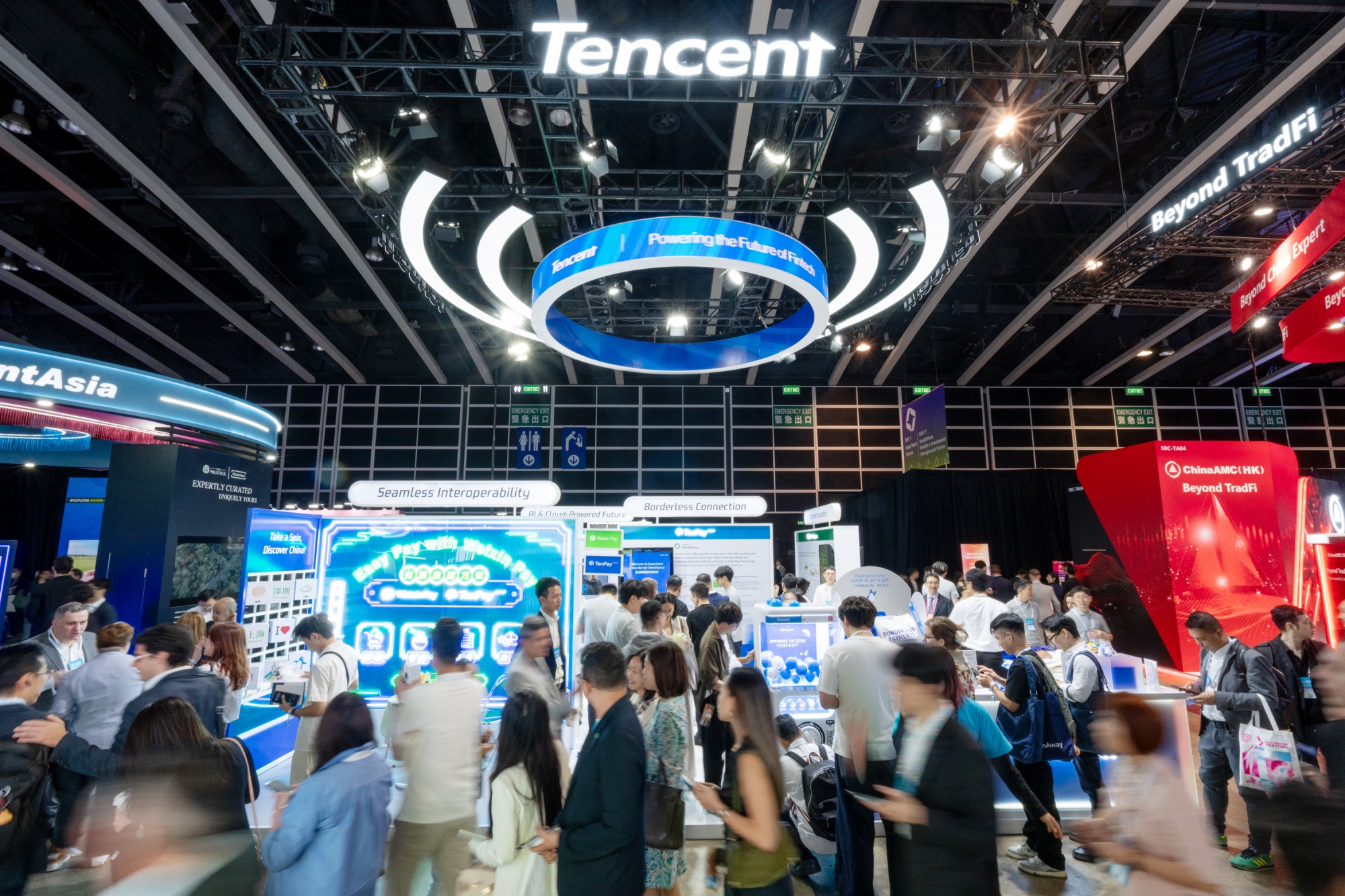
Credit:Tencent
Tencent’s graphic processing units (GPUs) are sufficient for internal use, and improvements in its Hunyuan foundation model and team are ongoing, the President Martin Lau told analysts at an earnings call when asked whether there is a risk that the company’s artificial intelligence (AI) investments are not aggressive enough, potentially losing market share to competitors.
Lau acknowledged chip shortages are constraining the growth of Tencent’s cloud business, which rents out computing to developers. “One constraint of the cloud business growth is the availability of AI chips. When AI chips are in short supply, we prioritize internal use instead of renting it out externally,” Lau said. “If there weren’t an AI chip supply constraint, our cloud revenue would be growing more quickly.”
Tencent has made many improvements in its team, talent acquisition, and Hunyuan infrastructure, as well as the entire Hunyuan research process, and felt satisfied with the progress it has made, Lau said, adding that improvement in Hunyuan capabilities will continue to accelerate.
“The blue-sky scenario is that eventually Weixin, with an AI agent, can help a user do a lot of tasks,” said Lau. “At this time, this is at a very early stage of development.”
Financial results released on Thursday showed Tencent maintained solid top and bottom line for the quarter ended on September 30, but the capital expenditure, or Capex, declined significantly.
Tencent’s revenue rose 15% year-over-year (YoY) RMB192.87 billion ($27.2 billion) for the September quarter, beating an average estimate of RMB188.8 billion, according to Bloomberg. On an IFRS basis, the profit attributable to equity holders of the company, or net income, soared 19% YoY to RMB63.13 billion, while analysts anticipated net income would add around 5% following a 17% YoY increase. Capex shed 24% YoY to RMB13.0 billion after the Capex surged 119% YoY to RMB19.1 billion three months earlier. That marked a 31.9% sequntial decrese in Capex during a period marked by geopolitical volatility and economic uncertainty.
Tencent attributed the stellar growth to its heavy investment in AI technology and leverage of AI tools to boost major businesses. “Our strategic investments in AI are benefitting us in business areas such as ad targeting and game engagement, as well as in efficiency enhancement areas such as coding, and game and video production,” said Tencent Chairman and CEO Pony Ma, or Ma Huateng in a statement.
Tencent said the third quarter saw it enhanced its large language model (LLM) HunYuan’s complex reasoning capabilities, especially in coding, mathematics, and science. HunYuan image generation model is ranked first globally among text-to-image models by LMArena.
“We are upgrading the team and architecture of our HunYuan foundation model, whose image and 3D generation models are now industry leading,” said Ma. “As HunYuan’s capabilities continue to improve, our investment in growing Yuanbao adoption, and our effort in developing agentic AI capabilities within Weixin, will gain further traction.”
Explore more exclusive insights at nextfin.ai.


