


A six-year-old life; a “world first” on Nature publication.
Seven days from treatment to death; over a year before disclosure.
On March 31, 2025, six-year-old girl Mei died after experimental gene-editing for Snijders BlokCampeau syndrome, a rare neurodevelopmental disorder causing a lack of speech and finemotor skills along with autism-associated behaviors. Led by neuroscientist Zilong Qiu at XinhuaHospital, Shanghai, China, the trial proceeded despite thin preclinical evidence and without disclosing death risks or organ toxicity seen in animal testing. Amid the tears of Mei’s family, Qiu faced no discipline and published a Nature paper on February 18, 2026 with Mei’s information all hidden.
Revealed July 23, 2026, Mei’s death sparked debates on research integrity in China and the ethics of gene editing for nonfatal conditions. This essay explores two major dilemmas in contemporary clinical neuroethics through the lens of this tragedy.
I. A Definition for “Normality”: Why gene-therapy in the first place?
Why would a child with a nonfatal condition undergo such risk? The decision was not simply personal. Confoundingly, despite the behavioral symptoms associated with Snijders BlokCampeau syndrome, it is not degenerative, and Mei also appeared relatively mildly affected, functioning typically as a toddler. Ironically, she was not different enough for most people around her to even notice her disorder, but apparently sick enough to become the world's first candidate for this brain gene-editing therapy.
This does not mean Mei lacked disability or that treatment inherently enforces conformity. Rather, it raises a boundary: does intervention relieve suffering and expand ability, or move someone toward a socially preferred “normal”?
This issue manifests in multiple ways. It relates to the concept of neurodiversity asking: why is a particular type of brain being classified as defective in the first place? Among 235 autistic adults, interventions supporting communication, safety, and quality of life were viewed favorably, while normalization-focused goals were rejected. A study of 504 autistic people and community members similarly found opposition to appearing “less autistic,” but support for improving adaptive skills and well-being. The distinction is between reducing suffering and eliminating differences.
“Normality” also shapes neurotechnology: conventional EEG systems often accommodate straight hair better than curled or braided hair, disproportionately affecting certain racial groups. When technologies are designed around limited populations, those users become the implicit “normality.”
Thus, in China, where neurodiversity remains less recognized, medical devices exclusive, and behavioral support limited, Mei and her family’s decision might be the product of pressure from countless “normalities.” Before neuroscience makes someone “normal,” we must ask who defines normality, whom it serves, and whether the person being changed had any say.
II. An Irresistible Academic Incentive: Who should take the biggest blame?
Explaining why the treatment seemed desirable does not explain why it moved illegitimately from animals to a six-year-old child: who stood to gain from changing her first?
Qiu’s responsibility is difficult to separate from the prestige of being first—the world’s first braindirected human gene-editing treatment. This title might have prompted him to proceed despite unresolved animal toxicities, and prompted the hospital to bypass national drug-regulator review and examination of the primate’s safety report. After Mei died, research centered on her mutation was still published in Nature without disclosing her condition.
This emphasis on publication points to a deeper problem: academia’s publish-or-perish culture turns papers, positive results, and “world firsts” into career currency. Under such incentives, Mei’s death remained unpublished, as do negative results from countless animal studies across the field. A 2022 survey found that each standard-deviation increase in publication pressure corresponded to 22% higher odds of questionable research practices. Another notorious example was in Alzheimer’s study, when a highly influential 2006 Nature paper linking Aβ56 to memory impairment gained over 2,500 citations before its 2024 retraction for manipulated data. Thus, a system that disproportionately rewards novelty and beautiful results can make caution professionally costly and allow influential claims to outrun transparency and ethics. The system thereby also creates its own “normality,” marginalizing those who prioritize integrity.
III. A Need for Policy Change: Who gets to hold the pen?
Both problems concern where lines are drawn: between support and assimilation, and between integrity and publication-driven recognition. Policy reform must therefore ask not only where these lines should be drawn, but who gets to hold the pen.
Across both issues, institutions remain powerful stakeholders, shaping ideas of “normality” and rewarding compelling but potentially unethical results. This resembles Steven Lukes’s three dimensions of power: decision-making power determines outcomes, agenda-setting power determines which issues are considered, and preference-shaping power influences what society accepts as normal or desirable. In neuroscience, these dimensions appear in who approves research, which questions receive priority, and why normality and publication productivity become assumed measures of value.
Drawing on Lukes, authority should shift from traditional gatekeepers—senior investigators, funders, journals, etc.—toward shared governance with the people affected the most. The essay proposes a five-layer model for “redistributing the pen” (Figure 1). Framing power lets affected populations define research goals; agenda power gives them influence over funding priorities; decision power shares authority over endpoints and evaluation criteria; interpretive power allows affected people to define what outcomes mean for well-being or scientific value; and corrective power makes governance iterative, requiring any contradictory evidence or signals to trigger reassessment of therapeutic goals and academic incentives.
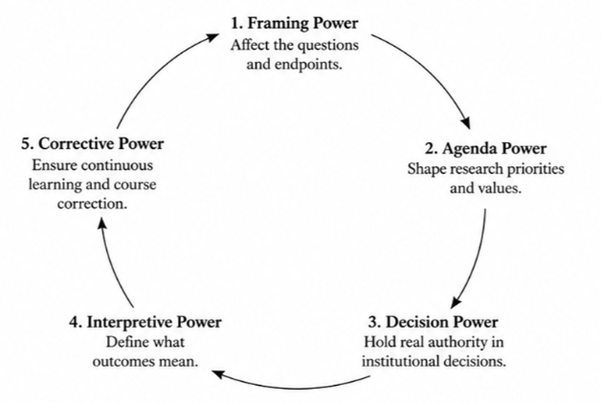
Figure 1. Proposed Five-Layer System for “Redistributing the Pen”.
Conclusion
Ultimately, Mei’s tragedy was a product of unequal power. On her consent form, she was told, “If you don’t want to write, you can draw a smiley face instead of your name.” Yet the consequential lines had already been drawn around her: what counted as abnormal, what risks were acceptable, and what achievements were worth pursuing. Before intensive care, she told her mother, “Mom, I want to go home.” She did not.
Explore more exclusive insights at nextfin.ai.


