
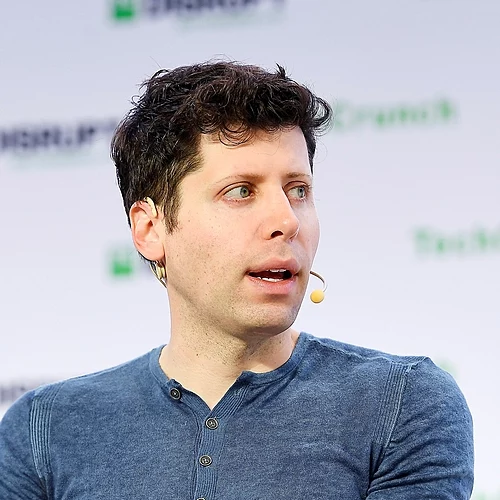
NextFin News - Sam Altman sat for a wide-ranging interview with Tucker Carlson that aired on September 10, 2025, in which Carlson pressed him about the disputed death of a former OpenAI researcher and the family's public accusations. The interview was published on The Tucker Carlson Show's site and circulated widely in national coverage following its broadcast. (tuckercarlson.com)
The segment brought the death of Suchir Balaji, who was found dead in November 2024 and whose passing was ruled a suicide by authorities, back into public focus; Carlson revisited the family's doubts and private examinations that have been widely reported in the press. (theverge.com)
Altman on the death: "It looks like a suicide to me"
Asked directly about the programmer who had complained about OpenAI and later died, Altman described the event as a personal and professional tragedy. He said he had spent time reviewing the available information and medical records and that, on balance, he believed the death was a suicide. In the interview he stated plainly, "Also a great tragedy. He committed suicide. It looks like a suicide to me.
" The remark formed the center of his public response during the exchange.
Response to direct accusation and family claims
Carlson told Altman that the deceased researcher’s mother publicly believes her son was murdered and has suggested the death may be connected to his criticisms of OpenAI. Carlson put the family's claim to Altman, asking if he believed the mother’s allegation that her son was killed on Altman's orders. Altman pushed back on the implication, saying he had not done many interviews in which he was accused of murder and rejecting any suggestion of involvement. He told Carlson he was shaken by the loss and emphasized respect for the family and the deceased: I think his memory and his family deserve respect and care.
Which details Carlson raised during questioning
Carlson listed a series of anomalies cited by the family and private experts: surveillance-camera wiring that had allegedly been cut, blood reported in two rooms, the presence of a wig that did not belong to the deceased, and the fact the researcher had ordered takeout shortly before being found. Carlson framed these points as reasons the official ruling merited further scrutiny, stating, "He was definitely murdered. I think there were signs of a struggle... He had just ordered takeout food... No indication at all that he was suicidal... He's found dead with blood in multiple rooms."
Altman on evidence and why he reached his conclusion
Altman said he reviewed forensic and medical records and that certain details—most notably the weapon purchase and the medical findings he read—led him to conclude the death was a suicide. He said that after examining more detailed reports about the wound trajectory and other medical information, his view was that the available evidence supported that conclusion. He framed his statements as rooted in reports he had read rather than speculation.
Authorities, offers to the family, and the interview dynamic
Altman acknowledged he had not personally spoken to law-enforcement investigators about the case and said he had offered to speak with the family, though he said the family did not take up that offer. Carlson argued the case raised concerns about how authorities handled the matter and suggested public skepticism was therefore understandable. Altman repeatedly returned to expressions of sadness about the death and discomfort at having to defend himself against what he described as an implied accusation: "I haven't done too many interviews where I've been accused of murder,"
he said during the exchange.
Both the interviewed assertions and the details Carlson recited were documented in the television episode and reported in press coverage following the broadcast. The episode is available on The Tucker Carlson Show’s site and has been excerpted and summarized by national outlets. (tuckercarlson.com)
References
Video and episode page: Sam Altman on God, Elon Musk and the Mysterious Death of His Former Employee — The Tucker Carlson Show (September 10, 2025). (tuckercarlson.com)
Press coverage and analysis: The Verge — Tucker Carlson asks Sam Altman about the death of a former OpenAI researcher. (theverge.com)
Feature report: Fortune — "I haven’t had a good night of sleep since ChatGPT launched": Sam Altman on AI and responsibility. (fortune.com)
Related reporting: The Daily Beast — Tucker Carlson asks OpenAI CEO Sam Altman if he ordered Suchir Balaji’s murder. (thedailybeast.com)
Explore more exclusive insights at nextfin.ai.


