
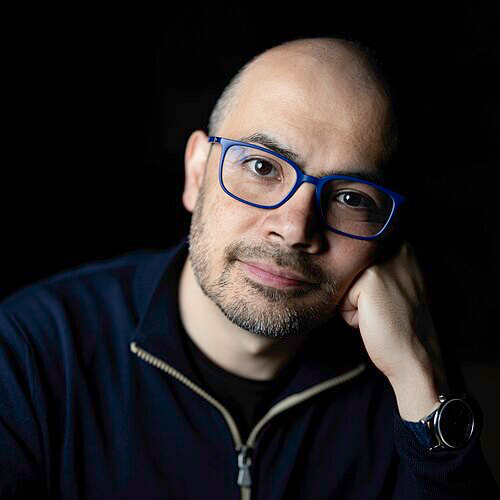
NextFin News - In a brief on-camera exchange recorded for The Economist, Google DeepMind chief executive Demis Hassabis set out a restrained, technical view of artificial intelligence: it is a tool built to extend human inquiry, and it must be built with care. The precise date and location of the recorded interview were not publicly available at the time of publication.
AI as a scientific tool, not a deity
Hassabis pushed back against dramatic metaphors used by others to describe the field. As he told the interviewer, I didn't like it that that kind of language. I think of this as a tool. Like a scientific tool, like a telescope or a microscope.
He explained that tool-making and curiosity define humanity: building more capable instruments is simply a continuation of that tradition. In his account, the goal is to create instruments that allow us to "interrogate the fabric of reality."
Potential benefits of advanced AI
While repeatedly stressing caution, Hassabis pointed to the large-scale benefits he believes advanced AI could deliver. He described the technology as a "meta-technology" that could help tackle major problems, listing examples such as curing diseases and addressing energy challenges. In his words, if the technology is built the right way, "we'll get all the benefits" and AI could help solve many of society's biggest challenges.
Risk awareness and calibrated optimism
Hassabis was frank about the dangers associated with increasingly capable systems. He said there is "a non-zero chance that things could go quite badly wrong if the technology's not built in the right way." At the same time he expressed optimism in human ingenuity: given time, care and focus, and the participation of the best minds across companies, he argued, it is "very possible" to build AI in a safe way.
Applying the precautionary principle as AGI approaches
Describing an AGI moment as one of the most transformative in history, Hassabis urged caution. He recommended using "the sort of precautionary principle here as we approach this AGI moment," a formulation he presented as a practical stance rather than a refusal to innovate. That cautious approach, he suggested, would help capture the opportunities while managing the risks.
Competition, race conditions and the need for standards
Asked how caution can be reconciled with intense corporate and national competition, Hassabis acknowledged multiple race conditions: between companies and between nations. He noted the difficulty in securing international cooperation amid geopolitical fragmentation, but expressed hope that as the arrival of AGI becomes more obvious to a wider public, so too will awareness of attendant risks. From that shared recognition, he proposed that the leading labs could agree on "some sort of minimum standards" as a baseline to build upon.
Humility about timing and the collective task ahead
Throughout the exchange, Hassabis combined technical modesty with a long-term view: he repeated his faith in collective effort and careful engineering, while cautioning that timelines and outcomes are uncertain. He balanced the claim that AI can be "one of those technologies that helps us" with the admonition that its risks must be managed deliberately.
References and related links:
Explore more exclusive insights at nextfin.ai.


