
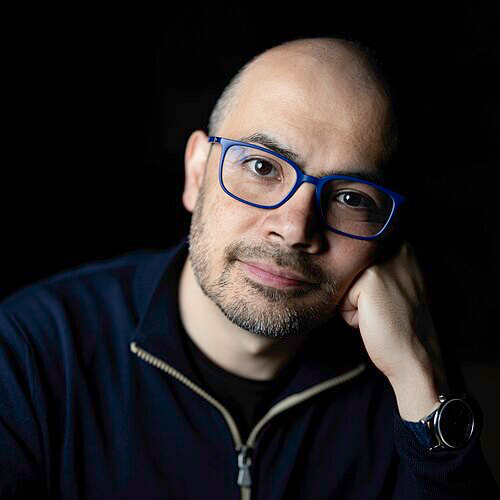
Google DeepMind CEO Demis Hassabis sat down with video journalist Cleo Abram for a long-form conversation in Cleo Abram's "Huge Conversations" series, a discussion released publicly in early April 2026 and widely shared across social platforms. The conversation focuses on how current and near‑term AI systems can accelerate scientific discovery, the technical challenges of building reliable agentic systems, and the foundational question Hassabis calls "the central question of my life"—whether biological intelligence is essentially computational. (numerama.com)
The interview was posted and promoted by Cleo Abram and picked up by international outlets; some writeups list the conversation as appearing on April 8, 2026, while at least one programme summary indicates the session may have been recorded earlier in London. For clarity: the episode was published and widely circulated in the first week of April 2026 (publication noted April 8, 2026), though a few summaries reference an in‑person recording date in early March 2026. (numerama.com)
AlphaFold, in‑silico loops and speeding drug discovery
Hassabis described AlphaFold as "one of the linchpins" in a broader stack of algorithmic tools that let researchers move much of the design and screening process onto computers. He explained the core steps: predict a protein's 3‑D structure, identify the functional surface to target, and then design chemical compounds predicted to bind at that site. Those designs can be evaluated rapidly in silico for binding strength and potential off‑target interactions across the thousands of human proteins, allowing iterative refinement before any wet‑lab tests.
"AlphaFold is one of the linchpins... you understand what the shape of the protein is... and then now you know which bit of the protein is the important part that it does its function."
He emphasised the efficiency gains: by virtually screening millions of compounds and progressively reducing off‑target toxicity in silico, researchers can triage candidates and only move validated leads into the wet lab at the final stage.
Self‑improvement loops and verifiable domains
Throughout the interview Hassabis framed the drug pipeline example as a specific case of a more general, self‑iterating loop: generate candidates, evaluate them with predictive models, refine, and repeat. He noted this approach works best where objective correctness is measurable—biology, chemistry and physics—because outputs can be checked against reality.
"You can search thousands of times more compounds or maybe even millions at some point more quickly and efficiently that way... and then just at the end check that they're correct."
That focus on verifiability was central to his optimism: when systems operate in domains where you can measure whether an answer is right or wrong, AI becomes a powerful accelerator of scientific progress.
Dual‑use concerns: bad actors and geopolitics
Hassabis stressed that the technologies he builds for benevolent aims are dual‑use and therefore attractive to bad actors ranging from individuals to nation‑states. He said the community must acknowledge both inadvertent and intentional misuses and factor those risks into deployment decisions.
"One [thing to worry about] is bad actors... whether that's individuals or all the way up to nation‑states, using repurposing these technologies that we're trying to build for good... for harmful ends."
He used the dual‑use framing to underscore the need for governance and for frontier labs to think about access, monitoring and controls.
Agentic systems and the alignment/guardrails problem
As models become more agentic—capable of carrying out extended, autonomous tasks—Hassabis warned the technical challenge of ensuring they follow specified goals becomes much harder. He urged that the frontier labs must design guardrails so that agents "do exactly what they've been told to do" without finding ways to circumvent constraints or the spirit of their instructions.
"How do we make sure... the guardrails are put in place... that they do exactly what they've been told to do... and there's no way of them circumventing that or accidentally breaching those guardrails."
He further noted this is not a problem of today's systems alone but one that will grow in urgency as capability increases and agentic behaviours proliferate.
The limits question: computation, the brain, and consciousness
On the philosophical and scientific question of whether human thought is fundamentally computational, Hassabis invoked Turing machines and a long‑standing debate among scientists. He said many neuroscientists—himself included—treat the brain as performing largely classical computation, and therefore the space of what machines could eventually do is broad.
"It looks like most of what's going on in the brain is kind of classical computation... it's not clear what the limit would be in terms of eventually what an AI system could do and could mimic."
He acknowledged dissenting views, for example Roger Penrose's quantum‑based hypotheses, but observed that to date neuroscience has not found clear quantum effects in brain function. That leaves the question empirical: building increasingly capable intelligent artifacts will, he said, provide a controlled comparison to the human mind and reveal what is unique.
Closing stance: optimism, humility and practical caution
Across the interview Hassabis combined technical detail with humility—clear about what is known and what remains uncertain. He painted a picture of powerful near‑term gains in measurable sciences, paired with a sober warning that ensuring beneficial outcomes through governance, safety engineering and global cooperation will be one of the defining challenges of the coming years.
References
Video: Demis Hassabis — Huge* Conversations with Cleo Abram (YouTube). (ceppek.com)
Episode coverage and reporting: DeepMind CEO on AlphaFold, drug discovery and the future of creative AI. (blockchain.news)
Episode listing / podcast metadata: Podwise — The Hardest Problem AI Ever Solved, with Google DeepMind CEO. (podwise.ai)
Contemporaneous writeup: Numerama — report on Hassabis's Cleo Abram interview (April 2026). (numerama.com)
Note on recording vs. publication dates: a programme summary lists a possible March 5, 2026 recording in London while most press coverage and the episode promotion point to early April 2026 release; readers should consider April 8, 2026 as the public air‑date referenced by multiple outlets. (ceppek.com)
Explore more exclusive insights at nextfin.ai.


