
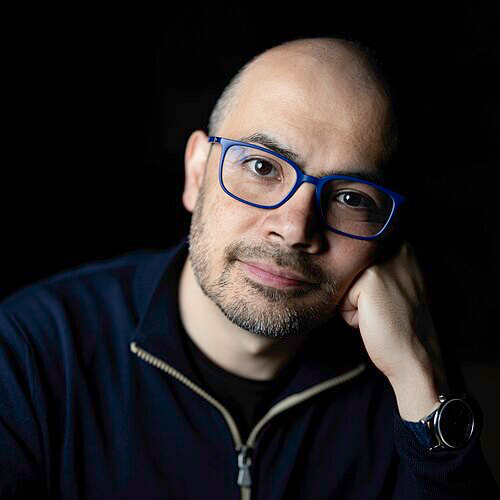
NextFin News - In the closing episode of Google DeepMind: The Podcast for 2025, Professor Hannah Fry sat down with Demis Hassabis, CEO and co‑founder of Google DeepMind, for an annual check‑in recorded and published on 2025-12-16. The conversation ranged from practical breakthroughs — AlphaFold and Gemini 3 — to the scientific strategies and remaining challenges on the path to AGI. The interview was recorded for Google DeepMind’s podcast series and broadcast as the season finale.
Host: Professor Hannah Fry. Guest: Demis Hassabis, CEO & co‑founder, Google DeepMind. Occasion: Final episode of Google DeepMind: The Podcast (2025 season finale), published 2025-12-16.
Progress, priorities and the route to AGI
Hassabis set out DeepMind’s high‑level approach: a balance between engineering scale and scientific innovation. As he put it, "Effectively, you can think of as 50% of our effort is on scaling, 50% of it is on innovation."
He emphasised that both are needed to reach AGI: "My betting is you're going to need both to get to AGI."
He described recent model advances — including the release of Gemini 3 — and said the pace of progress this year felt like compressing a decade into months: "It feels like we packed in 10 years in one year."
Root‑node problems: translating research into impact
Hassabis reiterated DeepMind’s belief in solving deep scientific problems as a path to broad benefits. He pointed to AlphaFold as a proof point and listed other ambitions: materials science, better batteries, and fusion. On fusion specifically he said the company had deepened collaboration with industry partners to accelerate containment and material design: "We've just announced a partnership... with Commonwealth Fusion... to help them contain the plasma in the magnets and maybe even some material design there, as well."
He framed these efforts as both addressing climate and enabling downstream capabilities — for example, cheap, clean energy enabling desalination and new industrial processes.
Consistency, reasoning and the "jagged" intelligence problem
Hassabis identified uneven model performance as a central weakness on the road to AGI. He described current systems as having high peaks and low troughs of ability: "They're really good at certain things, maybe even PhD level. But then, other things, they're not even high school level... it's very uneven still."
He highlighted the need for more consistent reasoning and better use of internal "thinking" steps so models reliably double‑check outputs rather than forcing an answer: "We have thinking systems now that, at inference time, they spend more time thinking... But it's not super consistent yet in terms of, is it using that thinking time in a useful way to actually double‑check and use tools to double‑check what it's outputting?"
From AlphaGo to AlphaZero and continual learning
Reflecting on AlphaGo’s history, Hassabis described two phases: systems built on human knowledge and the later step of self‑discovery. He likened current foundation models to AlphaGo — starting from a compressed corpus of human knowledge — and argued the next step is AlphaZero‑style self‑discovery and continual online learning: "One of the things missing from today's systems is the ability to online learn and continually learn... we train these systems, we balance them, we post‑train them, and then they're out in the world. But they don't continue to learn out in the world, like we would."
Hallucinations and measures of confidence
On hallucinations, Hassabis acknowledged they remain a practical challenge and proposed that models must learn to express uncertainty in the way AlphaFold expresses confidence: "I think we need that... the better the models get, the more they know about what they know... they could introspect... and actually realize for themselves that they're uncertain."
He explained that token‑level probabilities do not directly map to whole‑statement confidence and that using planning and verification steps will be important to reduce unwarranted answers that become hallucinations.
World models, simulation and why they matter (Genie, Veo, SIMA)
Hassabis returned often to the theme of world models and interactive simulation as essential for embodied understanding and robotics. He argued language contains much about the world, but that spatial, motor and sensory dynamics are hard to capture purely in words. On world models he explained: "What we mean by world model is this sort of model that understands the causative and effect of the mechanics of the world—intuitive physics, but how things move, how things behave."
He described projects such as Genie and Veo (video/world models) and SIMA (simulated agents), and noted combined loops where a SIMA agent learns inside a Genie‑generated environment could create effectively infinite curricula: "Whatever the SIMA agent is trying to learn, Genie can basically create on the fly... you could imagine a whole world of setting and solving tasks, just millions of tasks automatically."
Grounding simulation: benchmarks, physics and hallucination control
On realism versus plausible but incorrect simulation, Hassabis acknowledged trade‑offs: some creative hallucination is useful for novelty, but not when training physical agents. He described building physics benchmarks using accurate game engines to measure whether models truly capture Newtonian dynamics and said current video models are impressive to the naked eye but not yet physics‑grade: "They're kind of approximations... they're not accurate enough yet to rely on for, say, robotics."
Societal impact, economics and governance
Hassabis reflected on historical parallels with the Industrial Revolution and urged early thinking about distributional effects. He repeated the familiar formulation that AI is overhyped in the short term but underhyped in the long term, and warned of likely disruption across jobs and institutions: "It's probably going to be 10 times bigger than the Industrial Revolution, and it will probably happen 10 times faster... more like a decade, unfold over a decade, than a century."
He suggested policy options to explore — universal basic income and novel democratic allocation mechanisms — and called for more international cooperation and stronger institutions to manage the scale of change.
Safety, competition and responsibility
Hassabis noted the tension between fierce commercial competition and the need for collaborative governance. He said most leading labs are trying to be responsible, and that enterprises will favour reliable, well‑guarded systems: "If you think about agents, and you're renting an agent to another company... that other company is going to want to know what the limits are and the guardrails are on those agents."
At the same time he acknowledged the risk of rogue actors and the possible need for international standards should incidents occur.
Computation, consciousness and the Turing question
Returning to a long‑held philosophical interest, Hassabis rehearsed his central research question: whether the mind is fully computable and whether Turing‑style machines can in principle model consciousness. He said nobody has yet found non‑computable phenomena in the universe and that his working hypothesis is that computation may suffice: "Nobody's found anything in the universe that's non‑computable, so far."
He allowed that quantum effects are an open possibility, but stated his current stance is to work on the assumption that classical computation can, in principle, model mind until physics demonstrates otherwise.
Personal reflections: stewardship, pressure and motivation
Hassabis described the mixture of exhilaration and responsibility at the field's frontier. He spoke candidly about workload and the emotional complexity of steering powerful technologies: "It's unbelievably exciting... But then... we understand it better than anybody the enormity of what's coming."
He framed his mission as helping to steward AGI safely for humanity and said that, after that work, he hopes for a well‑earned sabbatical.
Closing note
The interview presents a consistent throughline: DeepMind is pursuing both engineering scale and new science, using demonstrable short‑term wins in science and product to inform longer‑term ambitions. World models, reliable reasoning, continual learning and careful governance are singled out as necessary steps. Hassabis repeatedly described simulation and agents as both research tools and practical pathways to more general capabilities while underscoring the ethical and institutional work that must accompany technical progress.
References
Podcast episode: Google DeepMind: The Podcast — The Future of Intelligence with Demis Hassabis (published 2025-12-16).
Episode listing and distribution: Google DeepMind: The Podcast on Apple Podcasts (episode published 16 Dec 2025).
Model announcement referenced in the interview: A new era of intelligence with Gemini 3 (Google blog) (Nov 18, 2025).
DeepMind podcast archive: Google DeepMind — The Podcast pages.
Explore more exclusive insights at nextfin.ai.


