
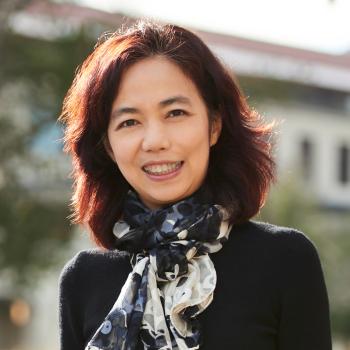

NextFin News - This article reports on a recorded conversation featuring Fei‑Fei Li alongside artists Holly Herndon and Mat Dryhurst. The discussion took place in the wake of artist‑led projects such as Holly Herndon and Mat Dryhurst’s Play from Memory (included in MoMA’s online SOUND MACHINES program, March–April 2024) and The Call at Serpentine (2024). The panel centers on how artists are experimenting with generative systems, the ethics of data and consent, and technical directions for future AI systems.
A civilizational moment and personal responsibility
Fei‑Fei Li opens by situating the present moment as epochal. In her words, "I do believe we're in a civilizational moment
" and she emphasizes a scientist’s duty in that context: "I'm one of the people in our generation that brought this science into the world
." Li frames that responsibility not as abstract guilt but as an obligation to shape how the technology is developed and deployed.
Data as a deliberate choice — not free fuel
Li reiterates a theme she has long advanced: the centrality of data. She describes her contribution to the field as beginning with "realizing the importance of data
" and warns that the constant production of digital traces does not justify taking them "for free and without the considerations." Throughout the conversation she treats dataset construction as an artistic and engineering act, arguing that decisions about what to include, how to curate and how to obtain consent change the character of models and their outputs.
Design, art and imagining consequences
Li draws a distinction among science, art and design: while science asks how things work, she says, "design and art questions are more about the actual impact of AI in the world." She stresses that artists help imagine possible futures and the consequences of new systems, and she welcomes their unconventional methods of probing and perturbing models.
Human‑centered AI and the locus of intelligence
On values and agency, Li is unequivocal: "Machines don't have independent values. Machine values are human values
." She urges that discussions of human‑centered AI begin with a clear account of what we want these systems to do for people. Li also reframes intelligence as relational, arguing that "intelligence is something that happens between us" — an interplay among people, artifacts and environments rather than a solitary property of a model.
Spatial intelligence: the next frontier
Looking forward, Li names "spatial intelligence" as the next major frontier for the field. She explains that her lifelong work in computer vision naturally extends toward perception for action: vision "is not just for the sake of passive viewing. Vision is for doing things, for moving, to navigate the world, to manipulate things, to collaborate." For Li, progress in spatial reasoning opens new capabilities for embodied systems, robots and collaborative tools that must be designed with human needs and contexts in mind.
Embodiment, voice and the human experience
Li reflects on embodiment and the intimate character of human expression. She notes how voice and singing carry personal identity and physical presence, and recognizes the ways artists like Holly Herndon and Mat Dryhurst explore the boundary between the embodied human and disembodied machine output. Her remarks underline a broader point: as models reproduce and remix human traits, their relationship to identity and consent becomes a moral and design problem.
Artists, participation and new governance practices
Championed throughout the discussion is the idea that artists are essential interlocutors for technologists. Li praises artists' capacity to propose scenarios that technologists might not imagine and urges their involvement "down in the trenches" with engineers and institutions. She highlights participatory experiments — for example, curated training sets and data trusts used in recent art projects — as prototypes for how broader consent and shared ownership might be implemented.
Democratizing AI and avoiding a repeat of past harms
Li cautions against leaving AI design to small groups. She states plainly that "everybody has to have a say in AI
" and warns that reproducing the closed, extractive patterns of the earlier internet will invite unintended harms. She calls for wider participation, public negotiation of defaults, and institutional practices that foreground consent and accountability.
Below are references related to the projects and exhibitions discussed during the conversation and to further reading on artists working with generative systems.
References:
- SOUND MACHINES — MoMA (March 11–April 11, 2024)
- "All together now: Holly Herndon and Mat Dryhurst on their AI choir at the Serpentine" — The Art Newspaper (October 4, 2024)
- Works from SOUND MACHINES: Play from Memory — MoMA
- Fei‑Fei Li: Spatial Intelligence is the Next Frontier in AI — published transcript/recording
Explore more exclusive insights at nextfin.ai.
