
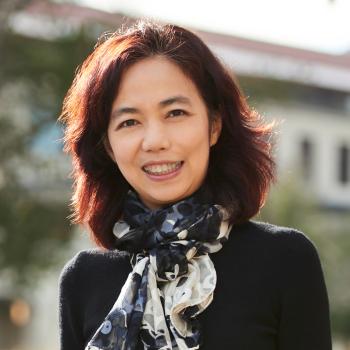

NextFin News - Dr. Fei-Fei Li addressed a Korean audience as part of the SBS D Forum (SDF2025) program in a session titled "The Next Frontier of AI with Dr. Fei Fei Li." The session was scheduled for 2025-11-13 at Dongdaemun Design Plaza (DDP) in Seoul and was presented to viewers as part of the SDF2025 program; the session page notes it was pre-recorded remotely. Questions during the session came from Korea's AI industry leaders, including representatives from the Korea Artificial Intelligence Software Industry Association and CEOs from companies such as TwelveLabs, Furiosa AI, and SBVA.
Across roughly forty minutes of remarks and a Q&A, Dr. Li laid out a programme to move AI beyond seeing and talking toward systems that can understand, generate and act within three-dimensional spaces. The following selections present her core statements organized by topic.
What is spatial intelligence?
Dr. Li defined spatial intelligence as an aspect of human intelligence that complements language. In her words, humans can perceive and understand space in very very profound ways
, and this includes our ability not only to interpret the 3D world but to create it, reason with it, move around in it and interact with it. She summarized the position succinctly: that is complementaryary to language intelligence and that I think it's the new frontier of AI.
Large world models: promise and definition
On why large world models are needed, Dr. Li explained that advancing spatial intelligence requires models that capture the structure of the physical world. She said these models must model the world which we call large world models
and must enable systems to understand to reason and to generate different kinds of worlds and to interact with it.
She argued the field requires new methodologies and architectures to represent 3D (and 4D with time) phenomena, and noted: do we need explicit 3D representation? Do we use implicit 3D representation? How do we put in data where we don't have too many 3D data and to get 3D output out? All these are incredible technically challenging questions.
Applications: creativity, design and embodied AI
Dr. Li described concrete application areas where spatial intelligence will matter. For creative work and visual storytelling she said current production tools are time-consuming and that spatial models could give creators tools that are a lot more powerful to express their stories and emotions
. On design, including architectural work, she noted spatial intelligence can help humans reason more effectively about space and objects. For embodied AI she highlighted robotics, saying that spatial intelligence can help training robots for example to interact and reason within space
, and called embodied AI a frontier with applications across health care, manufacturing and other sectors.
Limits of generation and understanding
Answering a question about the limits of understanding through generation, Dr. Li observed that spatial generative models face special constraints. She noted that generative spatial outputs must be both semantically correct and geometrically precise: if I generate a cup on the table, that cup has to be very well structured in terms of representing the space. And when a person or a robot attempt to interact with the cup, it also has to be quite perfect.
She further argued that deeper forms of understanding — such as affordances and functional uses of objects — go beyond today's generation capabilities: what about what we call affordance or the function of an object… that is a very deep understanding of the spatial world that doesn't really transpire through pure generation at least not through today's technology.
When might we see a 'ChatGPT moment' for world models?
Dr. Li compared the GPT moment to what a large world model would need to achieve. She described the GPT moment as an application moment of a very powerful large language model
and said that for world models to have comparable moments, teams must productize strong LWM capabilities into compelling products. She said World Labs had been developing proprietary models and had been one of the first to demo the generation of 3D space in a way that is on par or sometimes even surpass humans' capability
, but cautioned that virality and product fit would depend on the use case and customer sectors.
Data, manufacturing and national strategy
Responding to questions about manufacturing data, Dr. Li praised Korea's technology ecosystem and stressed the centrality of high-quality data. She said key challenges include how to scale the data, how to close the loop between data and modeling
, and urged lowering barriers to data access to enable broader innovation. On national-level AI export strategies she recommended partnerships rooted in shared values and the implementation of responsible AI framework[s] to be transparent and respectful… from data sources to model design to application guard rails.
Compute, scaling laws and technical constraints
On whether world models will demand more compute than LLMs, Dr. Li explained that spatial data are richer and can be extremely large in scale. She noted that a single hour of 4K video equates to an enormous number of tokens and that world models will face heavy compute demands: because the complexity of the data is even richer we are going to run into a lot of compute demand.
At the same time she observed that the field is young: many world models discussed so far remain smaller than the largest LLMs, but that may change as the field matures.
Embodied intelligence, robotics and affordance
Dr. Li tied spatial intelligence directly to embodied AI, describing how robust world models could create the simulation and training environments that robots need to learn. She emphasized that generating geometrically and functionally accurate worlds is a prerequisite for robots to interact reliably with objects and that spatial models can provide the synthetic training data necessary for safe, generalizable robotic behavior.
Human-centered AI, inequality and governance
Dr. Li reiterated her long-standing position that AI should be developed with human well-being at the center. She framed AI as a powerful tool and warned that tools are double-edged: they can help build civilization but can also hurt intentionally or unintentionally. She urged policies that incentivize entrepreneurship, open-source efforts and public-sector investment, saying a healthy ecosystem needs big companies, entrepreneurs, government, higher education and nonprofits. On social imbalance, she advocated public education and communication: it is very important that we rapidly invest in the communication and education of the public of what AI is
, and she called for governments, companies and educational institutions to work together on guard rails and regulatory policy.
Jobs, education and public attitudes
Asked whether there will remain exclusively human jobs, Dr. Li replied that jobs will shift and evolve but not disappear wholesale. Using historical perspective, she compared the decline of agricultural employment to the rise of software engineering, and argued that new roles will emerge. On education she said the last century's framework must be updated: instead of training memory, schools should teach students how to learn, how to be creative and how to use AI tools effectively. She encouraged widespread participation in AI, stressing that everybody can participate in AI
whether or not they have an engineering degree, and that citizens should also participate in democratic governance of AI.
Closing and next steps
Dr. Li closed by restating her focus on spatial intelligence, robotic simulation, robotic learning and computer vision, and by inviting continued collaboration with students, researchers, entrepreneurs and business leaders in Korea: I definitely look forward to continue to collaborate with students, researchers, colleagues, entrepreneurs, business leaders in Korea and I hope to visit in the future.
References
Program and speaker information: SDF2025 Program (SBS D Forum) and Fei Fei Li — Speaker Page (SDF2025).
Background on World Labs and spatial intelligence reporting: Reuters — Fei-Fei Li raises $230m to launch World Labs and additional reporting on spatial intelligence ambitions: Forbes — Fei-Fei Li on spatial intelligence.
Explore more exclusive insights at nextfin.ai.
