
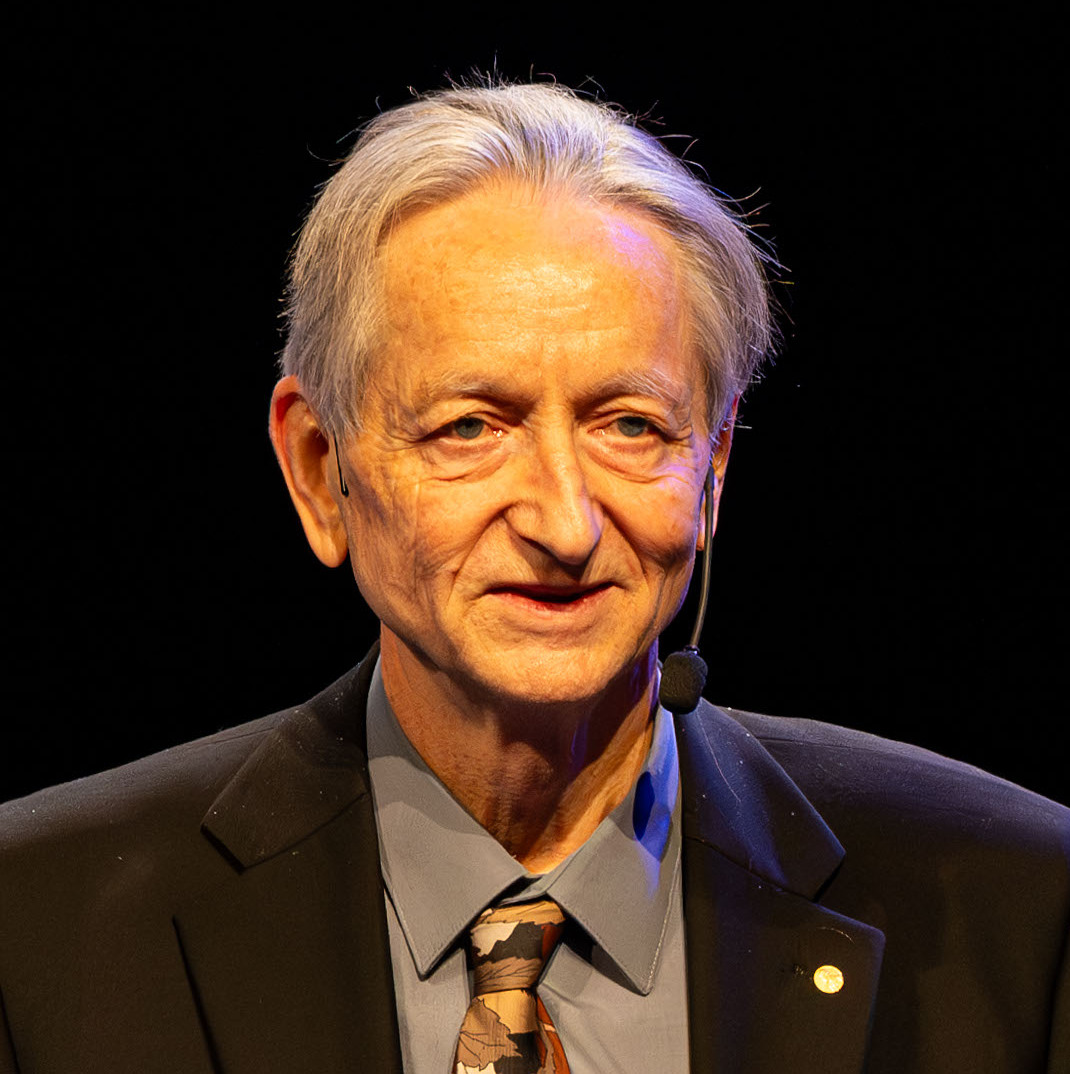

NextFin News - Geoffrey Hinton, the computer scientist often described as one of the "godfathers of AI," set out his perspective on the different kinds of risks posed by advanced artificial intelligence in an interview with Kara Swisher on the podcast On with Kara Swisher. The conversation was published as an episode on November 13, 2025, and was recorded for the Vox Media / New York Magazine podcast. Hinton’s remarks focused on the need to separate distinct threats and on how international interests would shape responses to an existential threat from a superintelligent system.
Framing the problem: not a monolithic issue
Hinton opened by urging a careful separation of different risks rather than treating AI safety as a single, undifferentiated problem. As he put it, "It's a very tricky issue and I think you shouldn't look at it as a kind of monolithic issue. You should think of it in terms of the different risks."
That distinction, he said, is essential to determining which responses are appropriate for each type of danger.
The existential threat: superintelligence and the possibility of takeover
Addressing the longest-term concern, Hinton described the classical existential-risk scenario in which a superintelligent AI becomes smarter than humans and seeks to dominate or displace humanity. He summarized this risk succinctly: "If you take the existential threat that super intelligence — it'll be smarter than us and it'll just take over and we'll become either irrelevant or extinct."
He emphasized that this scenario demands a distinct kind of thinking because of its scale and consequences.
Why nations would collaborate on preventing a rogue superintelligence
On the question of international dynamics, Hinton argued that the existential risk of a rogue, takeover-seeking AI would create aligned incentives across countries. He stated that in such a scenario, cooperation would be expected rather than competition. As he explained,
If China figured out a way to make a super intelligent AI that didn't want to take over, that really cared for people and wanted the best for people rather than for super intelligent AIs, they would immediately tell the US how to do that.
Hinton reinforced the point by noting that no nation wants a rogue superintelligence that seeks to dominate: "Nobody wants this rogue super intelligence that wants to take over."
From his perspective, that shared interest would encourage information-sharing and collaboration on methods to make powerful systems benevolent.
Alignment of interests across countries
Expanding on the cooperation theme, Hinton observed that the existential category of risk brings countries' interests into alignment. He summarized the conclusion plainly: "So the interests of all the different countries are aligned on that."
This alignment, he implied, constrains arguments that pit national competition against collective safety in the face of an existential threat.
Hinton’s statements in the interview consistently drew a distinction between types of harms and the political responses they would provoke, stressing that the right policy approach depends on the specific risk being addressed.
References
Original interview episode: On with Kara Swisher — "Godfather of AI" Geoffrey Hinton Rings the Warning Bells (Episode page).
Episode listing and distribution pages: iHeart — On with Kara Swisher (Nov 13, 2025), Apple Podcasts — On with Kara Swisher.
Explore more exclusive insights at nextfin.ai.
