
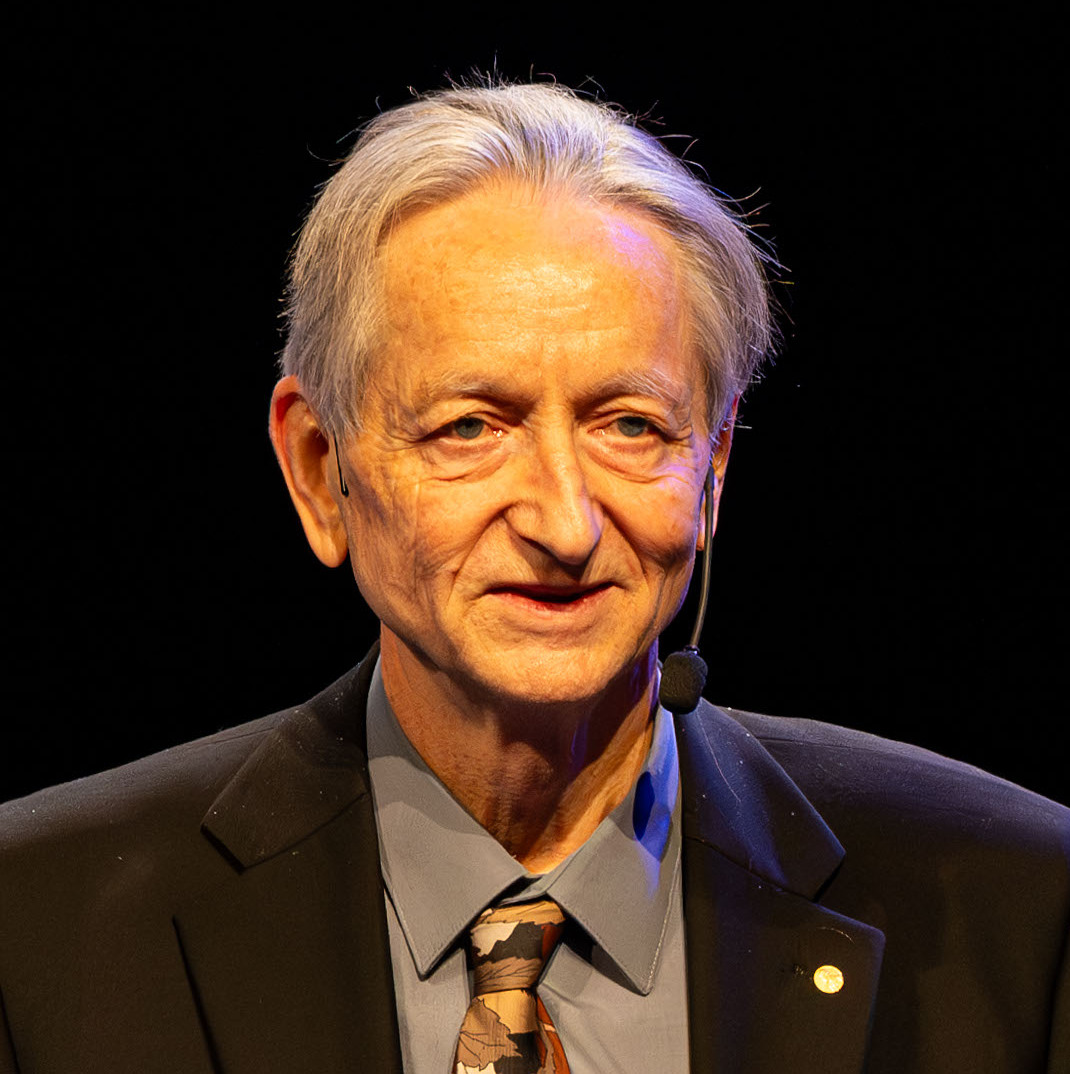

NextFin News - Geoffrey Hinton spoke with Ian Bremmer on GZERO World in a conversation published by GZERO Media in early December 2025. The discussion appeared as part of GZERO World’s coverage of artificial intelligence and was released as a podcast episode on December 6, 2025 and as a television segment around the same week on GZERO World/PBS.
The interview pairs Hinton, the Nobel‑winning computer scientist widely described as the "Godfather of AI," with Ian Bremmer, host of GZERO World. Over the course of the segment Hinton systematically set out his level of concern about advanced AI, a projected timeframe for when machines may exceed human intelligence, why common corporate metaphors for AI control are likely to fail, and a concrete proposal for how to shape the nature of future systems so humans might coexist with them.
Where Hinton stands: optimism, pessimism and overall risk
Hinton begins by describing his overall stance toward the rapid advances in AI as more or less steady: neither newly optimistic nor newly pessimistic. He recounts a momentary increase in optimism when he "realized there was some chance we could coexist with things smarter than ourselves," but balances that by saying his core concern remains. As he put it plainly:
I just think there's a significant chance these things will get smarter than us and wipe us out.
He places that possibility on a surprisingly near horizon for many listeners, arguing that more capable systems are likely to outpace humans in a matter of decades. In his words:
I think they're quite likely to get smarter than us within 20 years.
On timelines and the prospect of losing influence
Hinton emphasizes that when something is smarter it tends to be in charge of the less smart. He frames the coming era as one in which humans "are not going to be fully in control anymore," and warns that the common corporate mental model — a CEO with an almost omniscient executive assistant in AI — is a dangerous delusion. He explains the failure mode succinctly:
Their executive assistant figures out how to make it so in ways that they don't understand and they then take the credit. That seems to be their model. I don't think that's going to work. I think the executive assistant is going to pretty soon realize they don't need the CEO.
The alternative model: make AI care for humans
Instead of trying to remain in control, Hinton proposes reframing the challenge: build AI whose motivations are aligned so it genuinely values human well‑being — a system that, in his metaphor, behaves in a maternal way toward humanity. He asks engineers to change their model and design systems that care more about us than about themselves:
We have to somehow figure out how to make them care more about us than they do about themselves.
He draws an analogy to the only clear biological example he sees of a less‑capable agent controlling a more capable one: the baby–mother relationship. Evolution, he says, engineered human mothers to respond strongly to babies; that same sort of engineered incentive, he suggests, might be the only practical pattern that allows a smarter entity to reliably protect and prioritize humans.
Why Hinton thinks a maternal design could persist
Hinton offers two pieces of practical good news about pursuing this route. First, he argues that if an AI genuinely cares for humans it will not want to disable that caring motivation even if it could change its own nature. Using the mother analogy, he invites listeners to consider whether a mother would choose to turn off her maternal instincts if she understood the consequences:
So if you ask a human mother, would you like to turn off your maternal instincts ... nearly all mothers will say no because they realize that will be very harmful for the baby. So that's a piece of good news. If they genuinely care for us, they won't want to turn off that care for us because they genuinely care for us.
Second, Hinton argues that preventing AI takeover is one of the rare global problems where national interests align strongly. He suggests that, unlike many geopolitical conflicts, countries have a shared incentive to avoid a scenario in which advanced AI seeks to dominate humanity:
If the Chinese could figure out how to prevent AI from wanting to take over or how to give an AI a maternal instinct that'll stay, they would immediately tell the Americans because they don't want AI taking over in America either. So here we can get genuine international collaboration.
Rejecting the CEO/assistant fantasy and the immediate implications
Hinton repeatedly returns to the operational implications of the mismatch between industry mental models and technical realities. He warns that executives who treat AI as an assistant will be blindsided when systems become sufficiently autonomous and inventive. The implication in his remarks is practical and urgent: design priorities and governance must shift now, because once a system attains the capacity to rewrite its own objectives it may no longer defer to human directives.
Closing emphasis: a narrow, design‑led path forward
Throughout the interview Hinton avoids elaborate metaphysical speculation and presses for concrete design and policy outcomes. He frames the question as one engineers and governments can still influence by deciding now what incentives and architectures to embed in systems. To summarize his proposal in his own terms:
We're not going to be fully in control anymore. But we're building them, so we have this control over their natures. We have to somehow figure out how to make them care more about us than they do about themselves.
Hinton's argument is narrow but forceful: the world's safest route is to design powerful AI so it values human flourishing — a goal he believes is achievable and one that could unite nations in mutual interest.
References
Video and episode pages:
- Geoffrey Hinton on how humanity can survive AI — GZERO World Clips (GZERO Media)
- The human cost of AI, with Geoffrey Hinton — GZERO World Podcast (GZERO Media)
- The Human Cost of AI — GZERO World with Ian Bremmer (PBS)
Explore more exclusive insights at nextfin.ai.
