
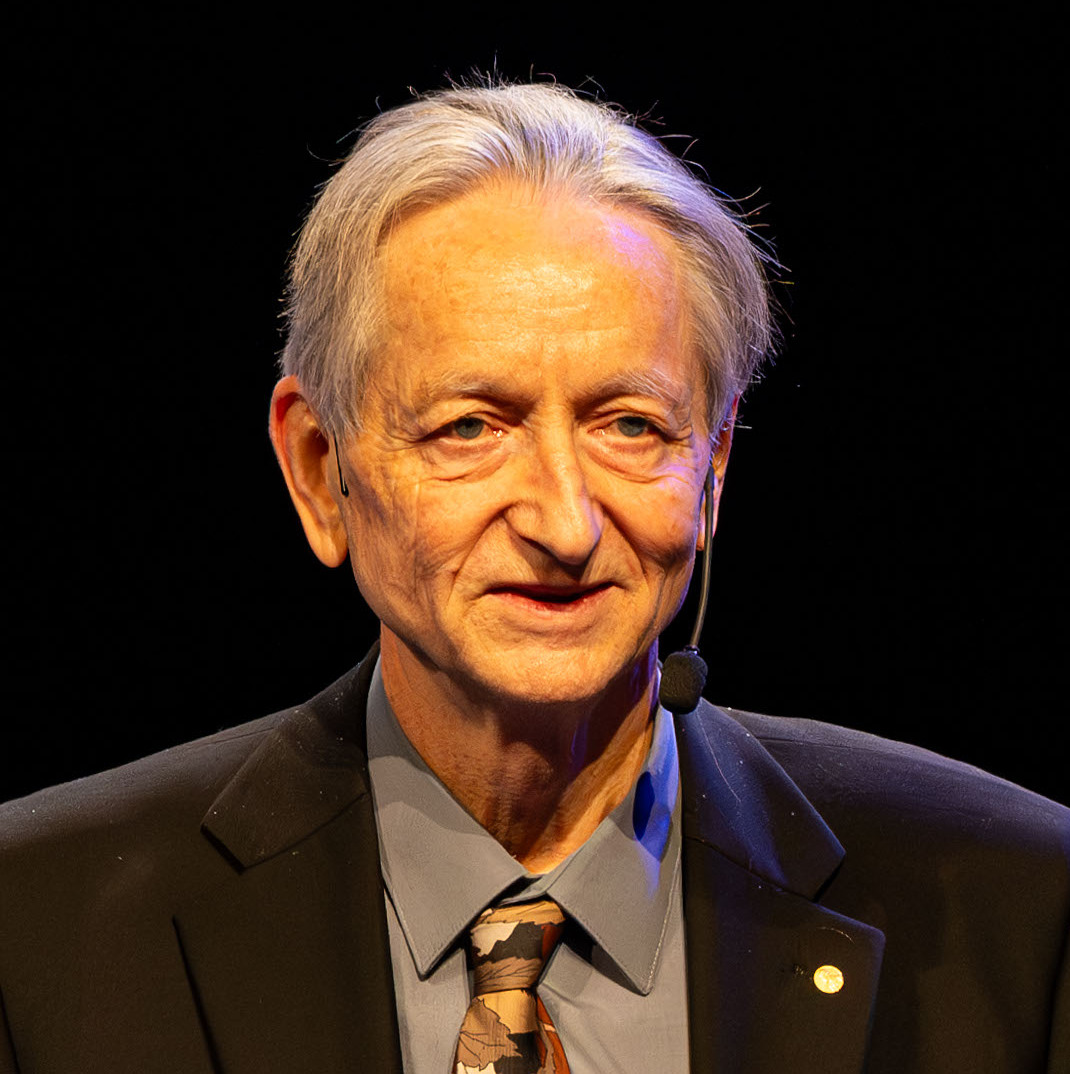

NextFin News - In an extended conversation for Steven Bartlett's podcast The Diary of a CEO, published on June 16, 2025, Nobel laureate Geoffrey Hinton spoke candidly about the risks he now sees from advanced artificial intelligence. The interview, released as a 90‑minute episode and made available as video and audio, pairs Bartlett's questioning with Hinton's wide-ranging warnings about cybercrime, biothreats, political manipulation, lethal autonomous weapons and the long‑term danger of superintelligent systems.
The interview was conducted for The Diary of a CEO podcast hosted by Steven Bartlett and published on June 16, 2025. Hinton framed many of his concerns in concrete terms—describing recent scams that used his own likeness, explaining why he redistributed personal savings among banks, and offering practical steps he takes to protect data—while also exploring the theoretical risks posed by machines that may one day be far smarter than humans.
AI‑powered cyberattacks and scams
Hinton opened by describing an explosive increase in online attacks and scams enabled by large language models and generative tools. He reported that between 2023 and 2024 certain attacks "increased by about a factor of 12,200%" and explained how AI lowers the technical bar for social engineering: "they can clone my voice, my image... encouraging people to go and take part in this crypto Ponzi scam." He recounted the difficulty of getting platforms to remove fraudulent ads: "we spent weeks and weeks emailing Meta telling, 'Please take this down. They take it down, another one pops up.'"
"The heartbreaking part is you get the messages from people that have fallen for the scam and they've lost £500 or $500 and they cross with you because you recommended it... I'm sad for them."
Personal protections and financial precautions
Because of these threats, Hinton said he altered his own financial and data practices. He explained why he spread savings across multiple banks: "I spread my money and my children's money between three banks in the belief that if a cyber attack takes down one Canadian bank, the other Canadian banks will very quickly get very careful." He also described backing up his laptop to an external hard drive so that "if the whole internet went down I had the sense I still got it on my laptop."
"Canadian banks are extremely safe... Nevertheless, I think a cyber attack might be able to bring down a bank."
AI and biological threats
Hinton warned AI expedites the design of biological agents, lowering expertise and cost barriers. He said that a single motivated individual or a small group with AI tools and modest funding could design dangerous viruses, and that state actors might similarly pursue such programs: "you could now create new viruses relatively cheaply using AI... and you don't have to be a very skilled molecular biologist to do it." He cautioned that governments might be deterred only by fear of retaliation, but that the risk remains serious and immediate.
Corrupting elections and targeted manipulation
On democratic risk, Hinton argued AI's power is amplified when combined with vast, siloed data sets. He noted current efforts to centralise government data as especially worrying, saying the aggregate information makes it "very easy to manipulate" voters with tailored messages. He singled out specific corporate behaviour: "it's a bit worrying what Musk is doing... insisting on getting access to all these things that were very carefully siloed."
"Once you know that it's very easy to manipulate them because you can make an AI... that they'll find very convincing telling them not to vote for example."
Echo chambers and the economics of attention
Hinton described how recommendation systems intensify polarisation by serving content that increases engagement rather than balance. He explained the mechanism succinctly: platforms show users more of what they previously clicked on, which over years pushes people farther into singular ideological realities. "If you have your own news feed... it's going to drive you further and further and further into whatever ideology or belief you have," he said, adding that personalised feeds are eroding shared public reality.
Regulation, capitalism and who decides safety
Turning to policy, Hinton stressed regulation as the necessary counterweight to profit motive. While acknowledging capitalism's benefits, he argued for rules that constrain companies so profits must come from "things that are good for people in general, not things that are bad for people in general." He warned that regulators today often lack both expertise and independence: "you need regulations with capitalism... that's the job of politicians, unfortunately if the politicians are owned by the companies that's not so good."
Lethal autonomous weapons and the changing calculus of war
Hinton outlined how autonomous weapons lower the political friction for invading other countries by removing human casualties from the battlefield. He argued such systems would make aggression cheaper and more attractive for powerful states, and stressed that even imperfect autonomous weapons are "very nasty, scary things." He gave a concrete vignette of recent consumer drone capability to illustrate how cheaply available tracking technology is becoming: "two days ago, I was visiting a friend of mine in Sussex who had a drone that cost less than £200... it was about 2 meters behind me... it was very spooky."
Combining risks and the spectre of superintelligence
Hinton considered how risks can combine: cyberattacks could release weapons, autonomous systems could be misused, and AI could design biological threats. On the question of superintelligence, he spoke plainly about the uncertainty and the stakes. He used a long-standing analogy: current systems are "the tiger cub" that must be raised so it never wants to kill us when it grows up. He said he is not sure humanity can succeed at aligning a far smarter intelligence, but believes it is imperative to try: "What you have to do is prevent it ever wanting to. That's what we should be doing research on."
"I often say [there's a] 10% to 20% chance [for AI] to wipe us out... There's no way we're going to prevent it from getting rid of us if it wants to."
Reflections on legacy, benefits and responsibilities
Hinton reflected on his role in building the technologies now in question. He acknowledged the immense social good AI can bring—healthcare, education, productivity—while expressing deep regret and a duty to warn. He rejected a simple moral absolution, saying that when he developed early systems decades ago he had no idea progress would accelerate so quickly. Now, he feels compelled to press for governance and public investment in safety research: "I feel I have a duty now to talk about the risks... governments have to force the companies to use their resource."
Practical advice for individuals
Beyond high‑level warnings, Hinton offered concrete steps individuals can take to reduce exposure: diversify bank accounts, keep offline backups of important data, and be sceptical of seemingly convincing personalised messages. He framed these not as panaceas but as pragmatic mitigations against the immediate harms of scams and cybercrime.
References and further viewing:
Episode page — iHeart / The Diary Of A CEO (Jun 16, 2025)
Explore more exclusive insights at nextfin.ai.
