
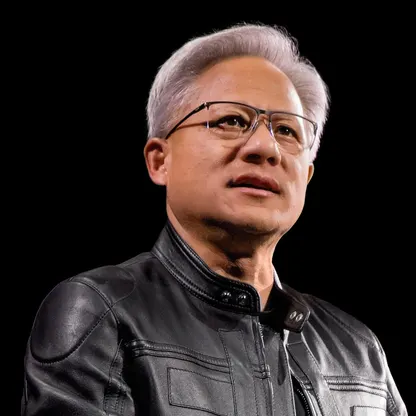

NextFin News - On Jan. 29, 2026, NVIDIA CEO Jensen Huang spoke briefly with reporters at Taipei’s Songshan Airport after returning from a trip to mainland China. Huang, who said he had met customers, partners and government officials during the visit, addressed the status of the H200 AI accelerator and broader supply and policy questions affecting NVIDIA’s business in Greater China.
The exchange was informal and conducted with field reporters at the airport; Huang’s remarks touched on licensing, orders and supply, production constraints at TSMC, China’s manufacturing capacity, and the tension between national security and technology leadership.
H200 license and Chinese approval
Huang opened by describing the status of the H200 export authorization, saying the paperwork was close to completion and expressing hope for a positive outcome from Beijing. He told reporters, The H200, the actual license for H200 is being finalized. And I'm hoping that also the Chinese government would allow Nvidia to sell the H200, so they have to decide and I'm looking forward to a favorable decision.
He repeated his belief that the chip would be welcomed by customers in China: I think that H200 is very good for American technology leadership. It's also very good for the Chinese market and the customers would very much like to have H200.
Orders, supply planning and TSMC coordination
Huang emphasized that formal purchase orders will be the signal that market access is real and actionable. He said that NVIDIA prioritizes customers that place orders and that, for now, the company has supply to support its existing commitments. In his words, We always prioritize customers that place orders and so the first thing that we need is orders and we have a supply that supports all of our existing customers.
He described the next steps if approvals come through: If H200 is approved, we will work with TSMC to schedule and plan the supply and deliver as fast as we can.
TSMC capacity and Taiwan’s energy limits
Turning to manufacturing capacity, Huang warned of constraints tied to wafer demand and local energy availability. He said his expectation was that demand for TSMC wafers and capacity would exceed Taiwan’s available energy, and he framed that as positive for TSMC’s global footprint: My expectation is that the demand for TSMC wafers and capacity will far exceed the amount of energy available in Taiwan. And so, so I think that's great for TSMC. TSMC has a global footprint now.
China’s manufacturing strengths and military reliance
Huang acknowledged China’s advanced manufacturing capabilities while drawing a line on military procurement. He observed that China is one of the world's largest chip manufacturers and said the premise that a nation's military would rely on foreign chips is implausible: The idea that that Chinese military would rely on American chips makes no sense just as American military would never rely on Chinese chips.
He noted that there is ample technology and supply for domestic use.
Balancing national security, technology leadership and politics
Huang framed the situation as one of finding a balance between national security, economic strength and technological leadership. Reporting on interactions with U.S. policymakers and the broader political context, he said the objective is to simultaneously achieve national security as well as technology leadership as well as economic leadership
and that every country must find its own balance. He added that President Trump has found a balance and has encouraged NVIDIA to re-engage in China with the H200:
President Trump has found his balance and he encourages us to go back to China with H200 and extend Nvidia's America's technology leadership and AI leadership.
Practical next steps and a wait-and-see posture
Throughout the exchange Huang reiterated that the practical markers of progress will be the issuance of licenses and the arrival of purchase orders. He urged patience while regulatory and commercial processes run their course: And so I'm looking forward to a good decision. And so we just have to wait patiently.
References and related coverage: Investing.com — Reuters dispatch, Jan. 29, 2026; Business Recorder — Reuters summary, Jan. 29, 2026; Channel NewsAsia — Jan. 29, 2026.
Explore more exclusive insights at nextfin.ai.
