
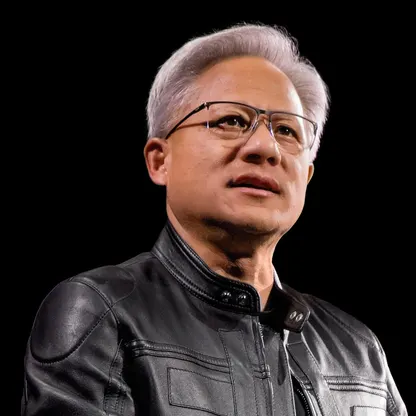
NextFin News - On November 20, 2025, Nvidia CEO Jensen Huang spoke with Ed Ludlow on Bloomberg's "The Asia Trade" following a U.S. Commerce Department announcement authorizing exports of advanced Nvidia systems to the UAE and Saudi Arabia. The Commerce Department said it had authorized the equivalent of up to 35,000 Nvidia Blackwell chips to Abu Dhabi-based G42 and to Saudi-backed Humain, subject to stringent security and reporting conditions. In the interview, Huang focused on the longstanding U.S. concern over preventing the diversion of sensitive technology and described how Nvidia has addressed those concerns in practice.
On the U.S. government's central ask: preventing diversion
When asked about the specific controls the U.S. government was requiring, Huang said the core element was familiar and straightforward: to prevent diversion. He framed the question as one the industry and regulators have grappled with for years, and emphasized that the expectation of preventing unauthorized transfer has long been a central part of export policy.
That element has been around for a long time. It is to prevent diversion.
Evidence and investigations into alleged diversions
Huang told the interviewer that Nvidia has actively investigated concerns and tested deployments worldwide. He said the company has pursued every reported concern and has repeatedly sampled and inspected data centers, finding no evidence that systems have been diverted to prohibited destinations.
Over the years, people have speculated about diversion. We've chased down every single concern and we've repeatedly tested and sampled data centers around the world and found no diversion.
How Nvidia believes compliance can be achieved
On mechanisms to meet U.S. conditions, Huang outlined several possible approaches. He said compliance can be implemented in different ways depending on the customer and deployment model. One clear path he mentioned is operating the systems on American cloud platforms; another is introducing technological or procedural safeguards to make sure equipment cannot be rerouted or misused.
And there's a lot of different ways to comply. And one of them, of course, is to have it be run by American cloud. Another way is just to make sure that we have measures put in place, whether technology or processes, to ensure that no diversion happens.
Commitment to ongoing rigor and monitoring
Huang stressed that vigilance will continue. He described the company’s approach as rigorous and ongoing, with monitoring and safeguards maintained as a matter of routine. The emphasis in his remarks was on practical, verifiable measures and sustained oversight rather than one-off assurances.
And so this is an area that we'll continue to be rigorous on.
Huang's remarks came amid wider reporting on the Commerce Department's conditional approvals and the U.S. government's insistence on tight security and reporting requirements tied to those sales. The Commerce Department issued its statement on November 19, 2025, and Bloomberg published the interview clip on November 20, 2025.
References
Full interview clip and transcript: Bloomberg — Nvidia CEO Huang Says There's No Diversion of Chips Overseas.
U.S. Commerce Department statement: Statement on UAE and Saudi Chip Exports — U.S. Department of Commerce, November 19, 2025.
Reporting on the approvals and related context: Reuters — US authorizes export of advanced American semiconductors to companies in Saudi, UAE.
Explore more exclusive insights at nextfin.ai.


