
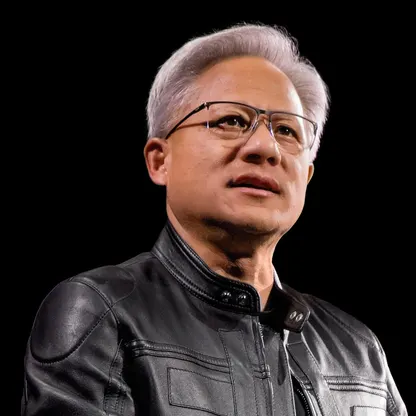

On January 21, 2026, at the World Economic Forum Annual Meeting in Davos, Switzerland, Nvidia founder and CEO Jensen Huang spoke on the mainstage in conversation with BlackRock CEO Larry Fink. The remarks, delivered during a packed session, focused on how artificial intelligence will reshape jobs, industry and national infrastructure.
Europe and the Opportunity to Lead in Physical AI
Huang began by addressing Europe's industrial strengths and the opportunity they present. He told the audience that "the thing that's really really quite exciting for Europe is remember your industrial base is so strong. The industrial manufacturing base in Europe is incredibly strong." He urged European nations to seize a strategic moment: "This is your opportunity to now leap past the era of software. United States really led the era of software."
You don't write AI, you teach AI.
He argued that combining manufacturing capability with artificial intelligence opens the path to "physical AI or robotics," calling robotics "a once-in-a-generation opportunity for the for the European nations."
AI as Infrastructure and the Need for Energy
Huang framed AI not merely as software but as an infrastructure imperative. He warned that countries must "get serious about increasing your energy supply so that you could invest in the infrastructure layer so that you could have a rich ecosystem of artificial intelligence here in Europe." He described the scale of the buildout plainly: "This is the largest infrastructure buildout in human history."
Jobs Created by the AI Buildout: Trades and Technical Roles
From that infrastructure lens, Huang catalogued the kinds of work the AI expansion will require. He emphasized that new employment opportunities will be practical and hands-on: It's wonderful that the jobs are related to tradecraft
, he said, listing categories of workers who will be needed to build and maintain AI facilities.
We're going to have plumbers and electricians and construction and steel workers and network technicians and people who install and fit out the equipment.
Huang highlighted that many of these jobs do not require advanced academic credentials but will be essential to constructing the physical systems for AI.
Salaries and Labor Shortages in Construction of AI Facilities
Pointing to market effects already visible in the United States, Huang noted rising compensation for workers building AI-related facilities. He said salaries in this segment "have gone up nearly doubled" and added that "we're talking about six figure salaries for people who are building chip factories or computer factories or AI factories." He also warned of an acute shortage, stating the industry "have a great shortage in" such skilled labor.
AI, Tasks and Purpose
Huang articulated a distinction between tasks and the purpose of work. He argued that AI automates tasks rather than erasing the underlying purpose that gives jobs value. By automating routine activities, AI allows professionals to focus on higher-value activities and — in Huang's view — can increase demand for skilled workers in roles that support those purposes.
You don't write AI, you teach AI.
Closing Thoughts
Throughout the conversation Huang returned to three interlocking themes: treat AI as national infrastructure, invest in energy and buildout capacity, and recognize the jobs and industries that will expand as a result. His remarks emphasized a practical, industrial view of AI's effects, centering on the construction, installation and operation of the systems that will power future applications.
References
Video and coverage of the session and related reporting:
- NVIDIA Blog — ‘Largest Infrastructure Buildout in Human History’: Jensen Huang on AI’s ‘Five-Layer Cake’ at Davos (January 21, 2026)
- Fortune — Six-figure plumbing and construction jobs are coming, Nvidia CEO Jensen Huang says (January 21, 2026)
- World Economic Forum — Annual Meeting 2026 (Davos)
Explore more exclusive insights at nextfin.ai.
