
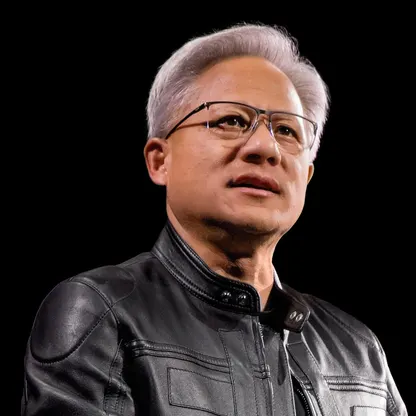

On Tuesday, February 3, 2026, during the general session of 3DEXPERIENCE World in Houston, Texas, Jensen Huang, founder and CEO of NVIDIA, joined Pascal Daloz, CEO of Dassault Systèmes, on stage to discuss a strategic partnership that connects Dassault’s virtual-twin technologies and NVIDIA’s accelerated AI platform. The conversation, held at 9:00 a.m. Central Time at the George R. Brown Convention Center, laid out a shared vision for industry-scale "world models," virtual companions and a new class of AI-driven infrastructure.
The following is a structured presentation of Jensen Huang’s core statements from that on-stage conversation, organized by topic. Quotations and paraphrases are taken from the participants’ remarks during the session.
Reinventing the computing stack
Huang framed the moment as a fundamental reinvention of computing: “We’re reinventing the computing stack all together.” He contrasted past structured design workflows — where every geometry and material was specified — with a future dominated by generative computing models. In his description, AI becomes foundational across industries and will be treated as critical infrastructure: "Just as water was infrastructure, electricity is infrastructure, internet was infrastructure, now artificial intelligence will be infrastructure."
From structured representations to generative world models
Explaining how digital representation will change, Huang said the next era moves beyond language models to what he called world models, grounded in industry, engineering and science. He noted that "LLMs do not build satellites. They don't design aircraft. They don't discover cancer therapies. You do and we help you to certify it." The world model makes virtual twins truly generative, combining simulation with AI to represent and predict real‑world behavior.
Virtual twins as knowledge factories
Huang emphasized that virtual twins are not mere applications but "knowledge factories"
where know‑how is enriched and results are trusted. He projected that design and validation will increasingly occur digitally: "In the future... we're going to spend 100% of the time in digital... we'll be designing everything, operating everything really as a virtual twin and realizing your vision for the first time."
He described a workflow in which designers move from 2D to parametric 3D, simulate in real time and then integrate design with software and operation.
Physics‑aware AI and accelerated simulation
To bridge simulation speed and physical fidelity, Huang presented physics‑informed AI approaches. He introduced a technology he called PhysicsNemo — a physics‑aware AI framework that can be trained by principled simulators or work alongside them — and argued this fusion enables predictions orders of magnitude faster: "It's grounded in the laws of physics but able to predict 10,000 times faster."
He used the analogy of animals predicting motion without solving equations to illustrate how AI can emulate physical behavior efficiently.
Life sciences and the language of life
On biological modeling, Huang said the first step is to learn the language of life — DNA, proteins and cells — so AI can interpret and translate between biological and human languages. He described generative capabilities that can produce proteins, chemicals or materials with designed properties: "Once you could learn something... we can translate between human language and the language of biology... generate new proteins that could be used for a drug or generate new chemicals... generate new materials that could be stronger, more heat resistant, lighter."
Generative design and the expansion of engineering possibilities
Discussing generative design, Huang highlighted surrogate and emulation models that enable exploration of vast design spaces. He predicted that design tools will produce many candidate solutions for engineers to refine: "I want you to explore this, I want you to explore that... give me three designs... give me 10 designs."
He framed agents and companions as collaborators that augment designers rather than replace them, noting that the number of tool users and tools will expand because each designer will manage a team of AI companions.
Factories, AI factories and model‑based design
Huang described factories as hybrid systems — physical and virtual — that will be modeled, simulated and operated inside virtual twins. He said product engineering and factory engineering will increasingly influence one another and that large AI factories require planning with model‑based design (MBSE/MBD): "We design, we plan, we simulate everything in MBSSE before we build it... we even run the network and run the supercomputers inside the virtual twin before we even break ground."
He estimated the scale of AI factory infrastructure, describing gigawatt AI factories as extremely large investments that demand precise digital planning.
Virtual companions, agents and knowledge protection
Huang spoke about agentic virtual companions that codify individual expertise and preferences: "That companion... will codify your skills, codify your preferences, codify your habits... that is your companion."
He stressed that these companions capture proprietary experience and should remain private and protected: "It's not going to be in the cloud, not going to be public because it captures your expertise."
Companions act as assistants and managers for teams of agents, coordinating design exploration and execution.
Certification, compliance‑by‑design and trust
Huang repeatedly returned to certification and trust. He argued that virtual twins and world models make compliance an integral, upstream part of design: "The recollections could be automatically ingested... the conformity is constantly verified which means now we are moving... it's by design it's a compliance by design."
He emphasized the role of simulation and validated models in reducing the time and cost of certification while increasing safety and trust.
The significance of the Dassault–NVIDIA partnership
Framing the partnership in historical context, Huang recalled a quarter‑century collaboration rooted in graphics and CUDA, now extended to AI and Omniverse. He summarized the joint objective as delivering a "knowledge factory" powered by real‑time simulation and accelerated computing so virtual twins and AI operate as one: "Together with NVIDIA, we're uniting decades of industrial leadership with NVIDIA's AI and Omniverse platforms to transform how millions of researchers, designers and engineers build the world's largest industries."
Huang closed by thanking the community of engineers and reaffirming the long partnership: "Without all of you and the amazing work that you do... many of the things that our engineering and scientists pursue wouldn't have an opportunity to come to life."
References
Press coverage and event information related to the conversation and partnership announcement:
3DEXPERIENCE World 2026 — Event page (Feb. 1–4, 2026, Houston)
Explore more exclusive insights at nextfin.ai.
