
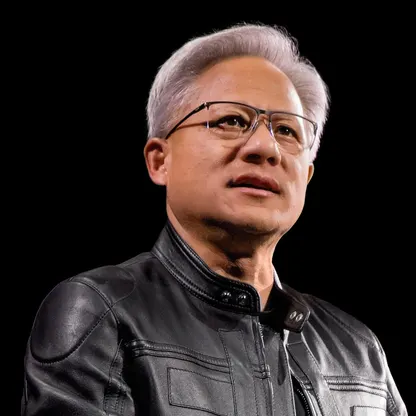
NextFin News - On December 3, 2025, NVIDIA founder and CEO Jensen Huang spoke in a fireside chat hosted by John J. Hamre at the Center for Strategic and International Studies in Washington, D.C. The conversation, held at 5:00 p.m. ET, focused on the United States' role in the unfolding AI industrial revolution and the practical steps needed to secure leadership.
Huang's remarks argued for a restrained public discourse and a concentrated emphasis on applying AI technologies. He urged policymakers, industry and the public to avoid alarmist framings while accelerating real‑world adoption.
On public perception: avoid science‑fiction narratives
Huang warned that the way AI is discussed can skew public sentiment. He said we must refrain from sensational descriptions that stoke undue fear and distract from concrete work. As he put it, We need to be careful not to describe AI in these science fiction movie ways of describing AI and and causing people so much concern.
He qualified that concern is appropriate but should be balanced with practicality: We want to be concerned but we also want to be practical.
On the nature of AI: automation and application
Central to Huang's framing was the idea that AI should be seen as an automation technology whose importance emerges in use. He stressed that AI's transformative power is realized through implementation: AI is about automation.
That focus on application underpinned his argument that the critical metric is how technology is deployed across industries.
On competition and diffusion: whoever applies first wins
Huang warned of a competitive imperative tied to diffusion and speed of adoption. He argued that falling behind in applying AI would cede advantage to others: I think that we need to be careful not to fall behind in the application and the diffusion of AI because in the end whoever applies the technology first and most wins that industrial revolution.
His message linked national competitiveness directly to rapid, broad deployment of AI systems.
Historical analogy: the electricity example
To illustrate his point about application versus invention, Huang invoked a historical parallel. He reminded the audience that invention alone does not guarantee leadership: As you know, electricity was invented in the UK, but United States applied it faster, more broadly. And as a result, look where we...
The example served to underscore his warning that practical adoption, not rhetoric, determines which nations and companies reap the benefits of a technological shift.
Closing emphasis: balance concern with action
Throughout the discussion Huang returned to a consistent theme: legitimate vigilance about AI's risks should not overshadow the urgency of harnessing its benefits. By advocating for measured public messaging and an operational focus on automation and deployment, he framed the path forward as one of thoughtful, accelerated application.
References:
CSIS — NVIDIA’s Jensen Huang on Securing American Leadership on AI (Event page, December 3, 2025)
Rev transcript — Nvidia CEO Fireside Chat (transcript)
Explore more exclusive insights at nextfin.ai.


