
 Everything About AI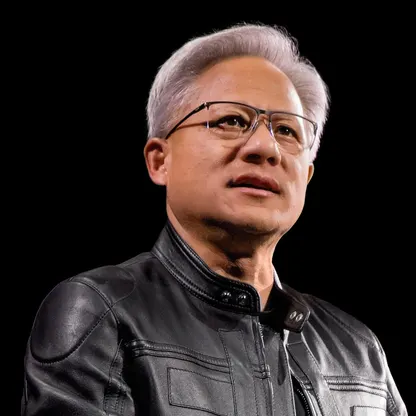

Commencement keynote at Carnegie Mellon University
NextFin News - Jensen Huang, founder and chief executive officer of NVIDIA, delivered the keynote address to the Carnegie Mellon University Class of 2026 during the main commencement ceremony held in Gesling Stadium on Sunday, May 10, 2026. The ceremony began at 10:00 a.m. ET and brought together bachelor’s, master’s and doctoral degree candidates for a single university-wide celebration.
Huang’s speech wove together personal history, lessons from building NVIDIA, and a wide-ranging perspective on artificial intelligence. He spoke directly to the graduates about opportunity, responsibility, and the practical steps society must take as AI reshapes work, industry, and infrastructure.
Personal background and the American dream
Huang opened with a personal narrative about immigration and family, explaining that his achievements were inseparable from his parents’ sacrifices. He described his family’s arrival in the United States and early life in Kentucky: "My father had a dream to raise his family in America. When I was 9 years old, he sent my older brother and me to the United States." He recalled his mother’s early morning labor delivering newspapers and his first job washing dishes, using these memories to underline the theme that his success was the realization of his parents’ dream.
Huang reminded the graduates that their accomplishments were shared with those who supported them, urging them to recognize parents, teachers, and mentors as part of their achievement. He asked graduates to "turn to your mothers and wish them a happy Mother's Day," framing the day as a communal milestone.
Founding NVIDIA: failure, humility, and resilience
Reflecting on NVIDIA’s origins, Huang recounted the early technical and financial struggles of starting the company at age 30. He said the first technology "didn't even work," that they nearly ran out of money, and that he had to travel to Japan to explain to Sega’s CEO that the contracted technology would not work. He described asking to be released from a contract and simultaneously requesting payment, calling the experience "embarrassing, humiliating, and one of the hardest things I have ever done."
From those setbacks came reinvention: Huang said the company used the funds it received to reset, inventing new chip and computer design methods that they continue to use. He framed failure as formative: "Each failure is just another learning moment, a humility moment, a character strengthening moment. The resilience forged through setbacks is what gives you the strength to go again."
The AI revolution: a reset of computing
Huang presented AI as a foundational reset of how computers and software operate. He contrasted the six-decade paradigm in which "humans wrote software. Computers executed instructions" with the new regime in which "intelligence" is produced by machine learning running on neural networks and GPUs. He said this shift means systems that can "understand, reason, plan and use tools," and called the emerging industry one that "manufactures intelligence at scale."
"Computing is undergoing a complete reset. Not since modern computing was first invented."
Huang stressed the historical lineage of AI at Carnegie Mellon, reminding listeners that the university is among the places where modern AI and robotics were born. He tied this origin to the present moment, calling the graduates’ entry into the workforce "the beginning of the AI revolution."
Jobs, tasks, and human purpose
Addressing widespread anxiety about automation, Huang underscored that tasks will be automated while jobs and new industries will be created. He said the purpose of work is distinct from the tasks it contains and offered examples: as software coding tasks become increasingly automated, engineers will use AI to pursue more ambitious problems; as radiology scans are more automated, radiologists will be elevated to provide better diagnosis and patient care.
Huang delivered a pragmatic warning and challenge: "AI is not likely to replace you, but someone using AI better than you might." He urged graduates to adopt AI as an amplifying tool and to ensure their children are "supercharged by AI or be left behind by those who are."
Four concurrent imperatives
Huang called for four things to be done simultaneously: "Advance safely, create thoughtful policies, make AI broadly accessible, and encourage everyone to engage." He emphasized scientists and engineers’ duty to advance capabilities and safety together and urged policymakers to create guard rails that protect society while permitting innovation and progress.
He argued against retreating from technology, saying that withdrawing from change "does not stop progress; they only surrender the opportunity to shape it and to benefit from it." Instead, Huang advocated open, responsible, and optimistic engagement with AI so that its benefits reach as many people as possible.
Infrastructure, industry, and reindustrialization
Huang painted the AI era as an industrial opportunity requiring unprecedented infrastructure investment. He said AI will demand "trillions of dollars of infrastructure investment" and called this "the largest technology infrastructure buildout in human history," listing chip factories, computer factories, data centers, and advanced manufacturing facilities as essential components.
Highlighting the broad employment implications, Huang said the AI buildout will create demand for skilled trades and technical roles: "Electricians, plumbers, iron workers, technicians, builders, this is your time." He positioned AI as a chance to "reindustrialize America and restore the nation's capacity to build."
Accessibility, democracy of capability, and education
Huang returned repeatedly to the theme that AI democratizes the power to create: because only a fraction of people today can write software, AI that can generate code enables anyone to build useful applications. "Everyone is now a programmer," he declared, noting that a shopkeeper can create a website and a carpenter can design a kitchen with AI’s help. He compared the spread of AI to past general-purpose technologies, saying it has the potential to close the technology divide in ways similar to electricity and the internet.
Call to action and final exhortation
Throughout his remarks Huang urged the graduates to act with speed and purpose. He repeatedly framed this moment as unique: "No generation has entered the world with more powerful tools or greater opportunities than you." He closed with a concise call: "Run, don't walk."
He also invoked Carnegie Mellon’s motto, telling graduates, "My heart is in the work. So, put your heart in the work. Build something worthy of your education, your potential, and the people who believed in you long before the world did."
References
Video: Commencement ceremony livestream and recordings from Carnegie Mellon University. See the university’s commencement pages for schedule and livestream information: Carnegie Mellon University Commencement.
Announcement of keynote & honorary degree recipients: Announcing our 2026 Commencement Speaker and Honorary Degree Recipients.
News coverage summarizing the speech and key points: Jensen Huang to college grads: "Run. Don't walk" toward AI.
Biographical context: Jensen Huang’s profile and recent honors include coverage in public biographical sources: Jensen Huang — Wikipedia.
Explore more exclusive insights at nextfin.ai.
