
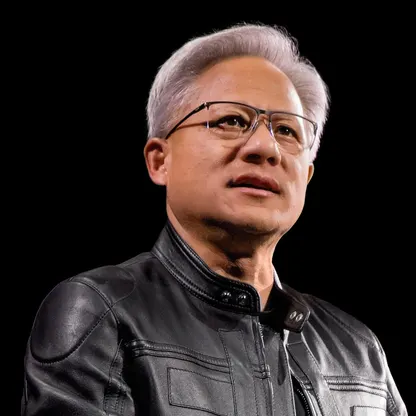

NextFin News - On January 5, 2026, NVIDIA founder and CEO Jensen Huang delivered a keynote at the Fontainebleau in Las Vegas to open the company’s presence at CES 2026. Huang addressed a live auditorium and an online audience, framing the talk as a launchpad for the company’s work across AI models, robotics, simulation and new infrastructure. (gadgets360.com)
Across roughly 90 minutes onstage, Huang laid out a single, consistent theme: AI is a platform shift that requires reinventing every layer of the computing stack, and NVIDIA intends to deliver that stack — from chips to simulation — in the open. The keynote included multiple product and platform announcements (including a new rack-scale platform and an autonomous-vehicle model) that Huang positioned as practical steps toward "physical AI" that can reason and act. (theverge.com)
Platform shifts and the five-layer stack
Huang opened by describing computing as periodically resetting every 10–15 years, and he placed the current moment alongside previous shifts: mainframe to PC, PC to internet, internet to cloud, cloud to mobile. He asserted that AI is now the next platform shift and that it brings two simultaneous changes: AI becomes the foundation for new applications, and the way software is developed and run is being reinvented.
You no longer program the software, you train the software. You don't run it on CPUs, you run it on GPUs.
He framed this as a five-layer reinvention — from chips and infrastructure to models and applications — and said a decade’s worth of computing value is being modernized to this new approach.
Open models, DGX clouds and building in the open
Huang emphasized NVIDIA’s work on open models and internal DGX supercomputers used to develop those models. He described the company’s approach as making model work and supporting libraries available so every company, industry and country can participate.
He listed multiple open projects and libraries — including NeMo libraries, physics-oriented Nemo libraries and model toolkits for biology, weather and robotics — and reiterated that the models, the training data and the lifecycle tools are being open-sourced to encourage broad adoption and trustworthy development.
We open source all the models. We help you make derivatives from them. We have a whole suite of libraries... so that you could process the data, you could generate data, you could train the model, you could create the model, evaluate the model, guardrail the model all the way to deploying the model.
Agentic systems, reasoning and multimodality
Huang described the rise of agentic AI — systems that can plan, use tools, research, and decompose problems into steps — and said these capabilities are unlocking new, practical applications. He explained that reasoning, test-time scaling ("thinking in real time") and multi-model approaches let agents call the right models for each part of a task.
The ability to use reinforcement learning and chain of thought... and search and planning... has made it possible for us to have this basic capability.
He argued that multimodality and multi-model architectures are central, and that agentic systems will be the user interface for future enterprise platforms.
Cosmos and physical AI: simulation and synthetic data
Turning to physical AI, Huang introduced Cosmos as a "world foundation model" trained on internet-scale video, driving and robotics data and 3D simulation. He explained that Cosmos learns unified representations that align language, images, 3D and actions and that it enables physically coherent generation and closed-loop simulation.
Cosmos turns compute into data, training AVs for the long tail. Developers can run interactive closed-loop simulations in Cosmos. When actions are made, the world responds.
Alpamo: a "thinking, reasoning" autonomous vehicle model
Huang announced the autonomous driving model he described in the keynote as Alpamo, which he characterized as "the world's first thinking reasoning autonomous vehicle AI," trained end-to-end from camera input to actuation output using both human driving demonstrations and Cosmos-generated synthetic miles.
Alpamo is trained end to end, literally from camera in to actuation out... it reasons about what action it is about to take. It tells you what action it's going to take, the reasons by which it came about that action, and then the trajectory.
Huang showed a live, no-hands demo and explained that Alpamo is coupled with a traceable AV safety stack and policy evaluator: when the model is confident it drives; when confidence is insufficient, the system falls back to classical guardrail systems.
Journalistic coverage of the keynote framed this announcement as part of NVIDIA's public CES 2026 presentation and reported the same model and demo details. (axios.com)
Vera Rubin: a new rack-scale AI platform
Huang unveiled Vera Rubin as NVIDIA’s next-generation rack-scale AI platform, describing it as a system of six co-designed chips (Vera CPU, Reuben GPU, NVLink switch, Connect-X9 NIC, BlueField4 DPU and Spectrum‑X switch) that operate as one supercomputer. He stressed performance, memory expansion for long-context models, confidential computing, and liquid cooling at 45°C as practical engineering advances.
Vera Rubin arrives just in time for the next frontier of AI... capable of delivering 100 petaflops of AI, five times that of its predecessor.
The Verge and other outlets published early coverage of the Vera Rubin platform and the hardware breakdown that Huang presented onstage. (theverge.com)
Robotics, Omniverse and training robots in simulation
Huang reiterated NVIDIA’s work with Omniverse, Isaac Sim and Isaac Lab as the simulation backbone that lets robots learn object permanence, causality and other common-sense physical laws. He showed robot demos and said robots learn inside simulated environments so synthetic, physics-grounded data can be generated at scale for training.
These ideas are common sense to even a little child, but for AI, it's completely unknown. And so we have to create a system that allows AIs to learn the common sense of the physical world.
Partnerships, vertical stacks and ecosystem openness
Throughout the keynote Huang named enterprise partners integrating NVIDIA technology into their stacks — from Palantir and ServiceNow to Snowflake, CodeRabbit and CrowdStrike — and described work with automotive partners to bring the full stack to production vehicles. He reiterated that NVIDIA builds entire stacks but opens them to the ecosystem so partners can adopt parts or the whole system.
We build the entire stack... but the entire stack is open for the ecosystem.
Press reporting confirmed the keynote timing and venue and noted partner demonstrations and planned vehicle deployments tied to the announcements. (gadgets360.com)
Closing and tone
Huang closed by framing the moment as the start of a new industrial era in which AI-powered physical systems — from autonomous cars to factory robots — will be designed, simulated and tested in software before being built in the real world. He repeatedly emphasized openness, simulation-driven synthetic data, and the centrality of GPUs and new infrastructure to enable models that can think and act.
We are reinventing AI across everything from chips to infrastructure to models to applications, and our job is to create the entire stack so that all of you could create incredible applications for the rest of the world.
References
Event and coverage:
- Gadgets360 — When and where to watch Jensen Huang's CES 2026 keynote (Jan 5, 2026)
- The Verge — Nvidia launches Vera Rubin AI computing platform at CES 2026
- Axios — "ChatGPT moment for physical AI": Nvidia CEO launches new AI models and chips (Jan 5, 2026)
- Engadget — How to watch NVIDIA's CES 2026 keynote
- Economic Times — NVIDIA CES 2026 keynote: time and what to expect
Video: NVIDIA Live at CES 2026 with Jensen Huang (NVIDIA livestream & partner feeds were broadcast during the keynote).
Explore more exclusive insights at nextfin.ai.
