
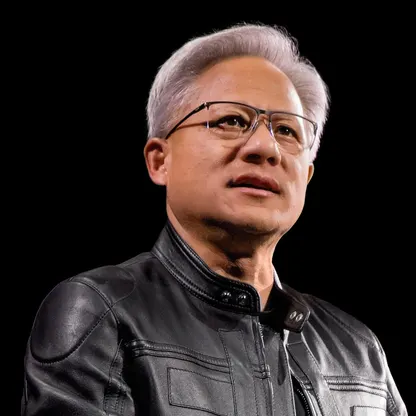
NextFin News - On July 16, 2025, NVIDIA CEO Jensen Huang spoke to reporters on the sidelines of the China International Supply Chain Expo in Beijing, delivering public remarks and responding to questions about AI, robotics, energy, trade and NVIDIA’s engagement with China. (aljazeera.com)
Economic impact and the new industrial revolution
Huang opened by framing NVIDIA as central to a new industrial revolution that is restoring manufacturing and jobs in the United States. He said the company’s work is creating new factories and supporting other large firms pursuing trillion‑dollar industries. As he put it, NVIDIA is "a multi‑hundred billion dollar company supporting multi‑hundred billion dollar companies going after trillion, trillion dollars of industry," and that the resulting technology leadership and economic prosperity are undeniable. He stressed the need to think carefully about how American technologies and standards diffuse globally, arguing that the U.S. should both safeguard national security and ensure American companies benefit first from new innovations.
Energy constraints: the pace problem
Answering questions about power and buildout, Huang described energy as a "pacing problem" for the AI era. He said the industry cannot rely solely on the public power grid and called for building behind‑the‑meter generation and accelerating nuclear and other power sources. He emphasized that although NVIDIA improves energy efficiency dramatically with each generation, overall demand from AI grows much faster. "I'm improving the performance by a factor of 10 times each year, but demand is going up by a factor of 10,000… AI is getting more computensive," he warned, concluding bluntly: "the bottom line is we need energy."
Scale, design and misconceptions about GPUs
Huang pushed back on simplified images of GPUs as mere gaming cards, explaining the true scale of systems designed for AI datacenters. He contrasted consumer GeForce cards with data‑center GPUs that, in his description, are massive, costly systems: "that GPU weighs two tons. It has one and a half million parts. It consumes $200,000 watts. It costs $3 million." He used that image to rebut claims about covert exports, saying the logistics of moving the number of systems required to operate an AI datacenter make smuggling narratives implausible.
Robotics is 'around the corner' — and China has an edge
When asked how robotics fits with AI, Huang explained how generative visual models and embodied systems converge. He described a straightforward pathway from describing actions in text, to generating video frames of an arm picking up a cup, to teaching a robot to perform that same task. "The AI can't tell the difference between it's manipulating pixels versus it's manipulating a bunch of motors," he said, arguing that moving AI from the cloud into physical machines — robotics — is imminent. He then outlined why China is likely to excel: it has enormous demand, a strategic imperative to automate, and deep strengths at the electronics‑mechanical intersection he called mechatronics. Other countries, he said, may have parts of that mix — Japan and Germany have mechatronics and demand but need AI advances; the U.S. has software strength and growing industrial demand but needs to improve mechanical and electronics capabilities.
On jobs, tasks and the human impact of AI
Addressing anxieties about AI's social effects, Huang distinguished between tasks and jobs, stressing that "everyone's jobs and profession will be affected by AI" because tasks within jobs will be transformed. Some jobs, he conceded, will become obsolete while new ones will be created and every job will change. He urged people to think differently about work, emphasizing that AI will enhance many tasks and reshape roles across sectors.
China, markets and NVIDIA’s commitments
Huang reiterated NVIDIA's long relationship with China and described the country’s technology ecosystem as fast and integrated. He noted NVIDIA's 30‑year history of partnerships in China and praised the pace of Chinese innovation across model and application layers. He also discussed conversations with Chinese officials and said NVIDIA is committed to serving the Chinese market and continuing to invest there as the market evolves. Journalistic coverage of the visit confirms Huang’s participation in CISCE events and his meetings with Chinese leaders during the trip. (china.org.cn)
Systems thinking: compute, models and applications
Throughout the discussion Huang emphasized that AI rests on three intertwined layers — computer infrastructure, models, and applications — and that progress requires advances across all three. He described RTX Pro and Omniverse as technologies designed for digital twins and smart factories that will support robot training in virtual environments before physical deployment. Huang framed this as part of a transition from manual coding and typing to AI‑driven learning and problem solving.
References:
Al Jazeera — 'Catalyst for progress': Nvidia CEO hails China’s AI at Beijing expo
China.org.cn / Xinhua — Nvidia CEO eyes 'great future' in Chinese market (July 16, 2025)
Global Times — Nvidia CEO attends CISCE, praises China's open‑source AI (July 16, 2025)
Explore more exclusive insights at nextfin.ai.


