
 Everything About AI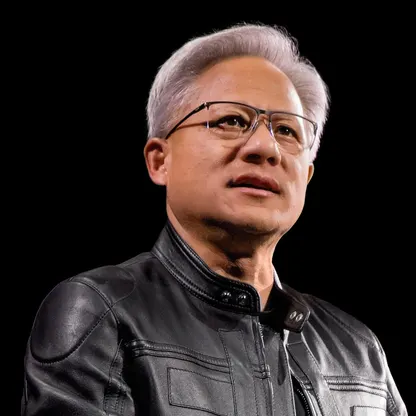

NextFin News - On May 10, 2026, Jensen Huang, founder and CEO of NVIDIA, delivered the keynote address to Carnegie Mellon University’s Class of 2026 at Gesling Stadium on the university’s Pittsburgh campus. Introduced by President Farnam Jahanian and the university's leadership, Huang received an Honorary Doctor of Science and Technology and spoke to graduates, families and faculty on a rainy Sunday morning.
Huang’s remarks wove together personal recollection, lessons from building NVIDIA, and a broad view of how artificial intelligence is reshaping computing, work and industry. Below are his core statements organized by topic, presented as he delivered them to the assembled graduates.
Gratitude, personal background and the American dream
Huang opened by recognizing the university community and the families whose sacrifices made the graduates’ achievements possible. He spoke of being a first-generation immigrant and of his parents’ journey: "My journey is their journey. I am their dream come true." He asked graduates to thank those who supported them and to "turn to your mothers and wish them a happy Mother’s Day."
Founding NVIDIA: failure, responsibility and resilience
Reflecting on NVIDIA’s early years, Huang recounted the company’s difficult start and the humiliations that come with near-failure. He described being forced to tell a partner that their contracted technology could not be delivered and asking to be released while still seeking payment to survive. Recalling that episode, he said it was "embarrassing, humiliating, and one of the hardest things I have ever done." From those struggles he drew lessons about leadership: being CEO is less about power than about the responsibility to keep a company alive, and that honesty and humility can meet generosity even in business. He emphasized that NVIDIA has reinvented itself repeatedly over 33 years and that each setback should be seen as a learning and character-strengthening moment.
The AI revolution as a computing reset
Huang framed the moment for graduates as epochal: having lived through platform shifts from mainframes to PCs, the internet, mobile and cloud, he said the transition to AI is "bigger than anything before." He described the prior computing paradigm—humans writing software and computers executing instructions—as over, and characterized AI as a shift "from human coding to machine learning," with neural networks running on GPUs and systems moving from following instructions to "understanding, reasoning, planning, and using tools."
AI’s reach, infrastructure demand and economic opportunity
Huang warned that AI will require massive infrastructure investment — chip factories, computer factories, data centers and advanced manufacturing facilities — calling it "the largest technology infrastructure buildout in human history." He argued this buildout offers a "once-in-a-generation opportunity to reindustrialize America and restore the nation's capacity to build," and that its effects will ripple beyond tech into trades and energy: electricians, plumbers, ironworkers, technicians and builders will be in high demand. He tied AI’s scale to energy and grid modernization, noting that powering these new systems will require substantial investments in energy infrastructure and sustainable generation.
Jobs, automation and human purpose
Tackling graduates’ anxieties about job disruption, Huang distinguished tasks from the purpose of a job. He said many tasks will be automated and some jobs will disappear, but new jobs and industries will also be created. Using examples, he noted that while AI automates tasks such as writing code or analyzing scans, it can elevate the professional purpose of software engineers and radiologists. He warned plainly: AI is not likely to replace you. But someone using AI better than you might.
Four actions to meet the moment
Huang urged a balanced approach and urged four simultaneous priorities: Advance safely. Create thoughtful policies. Make AI broadly accessible. And encourage everyone to engage.
He told scientists and engineers they have a duty to advance capabilities and safety together, and told policymakers they must design guardrails that protect society while allowing innovation to continue. He argued that retreating from technology cedes the chance to shape it and to benefit from it.
Accessibility and closing the technology divide
Stressing inclusive opportunity, Huang said AI makes it possible for many more people to build and create. "Only a fraction of the people in the world know how to write software. Now, anyone can ask AI to build something useful." He framed this as the first time the power of computing and intelligence can genuinely reach everyone and called for ensuring AI’s benefits are widely distributed.
Call to action and closing exhortation
Huang concluded by urging graduates to seize the moment and to put passion into their work. Invoking Carnegie Mellon’s motto, he told the Class of 2026: My heart is in the work.
He closed with an appeal to build something worthy of their education and the people who believed in them, and with congratulations to the graduates.
Notable lines and quotations
"My journey is their journey. I am their dream come true."
"It's harder than we thought."
"AI is not likely to replace you. But someone using AI better than you might."
"Advance safely. Create thoughtful policies. Make AI broadly accessible. And encourage everyone to engage."
References
Carnegie Mellon University — Announcing our 2026 Commencement Speaker and Honorary Degree Recipients: Carnegie Mellon University, March 24, 2026.
NVIDIA Blog — "Your Career Starts at the Beginning of the AI Revolution," Jensen Huang’s commencement address: NVIDIA Blog, May 10, 2026.
Carnegie Mellon News — "NVIDIA Founder, CEO Jensen Huang to Carnegie Mellon University Graduates: 'Shape What Comes Next'": CMU News, May 2026.
Selected coverage: Axios — "Jensen Huang to college grads: 'Run. Don't walk' toward AI": Axios, May 11, 2026.
Explore more exclusive insights at nextfin.ai.
