
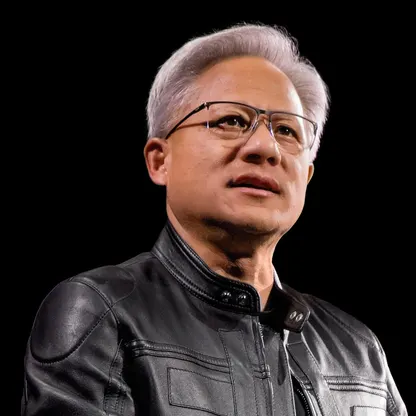
NextFin News - On November 18, 2025, Microsoft, NVIDIA and Anthropic published a coordinated announcement and a short video conversation bringing together Satya Nadella, Dario Amodei and NVIDIA CEO Jensen Huang to describe new strategic partnerships. The event — released as part of the companies’ joint news on that date — framed a broad collaboration: Anthropic will scale Claude on Microsoft Azure, Anthropic will incorporate NVIDIA architectures, and NVIDIA and Microsoft will make strategic investments in Anthropic. The remarks in this article are drawn directly from the recorded discussion among the three CEOs.
Partnership overview: mutual customers, mutual commitments
In the opening exchange, Satya Nadella framed the announcement as a deepening of prior partnerships and said the companies would become “customers of each other.” He summarized four key elements: making Anthropic’s Claude available to Microsoft Foundry customers, continuing Claude access across Microsoft’s Copilot family, Anthropic’s commitment to Azure capacity, and a new NVIDIA–Anthropic partnership to support Anthropic’s growth. In response, Jensen Huang described the moment as “a dream come true” and emphasized the three‑way collaboration’s practical aims: performance, efficiency, and wider enterprise adoption.
“This is a dream come true for us. We’ve admired the work of Anthropic and Dario for a long time, and this is the first time we are going to deeply partner with Anthropic to accelerate Claude.”
NVIDIA’s mission and enthusiasm for Claude
Huang put the announcement in the context of NVIDIA’s longstanding engineering mission. He described NVIDIA’s DNA as building “the most advanced computing systems in the world” to accelerate “the most challenging workloads.” He repeatedly praised Anthropic’s research, safety work, and engineering team, saying that NVIDIA engineers were excited by concrete features of Claude’s technology.
“The work that Anthropic has done, the seminal work in AI safety, the advances of Claude code, the engineers of NVIDIA love Claude code.”
He highlighted a specific technical advance — the Model Context Protocol (MCP) — as transformative for agentic AI and praised Claude Code’s ability to refactor code automatically, calling it “pretty an amazing thing.”
Technical focus: accelerating Claude on Grace Blackwell and Vera Rubin
Huang focused on the engineering work to co‑optimize Anthropic’s models for NVIDIA architectures. He named NVIDIA’s Grace Blackwell family (and the upcoming Vera Rubin systems) as core platforms for Anthropic’s workloads and expressed strong expectations about performance gains once Claude is tuned for NVLink and those systems.
“I can’t wait to go accelerate Claude... I’m really, really hoping for an order of magnitude speed up, and that’s going to help you scale even faster, drive down token economics, and really make it possible for us to spread AI everywhere.”
Huang said that an order‑of‑magnitude speed up would lower token economics, enable faster scaling, and make deployment more cost‑effective — a point he linked directly to broader adoption and more frequent use of AI models.
Enterprise reach: combining infrastructure with go‑to‑market
Huang and Nadella placed equal weight on technical performance and enterprise adoption. Huang noted NVIDIA’s wide enterprise footprint and suggested that pairing NVIDIA compute with Microsoft’s enterprise go‑to‑market would extend Claude into many industries and countries. He contrasted the decades‑long effort required to build enterprise sales and support with the immediate availability of hardware and urged practical cooperation.
“The enterprise go‑to‑market is very complicated. And this is where the two of us have such great harmony because NVIDIA’s computing is in every enterprise. And we’re in every enterprise in every single country.”
Scaling laws, compute economics and industry perspective
Huang described how three scaling dynamics are driving demand for compute: large‑scale pre‑training, post‑training benefits from additional compute, and inference/test‑time scaling where more thinking at inference yields higher quality answers. He argued that more and more cost‑effective compute will produce smarter tokens and smarter AI, which in turn boosts adoption across applications.
“We’re seeing three scaling laws happening at the same time... the more compute we give it, the more cost‑effective compute we give it, the smarter the tokens, the smarter the AI is going to be.”
Huang closed these remarks by linking compute demand to Azure capacity and NVIDIA GPUs — and by expressing enthusiasm for working with Anthropic and Microsoft to meet that demand.
Collaboration over zero‑sum narratives
Throughout his remarks, Huang returned to a broader industry theme: moving beyond winner‑take‑all expectations to practical engineering and partnership. He urged the industry to focus on building “broad, durable capabilities” that deliver tangible local success for countries, sectors and customers rather than framing progress as strictly zero‑sum.
“As an industry, we really need to move beyond any type of zero‑sum narrative or winner‑take‑all hype. What’s required now is the hard work of building broad, durable capabilities together.”
Closing thoughts
In the recorded discussion Jensen Huang emphasized three interlocking goals: accelerate Anthropic’s Claude with NVIDIA systems, reduce the cost and latency of model use, and combine NVIDIA’s engineering with Microsoft’s enterprise reach so that Claude can scale across industries and geographies. His comments in the video repeatedly return to concrete engineering outcomes — faster models, lower token economics, and co‑optimization of models and chips — while also situating those outcomes within a cooperative industry posture.
References
Video and company announcements referenced in this article:
- NVIDIA Blog — Microsoft, NVIDIA and Anthropic Announce Strategic Partnerships (November 18, 2025)
- Anthropic Newsroom — News and Announcements (includes Nov 18, 2025 entries)
- Video: Microsoft, NVIDIA and Anthropic Announce Strategic Partnerships (published with the announcement)
Explore more exclusive insights at nextfin.ai.


