
 Everything About AI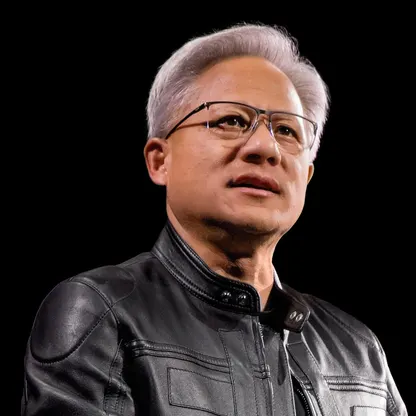

Jensen Huang, founder and CEO of NVIDIA, spoke with CNBC anchor Becky Quick on Monday, May 4, 2026, at the Milken Institute Global Conference in Beverly Hills, California. The conversation, "Leading in the Age of AI," laid out Huang's view of how generative systems evolved into agentic AI, why compute demand has exploded, where investment matters most in the AI stack, and how societies should respond to both the opportunities and risks the technology presents.
From generation to reasoning: the inflection point
Huang described the arrival of generative systems as the moment machines gained the ability to "think" and to use external tools. As he put it, generative models enabled two new capabilities: the internal generation of tokens for thought and the generation of commands to control tools. In his words, the moment that happened, the entire industry raced off to go figure out how to use generative AI to enable reasoning
. He highlighted that recent developments produced agentic systems that can "understand, reason, plan, [and] use tools to do something useful," and pointed to software coding as an early, productive use case for those systems.
Compute demand: a thousand‑fold shift and its multiplier
Huang emphasized the scale of the change in resources required. Compared with early generative workloads, he said, the compute needed for reasoning and agentic tasks is roughly a thousand times greater. He then multiplied that by a surge in users—orders of magnitude more people wanting to use AI—which, he argued, explains the dramatic rise in GPU consumption and system demand. As he summarized, AI reinvented the computer industry
and will lead to GPUs and AI computing "literally everywhere."
The five‑layer stack and where to invest
To explain where bottlenecks arise, Huang framed AI as a five‑layer cake spanning land, power and shell; chips and systems; model infrastructure; models; and applications. He said Nvidia invests across those layers and sometimes makes anchor investments in infrastructure companies to catalyze further capital. Those strategic bets are intended to produce large amplifications—"if we invested $1, it activates AI maybe by $100"—by unblocking critical choke points such as data‑center capacity, interconnects, advanced memory and cooling.
Jobs, re‑industrialization and energy
Contrary to narratives of mass displacement, Huang argued that AI is generating a large number of jobs. He said the transition requires three types of plants—chip fabs, computer plants and AI factories—and called the moment an extraordinary opportunity to reindustrialize through market forces. Huang also linked AI expansion to power‑grid modernization: with predictable, high‑demand customers, he said there is a market mechanism to invest in sustainable energy and grid upgrades.
Safety, guardrails and the role of industry
On safety, Huang called the technology industry's role central and compared building safe AI to engineering safe airplanes—with redundancy, diverse sensors and continuous improvement driven by real‑world use. He stressed that guardrail systems have improved markedly and that iteration with user feedback is essential. He stated plainly, it is the technology industry's job to make AI safe
, and that companies must hold themselves accountable while working with governments and other nations to set norms.
Open source, defense and cyber resilience
Addressing the possibility of dual‑use or weaponized models, Huang argued that defense against sophisticated offensive tools is not another singular superweapon but an abundance of distributed defenders. He advocated open‑source models and "swarms" of defensive systems—"white blood cells"—to detect and close threats quickly. In his view, ubiquity and diversity of defenders create an asymmetry in favor of resilience: "you can't count on your AI being better than theirs, but you can count on the fact that you got more AI than they got."
Exports, national competitiveness and government role
Huang articulated a balanced stance on international engagement: American companies should compete globally and the United States has the right to maintain a lead by controlling the most advanced capabilities, while still exporting broadly to maximize economic gains. He welcomed appropriate government regulation for high‑risk applications—medical instruments and autonomous vehicles, for example—and supported government‑industry cooperation in national defense contexts, while noting company leaders are not elected officials and must defer to policymakers in wartime decisions.
Doomers vs. pragmatists: impact on work and ambition
Responding to fears that AI will eliminate professions, Huang drew a distinction between tasks and the purpose of jobs. Using radiology as an example, he explained that while AI may supplant a narrow task, it does not eliminate the professional purpose; instead, AI expands capacity and creates new roles, often increasing demand for skilled people. He urged a pragmatic view: the purpose of a software engineer is not to code. The purpose is to solve problems, innovate new things
. He also warned that fear‑driven narratives can undermine U.S. engagement and competitiveness.
Science, discovery, and a call for higher ambition
Looking ahead, Huang said AI will accelerate scientific discovery across biology, energy, climate and physical sciences—turning months of exploratory work into days. He closed by urging everyone to raise their expectations and ambitions: whatever goals organizations set today, he said, should be multiplied many times over to match the transformation he sees unfolding.
References
Event page: Milken Institute — Leading in the Age of AI: A Conversation with NVIDIA CEO Jensen Huang.
Conference: Milken Institute — Global Conference 2026 (May 3–6, 2026, Beverly Hills, CA).
Explore more exclusive insights at nextfin.ai.
