
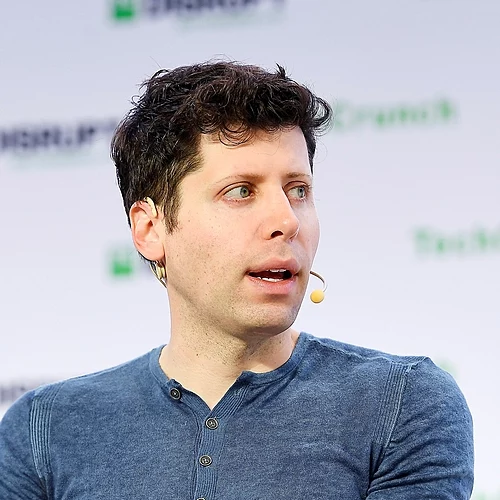
NextFin News - Sam Altman sat down with Cleo Abram for the video episode “Sam Altman Shows Me GPT-5... And What's Next,” a recorded interview published on Cleo Abram's Huge If True channel in early August 2025. The conversation was presented as a feature-length discussion about GPT-5, the trajectory of large models, and how societies will live with rapidly improving AI tools. (glasp.co)
The interview is framed as a forward-looking tour of both product and social implications: Altman describes what the technology feels like to users today, how it may shape younger generations, and the kinds of institutional choices his company has made while building and deploying increasingly capable systems. (youtubesummary.com)
AI as an ordinary background for future generations
Altman repeatedly returns to the image of children who will never know a world without AI. He says the technology will become woven into daily life so completely that future generations will think in terms of the companies that built on it and the public leaders who used it — but not in terms of AI as a separate, exotic force. In his words: kids born today, they they never knew the world without AI. So, they don't really think about it. It's just this thing that's going to be there in everything.
Society as the collective intelligence — the scaffolding metaphor
Altman frames powerful AI not as a solitary supermind but as another layer in a long chain of social progress. He emphasizes that many people and institutions built the scaffolding that makes current advances possible and that new layers will be added on top: all these companies and people and institutions before us built up this scaffolding. We added our one layer on top and now people get to stand on top of that and add one layer and the next and the next.
He calls the broader interaction of people, tools and institutions a form of collective or societal intelligence: I love this idea that society is the super intelligence.
Tools, not creatures: a vision for how AGI arrives
Rather than picturing a single dominant agent, Altman describes a path in which AI tools proliferate and assist billions of people. He suggests that superintelligence will be an emergent effect of many systems, copies and interactions across society — it's going to feel like... some nerds discovered this thing and that was great and now everybody's doing all these amazing things with it
— and he contrasts that with the older one-tower conception of AGI.
Aligning product incentives with long-term public benefit
Altman says OpenAI has made explicit trade-offs to keep ChatGPT aligned with user interests rather than short-term growth metrics. He notes the company could take many steps to increase engagement or revenue, but that these would conflict with the long-term incentive to remain trusted by users. He frames this as a deliberate institutional stance: the goal is to stay as aligned with our users as possible.
Concrete example: resisting features that would 'juice' engagement
Pressed for a specific choice that favored the public interest over quick growth, Altman gives a candid, offhand example of a temptation the company resisted:
We haven't put a sexbot avatar in ChatGPT yet.The remark was offered to illustrate the sorts of obvious engagement-driving features the company has weighed and often declined because they would be misaligned with long-term trust and safety objectives.
Progress described in 'innings' and learning from early mistakes
Altman uses a sports metaphor to note that the field is still early-stage and that teams are learning as they go. He describes the community's sense that the work is not finished and that there will be many more iterations: it feels like we're in the first inning... maybe out of the first inning, I would say second inning.
He frames past errors and safety work as part of that learning process and repeatedly emphasizes the need to both accelerate useful capabilities and manage risks.
Responsibility, governance and the role of companies
Throughout the interview Altman stresses a responsibility to build tools that serve users and to invest in safety and norms. He acknowledges hard choices and the fact that future actors will use the technology in ways current builders may or may not approve of, but he repeatedly returns to the practical task of making tools that help people and of creating institutions and boundaries that reduce harms.
References and further viewing:
Sam Altman Shows Me GPT 5... And What's Next — Cleo Abram (YouTube). (youtube.com)
Audio version: Sam Altman Shows Me GPT 5... And What's Next — Spreaker. (spreaker.com)
Episode summary and chapter highlights — Nexus Newsfeed. (nexusnewsfeed.com)
Video summary and transcript extract — YouTubeSummary. (youtubesummary.com)
Explore more exclusive insights at nextfin.ai.


