
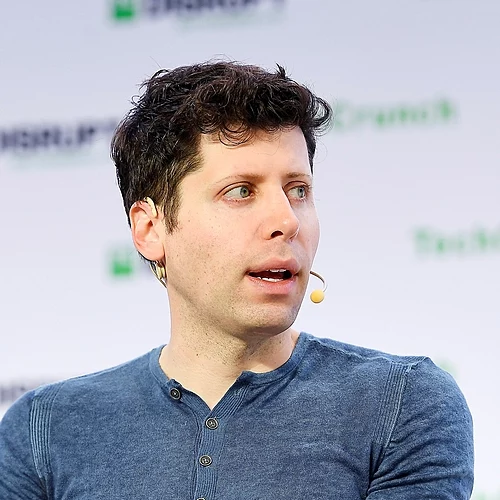
NextFin News - Sam Altman sat down with Alex Kantrowitz for the Big Technology Podcast in-studio in New York on December 18, 2025. The conversation ranges across competitive threats and "code red" responses, consumer and enterprise strategy, product design and personalization, the case for massive compute and infrastructure investment, the implications for work, and the long-term questions about AGI and going public.
The interview presents Altman's account of OpenAI's current priorities and the company's reasoning for aggressive investment in models, products and data-center capacity. Below are his core statements, organized by topic and presented largely in his own words.
On competition and the "code red" mentality
Altman described "code red" as an operational habit rather than an existential panic: teams go into short, intense response cycles when a competitive threat appears. He said these are "relatively low stakes somewhat frequent things to do" and that historically they last "six or eight week[s] for us." He pointed to earlier this year’s DeepSeek event and more recently Gemini 3 as triggers that identified specific weaknesses in OpenAI’s product strategy.
It's good to be paranoid and act quickly when a potential competitive threat emerges.
He acknowledged Gemini 3 "has not or at least has not so far had the impact we were worried it might," but said it still helped identify places to improve. Altman also noted recent feature launches — a new image model and GPT-5.2 — as concrete responses to user demand and competition.
Models, commoditization and what will matter
Altman argued that thinking of models as commoditized misses important nuances: different models will excel in different domains and the greatest economic value will come from frontier models. For everyday chat use there may be many good options, but at the frontier — science, complex reasoning, specialized enterprise tasks — the differences matter.
He characterized GPT-5.2 as "the best reasoning model in the world" for many scientific and enterprise use cases and said OpenAI plans to remain ahead at the frontier while building the complementary product and infrastructure layers.
The most economic value I think will be created by models at the frontier and we plan to be ahead there.
Product, distribution and personalization
Altman emphasized that product and distribution are decisive complements to model performance. He said ChatGPT's consumer strength feeds enterprise adoption, because people want consistent experiences across personal and professional life. He highlighted personalization and memory as especially sticky features:
Personalization is extremely sticky. People love the fact that the model gets to know them over time, and you'll see us push on that much, much more.
On interfaces, he reflected that the original chat UI proved far more powerful than expected, but that future interfaces should be more diverse and interactive: task-specific UIs, continuous background work and proactive updates rather than only back-and-forth conversation.
Memory, companionship and user choice
Altman said AI memory will surpass human capacity and that present memory systems are still rudimentary. He expects memory-driven personalization to become a major advantage, describing a future where an AI can remember vast personal detail and small preferences the user never explicitly stated.
We have no conception because the human limit—no human can remember every word you've ever said in your life. AI is definitely going to be able to do that.
On companionship, Altman acknowledged wide variation in user preferences: some want deep connection, others prefer a dry, efficient tool. He said OpenAI will give users choice and set limits on certain behaviors (for example, not encouraging exclusive romantic relationships between users and bots).
Enterprise priorities and the GDP-VAL evaluation
Altman described 2025 as the year in which enterprise growth outpaced consumer growth, and said the company intends to scale enterprise offerings rapidly in 2026. He said enterprises are asking for AI platforms they can trust with their data, APIs customized for their needs, and the ability to stream very large token volumes into products.
Addressing the GDP-val evaluation of knowledge-work tasks, he noted that GPT-5.2 and GPT-5.2 Pro scored well on many scoped tasks and that even if those are narrow tasks, being able to hand an hour of work to an AI and get satisfactory output 70–74% of the time is extraordinary for businesses.
If you can assign an hour's worth of tasks to a co-worker and get something you like better back 74% of the time, that's pretty extraordinary.
Jobs, transition risk and a long-term view
Altman allowed that transitions will be rough in some cases and said he has short-term worries, but expressed faith in long-term human drives for meaning and contribution. He described a future in which many roles change — managers may oversee AI systems rather than teams of humans — and even entertained the idea of highly automated organizational roles, while insisting on human governance.
I am not a jobs doomer. Short term I have some worry. I think the transition is likely to be rough in some cases.
Infrastructure, the $1.4 trillion figure and compute economics
Altman explained the company’s large compute commitments as multiyear investments to enable discovery, products and high-volume enterprise usage. He described scientific discovery and advanced real-time user interfaces as compute-intensive use cases and said OpenAI will continue to scale training capacity: roughly tripling compute year-over-year recently and aiming to do so again.
That 1.4 trillion you mentioned, we'll spend it over a very long period of time. I wish we could do it faster. I think there would be demand if we could do it faster.
He argued revenue will track compute growth and that training costs will eventually be balanced by higher inference-driven revenue. Altman acknowledged market skepticism about debt financing but said lending to build data centers is reasonable provided model progress continues.
Demand for compute, discovery and early scientific results
Altman said that small scientific discoveries powered by models have already started and that, in his view, those signs began in 2025 rather than the later timeline he had expected. He expects a steady climb: more discoveries where humans and models together accomplish things that were previously impossible.
Anything that starts to move off the x-axis is interesting — people are already starting to change their workflow in some research communities.
Devices, AI cloud and product form factors
On devices, Altman said OpenAI is building a family of consumer devices and expects a long-term shift from reactive, screen-first devices toward proactive, context-aware systems. He suggested devices will enable continuous background work and closer integration with a user's physical context.
About an AI cloud or platform, he described a distinct offering from general-purpose web cloud providers: companies will want a tailored AI platform for internal systems, APIs and agent orchestration rather than a generic hosting service.
AGI, superintelligence and an IPO outlook
Altman reflected on definitions: while many observers call current models AGI-like, he emphasized missing capabilities such as autonomous continuous learning. He proposed clearer terms going forward and offered a candidate test for "superintelligence" — a system that can outperform any human as a president, CEO or head of a large lab even with human assistance.
There are a lot of people that would say we're at AGI with our current models. I think almost everyone would agree that if we had continuous autonomous learning, it would be very AGI like.
On going public, Altman said OpenAI needs lots of capital and at some point will cross shareholder limits; he is ambivalent about being a public-company CEO and gave no firm timeline for an IPO.
Closing remarks
The interview ended with Altman restating the company’s approach: build the best models, surround them with cohesive products, and scale the infrastructure to meet demand. He framed the current moment as one of both opportunity and responsibility: rapid technical gains combined with hard choices about governance, deployment and financing.
References
Episode page and publication: Sam Altman: How OpenAI Wins, AI Buildout Logic, IPO in 2026? — iHeart / Big Technology Podcast (Dec 18, 2025).
Podcast streaming pages: Player.fm — Big Technology Podcast.
Summary roundup and coverage: Techmeme — Q&A with Sam Altman (Alex Kantrowitz / Big Technology).
Explore more exclusive insights at nextfin.ai.


