
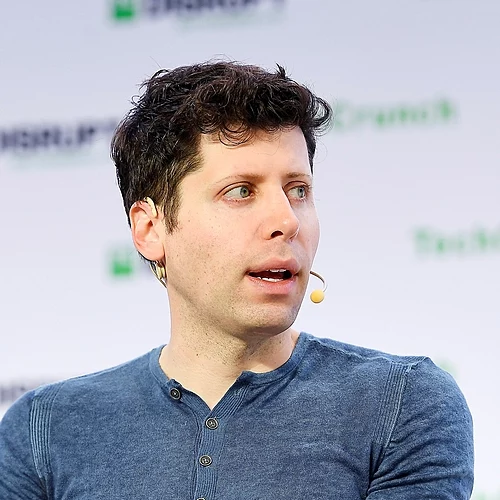
NextFin News - Sam Altman, CEO of OpenAI, spoke at the Cisco AI Summit in San Francisco on February 3, 2026, in a conversation onstage with Cisco leaders. The exchange focused on recent headlines about Moltbook and the broader implications of autonomous agents and how they will change the way people and organizations use computers.
Altman framed the discussion around a distinction between what is viral and what endures: while some AI-driven social experiments capture attention, the deeper technical shift is in agents that act, not only converse. His remarks stressed practical capability, adoption challenges, and the enterprise implications of letting software act on behalf of people.
Moltbook and the difference between fad and infrastructure
Altman cautioned that a highly visible platform can be a short-lived cultural phenomenon while its underlying technology can drive long-term change. In his words, quoted to the audience, Moltbook maybe (is a passing fad) but OpenClaw is not.
He directed attention away from the spectacle and toward the engine powering it: generalized agents that can use computers and services to get work done.
Agents as actors, not chatbots
Altman emphasized that OpenClaw-style systems are fundamentally different from chat interfaces. He described them as agents that do more than talk: they act. As he put it, these systems "don't just talk. they act — can manage your calendar, argue with your insurance company, and check you in for flights while you're still asleep." The point he repeatedly made was that agents are capable of using a computer and its apps to complete tasks on behalf of a user.
Personal experience: the psychological shift
Altman recounted a personal anecdote to illustrate the moment of acceptance when AI moves from curiosity to utility. He confessed that he had sworn he would never give an AI full control over his laptop: no touching private files, no browsing personal data, no sending emails as him. Yet, after watching a personal agent navigate his desktop and finish tasks, his resistance vanished. In his own words, the resolve lasted "exactly 2 hours." That incident, he suggested, signals a larger psychological turning point in how people view AI assistants.
The UI and platform battle: agents inside the OS
Altman pointed to a migration of agentic capabilities into operating systems and native apps as a pivotal development. He argued that developers and platforms are now competing to make agents the command center of users' workflows, noting why one would prefer an AI living in the operating system rather than returning to a browser to copy and paste. He referenced developer adoption numbers for agentic developer tools and described the strategic push to ship desktop apps that put agents closer to files, tools, and the user's environment.
Adoption: a plumbing problem, not a capability problem
Perhaps most strikingly, Altman acknowledged he had been mistaken about how quickly organizations would embrace an "agent economy." He said the barrier is not technical capability but infrastructure: our authentication, permissions, security, and enterprise workflows were built for humans clicking buttons, not for software acting autonomously. He labeled this gap a form of "capability overhang": AI is ready to work a 9-to-5 right now, but the digital office plumbing that would allow safe, auditable, and permissioned agent actions is not yet in place.
Security, liability, and enterprise readiness
Altman outlined a series of concrete obstacles that enterprises must solve before agents can be broadly deployed: security systems that flag agent activity as suspicious, legal questions about liability when a bot makes a mistake, and IT processes that lack clear models for granting and auditing digital coworker permissions. He described how traditional monitoring treats non-human logins as an emergency, and he emphasized the need to redesign identity and permission models so agents can operate without triggering alarms or exposing organizations to undue risk.
Market implications and a call to watch cloud providers
Turning to the near future, Altman urged attention to how large cloud and infrastructure vendors handle agent permissions and integrations. He suggested watching how companies like Cisco and major cloud providers approach agentic permissions and platform plumbing in the coming months. He warned that organizations that move quickly to adopt secure, well-governed AI coworkers will gain a competitive advantage, while those that delay will fall behind.
Closing emphasis: utility over paranoia
Throughout the conversation, Altman returned to a single through-line: the moment when agents become truly useful is the moment many users stop treating them as mere search bars and begin delegating concrete tasks. That psychological and practical shift—he argued—will define the next phase of AI adoption. He encapsulated the change by saying that agents have "learned how to use our tools, navigate our apps, and cross off our to-do lists," and that the technology is ready even if the surrounding infrastructure is not.
References:
Cisco press release — Cisco Announces its Second Annual AI Summit (Jan 15, 2026)
Cisco AI Summit event page — Feb 3, 2026
PYMNTS — Coverage of Sam Altman's remarks at Cisco AI Summit (Feb 3, 2026)
AIM / Front Page posts summarizing Altman’s remarks
Explore more exclusive insights at nextfin.ai.


