
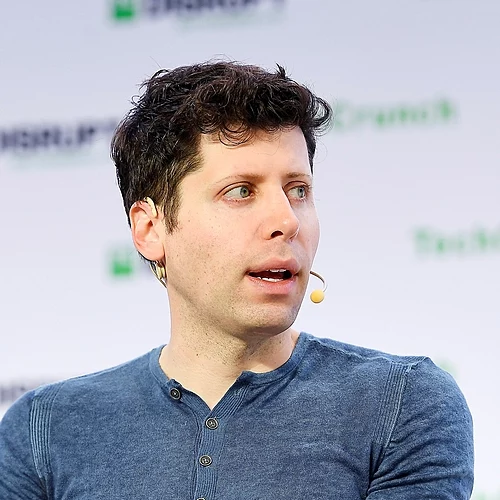
NextFin News - OpenAI CEO Sam Altman appeared on The Tonight Show Starring Jimmy Fallon on December 9, 2025, speaking with host Jimmy Fallon at NBC’s Studio 6B in Rockefeller Center, New York. In a brief, conversational segment, Altman introduced ChatGPT to Fallon’s audience, described how he uses it in daily life (including parenting), and laid out both the practical benefits and the risks he sees as AI adoption accelerates.
What ChatGPT is and how people use it
Altman opened with a simple description of the product. As he told Fallon, "It's like an A.I. chatbot. You ask a question, it tells you what to do."
He emphasized that the system has become much more capable over three years: it used to "not do very much"
and is now able to help with a wide variety of tasks. Altman listed common uses: learning new subjects, speeding up work, replacing some uses of search, and offering life advice. He said plainly that people approach ChatGPT for help with things ranging from writing résumés to coding and planning travel.
Benefits and real-world stories
Altman shared examples of outcomes people have reported after using ChatGPT. He recounted messages from users who, after inputting symptoms into the tool, were guided to request specific tests and ultimately obtained diagnoses and treatments. He presented that feedback as evidence of practical, meaningful benefit: "I had this crazy health condition... I just put my symptoms into ChatGPT and it told me what test to ask the doctor for, and I got it, and now I'm cured."
He also stated, succinctly, that "You can definitely learn anything."
Personal use: parenting and the newborn anecdote
Turning the conversation personal, Altman described how he and his husband are raising an eight-month-old son and how ChatGPT has been part of his parenting toolkit. He said, "I cannot imagine having gone through, like, figuring out how to raise a newborn without ChatGPT."
He related a moment at a party when another parent asked about developmental milestones and he immediately checked with the model, then told the audience how ChatGPT gave a reassuring, personalized response and advised him to relax. Altman highlighted that the tool can learn contextual details about the user and give tailored guidance.
Technology as an equalizing force
Altman framed one of the central social benefits of AI as increasing access to expertise. He compared AI’s distributional effect to the arrival of the smartphone, explaining that technology can give ordinary people access to high-quality advice and services previously available only to the wealthy. As he put it, "I think there's many downsides to technology, but there's a lot of upsides. And one of the upsides is, it is a sort of equalizing force in many ways."
He stressed that, while the systems are backed by large companies and powerful compute, their outputs are shared with many people.
Concerns: pace of change and potential harms
Altman acknowledged significant worries, focusing on the speed at which capabilities are appearing. He described the situation as unprecedented: a three-year-old technology being adopted by the world faster than any before it. He warned that a single general-purpose system that can help cure diseases could also be repurposed for negative uses. He emphasized the societal challenge of ensuring people have time to adapt and provide input, saying the rate of change could lead to implementation mistakes. In his words, one of the things he is worried about is "the rate of change that's happening in the world right now."
Trajectory and hopes for the future
Asked about what to expect over the next years, Altman avoided a finite end point and said he hopes humanity keeps improving: "I hope never [that it’s perfected]."
He pointed to recent leaps in capability during 2025 and suggested the near-term role for models will include small but important scientific discoveries, with the longer-term aspiration that the technology will be used to cure diseases. He said, simply, "In five years, I hope they're curing diseases."
Altman closed the segment on a personal note, thanking Fallon and accepting the host’s well-wishes about his son.
References
Episode listing and air date: The Tonight Show Starring Jimmy Fallon — Season 13, Episode 40 (Dec 8, 2025).
Report and excerpt coverage of the interview: TVMaze — The Tonight Show Starring Jimmy Fallon (episode index).
Contemporary coverage and summary: TechRadar — Sam Altman tells Jimmy Fallon that AI is the "equalizing force" the world needs.
Interview write-up and context: LateNighter — Sam Altman’s ‘Tonight Show’ Spot Offers Introduction, Not Interrogation.
Studio location information: NBC — Tickets and Studio Tour (Studio 6B, 30 Rockefeller Plaza).
Explore more exclusive insights at nextfin.ai.


