
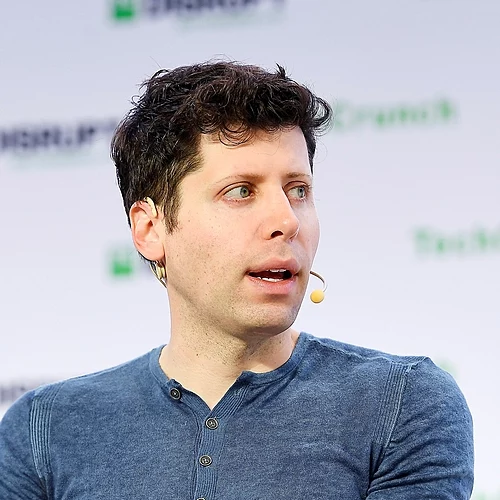
NextFin News - On October 31, 2025, OpenAI chief executive Sam Altman joined Microsoft CEO Satya Nadella on the BG2Pod Halloween special hosted by Brad Gerstner. The conversation centered on the scale of OpenAI's computing commitments and the question hanging over the market: how a company said to be generating roughly $13 billion a year could pledge approximately $1.4 trillion to compute over the next several years.
The following sections present Altman's core statements from that interview, arranged by topic. Quotations are drawn from the episode's discussion as Altman responded to investor and market scrutiny.
Compute commitments and the $1.4 trillion question
The episode opened with the host laying out the numbers and asking how OpenAI could justify massive long-term compute commitments. Altman's response framed the spending as a forward-looking necessity rather than a present mismatch between revenue and commitments. He argued that the company was making a deliberate bet on future scale and capability rather than acting on short-term accounting figures.
"All that said, you know, OpenAI's revenues are still a reported $13 billion dollars in 2025. And Sam, on your live stream this week, you talked about this massive commitment to compute, right? $1.4 trillion over the next four or five years..."
In answer to that framing, Altman emphasized that the headline revenue figure did not reflect the full picture he wanted to convey and that the compute commitments were tied to anticipated growth.
"First of all, we're doing well more revenue than that."
Revenue outlook: "Revenue is growing steeply"
Altman repeatedly returned to a single, central point: OpenAI expects steep revenue growth. He presented the company's financial trajectory as the foundation for making large, multi-year infrastructure commitments.
"We do plan for revenue to grow steeply. Revenue is growing steeply."
He framed the spending as a forward bet on that trajectory: if compute capacity were available and demand continued as expected, OpenAI would capture substantial value.
"We are taking a forward bet that it's going to continue to grow... not only will ChatGPT keep growing but we will be able to become one of the important AI clouds..."
Where growth will come from: ChatGPT, cloud, devices and automating science
Altman listed multiple channels through which he expected OpenAI's revenues to expand. He highlighted the continued growth of ChatGPT, the company's ambitions to operate as a major AI cloud provider, a nascent consumer device business, and the potential of AI to automate scientific work as sources of long-term value.
"...that our consumer device business will be a significant and important thing, that AI that can automate science will create huge value."
Response to critics and the share comment
When the interviewer pressed on how OpenAI could commit to such large sums, Altman expressed frustration with skeptics and suggested that many of the loudest critics would themselves be eager to buy a stake if shares were available. His retort combined defensiveness with a rhetorical flourish aimed at those publicly predicting OpenAI's failure.
"Second of all, Brad, if you want to sell your shares, I'll find you a buyer. I just — enough. I think there's a lot of people who would love to buy OpenAI shares."
He returned to the theme of vindication by public markets as a counterpoint to online speculation.
"There are not many times that I want to be a public company, but one of the rare times it's appealing is when those people are writing these ridiculous OpenAI is about to go out of business... I would love to tell them they could just short the stock and I would love to see them get burned on"
Tone and context
Altman's remarks in the interview combined blunt reassurance about OpenAI's commercial trajectory with clear impatience toward what he characterized as breathless public commentary about the firm's spending. He framed the company's commitments as strategic, long-term investments tied to anticipated revenue growth rather than a short-term financing mismatch.
Participants: Sam Altman (OpenAI CEO), Satya Nadella (Microsoft CEO), Brad Gerstner (host). Recorded and released as the BG2Pod episode "All things AI w @altcap @sama & @satyanadella. A Halloween Special." The episode was published as part of BG2Pod's October 31, 2025 recording.
References
Episode: All things AI w @altcap @sama & @satyanadella. A Halloween Special (BG2Pod).
Podcast page: BG2Pod • BG2Pod with Brad Gerstner and Bill Gurley.
Alternative host page: BG2Pod episode listing (iHeart).
Explore more exclusive insights at nextfin.ai.


