
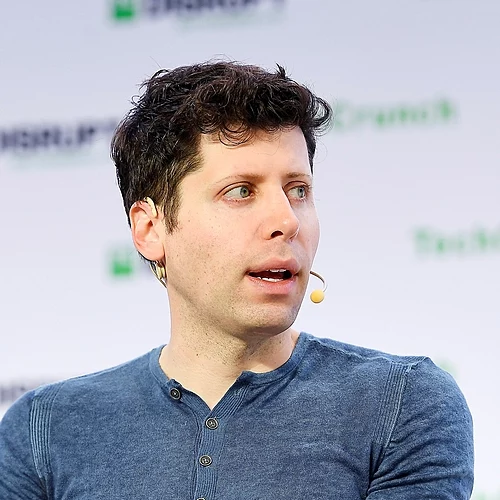
NextFin News - Sam Altman, CEO of OpenAI, sat down with Lex Fridman for a wide-ranging conversation about GPT‑4, alignment, model design and the human experience of interacting with advanced language models. The episode was released on March 25, 2023 and published on the Lex Fridman Podcast website and YouTube. (lexfridman.com)
The interview focused on practical lessons from deploying GPT‑4, the technical work behind the model’s advance from previous generations, how users respond to safety and moderation choices, and Altman’s perspective on the role of large language models in the longer trajectory toward more capable AI systems. The conversation combined concrete engineering observations with reflections about the social and emotional dimensions of AI tools. (happyscribe.com)
User experience: the problem of being "scolded" by a machine
Altman described a strong, visceral reaction some users have when an AI system rebukes or refuses them. He emphasized that this feeling matters for design and moderation choices. He recalled an anecdote about early Macintosh design to frame his approach to user control: "Of course, not that many people actually throw their computers out of a window, but it's sort of nice to know that you can. And it's nice to know that this is a tool very much in my control. And this is a tool that like does things to help me."
He added candidly that "I have like a visceral response to being scolded by a computer."
and that OpenAI must learn from those reactions to improve the product. (happyscribe.com)
On moderation and refusal behavior, Altman said OpenAI intentionally started conservatively and is working toward giving users more control where appropriate, while still retaining guardrails for safety: "We have started very conservative, which I think is a defensible choice... what we'd like to get to is a world where if you want some of the guardrails relaxed a lot and you're not like a child or something, then fine, we'll relax the guardrails, it should be up to you."
(happyscribe.com)
Technical leaps from GPT‑3/3.5 to GPT‑4
Altman insisted the advance to GPT‑4 was the result of many technical improvements rather than a single breakthrough. He described OpenAI’s approach as finding numerous "small wins and multiplying them together," covering data collection and cleaning, training procedures, optimizer choices, architecture tweaks and other detailed engineering efforts: "Each of them maybe is like a pretty big secret in some sense, but it really is the multiplicative impact of all of them and the detail and care we put into it that gets us these big leaps."
He stressed that outsiders might assume a single change produced the jump, but in reality it was hundreds of complicated things. (happyscribe.com)
On size and parameter counts
Asked whether size (parameter count) is the decisive factor, Altman warned against overemphasizing raw numbers. He compared the parameter‑count race to the gigahertz race in processors, noting end users care about capabilities rather than a single metric: "I think people got caught up in the parameter count race in the same way they got caught up in the gigahertz race... what you care about is what the thing can do for you."
He emphasized OpenAI’s pragmatic stance of pursuing whatever engineering choices “are going to make the best performance” even if they are not the most elegant solution. (happyscribe.com)
Altman also addressed a recurring public misunderstanding about public remarks on size and parameters — noting that comments and memes asserting fixed, enormous parameter counts for GPT‑4 were taken out of context and that those metrics do not capture the whole story about performance improvements. "It doesn't matter in any serious way... size is not everything but also people just take a lot of these kinds of discussions out of context."
(happyscribe.com)
Complexity and the comparison to the human brain
Reflecting on the scale and complexity of modern models, Altman offered a striking characterization: "This is the most complex software object humanity has yet produced"
while also anticipating that future models will make today’s work seem rudimentary. He framed GPT‑4 as a compression of vast amounts of human textual output and human civilization’s technological history, and raised the question of how much of human “what it means to be human” can be reconstructed from internet text alone. Altman suggested that while the internet data is powerful, achieving deeper capabilities will require better models and further ideas. (happyscribe.com)
AGI: part of the way, but not the whole story
Altman spoke cautiously about Artificial General Intelligence. He said large language models are clearly part of the path but that other important components will likely be necessary for systems that can significantly add to the sum of scientific knowledge. He allowed uncertainty but gave a view of necessary capabilities: "For me, a system that cannot go significantly add to the sum total of scientific knowledge ... is not a super intelligence."
At the same time, he did not rule out surprising routes: with correct prompting and extended chains of interaction, he conceded that a much more capable future model could conceivably emerge from continued scaling and iterative human‑AI loops. (happyscribe.com)
Human–AI symbiosis: tools, feedback loops, and programmers
Altman repeatedly emphasized the value of AI as an amplifier of human ability rather than an independent agent: he described excitement about the feedback loop where humans use tools like GPT‑4, iterate, and build on trajectories across multiple iterations. He framed a future where AI is "an extension of human will and an amplifier of our abilities"
and argued that even if classical AGI never materializes, dramatically improving human capability through these tools would be a major win. (happyscribe.com)
On programming and jobs, Altman said models will automate much boilerplate work and increase productivity; if a model can fully replace a developer, that signals the developer was doing largely automatable work. Still, he respected the unique human contribution of generating the single important idea in a day of programming: "Maybe you have one really important idea. That's the contribution... and GPT‑like models are far away from that one thing even though they're going to automate a lot of other programming."
(happyscribe.com)
Closing reflections
Throughout the interview Altman balanced technical detail with human‑centered concerns: the engineering craft that produced GPT‑4, the psychological responses users have when interacting with systems, and a persistent focus on making tools that people control and find useful. He framed OpenAI’s work as pragmatic, performance‑driven and attentive to the user experience while acknowledging the deep unknowns that remain in the path forward. (lexfridman.com)
References
Episode page: Lex Fridman Podcast — Sam Altman (Episode #367). (lexfridman.com)
Video: YouTube — Sam Altman on Lex Fridman Podcast. (youtube.com)
Transcript excerpt: Transcript and highlights. (happyscribe.com)
Explore more exclusive insights at nextfin.ai.


