
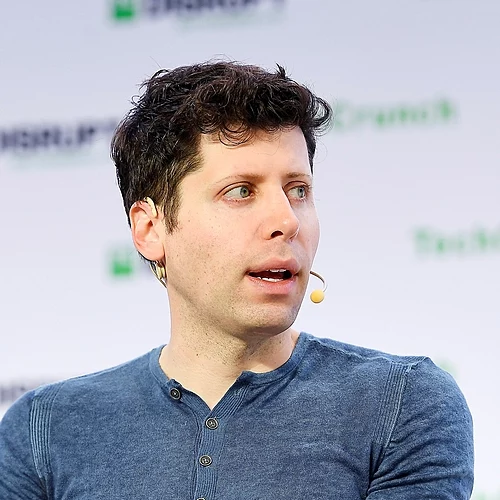
NextFin News - This article presents a concise report on remarks by Sam Altman excerpted in a short clip titled "サムアルトマン、未来のリーダを語る。 #ai #shorts #samaltman" published on the YouTube channel あつまれAIの森 〜みんなで語ろう、僕らの未来〜. The clip contains a brief portion of a longer conversation in which Altman considers how the role of senior leaders will change as AI capabilities grow. Precise details about the original recording (exact date, host and location) are not specified in the short excerpt.
The excerpt centers on how executives will need to shift from doing every task themselves to supervising AI systems that can scale far beyond any single human's capacity. The statements below are drawn directly from the provided transcript and reproduced here in topic-focused sections.
AI as a force-multiplier for leadership
Altman frames part of the executive role as increasingly delegated to AI agents because of sheer scale. He notes that a human leader cannot possibly be everywhere at once and that AI can extend reach in ways people cannot. As he puts it in the clip, an executive confronts "the actual parts of my role that I will increasingly have to rely on an AI to do," and that reliance is driven by limits of human scale.
From doing to supervising
Altman emphasizes that many future jobs — including high-level leadership tasks — will become primarily supervisory in nature. He says leaders will end up "supervising a bunch of AI" and providing the essential human elements that machines cannot fully replicate. The responsibilities he lists for that supervisory role include setting direction, monitoring behavior, and providing human judgment where required.
Oversight, trust, and judgment
Repeatedly in the excerpt Altman returns to the question of oversight: how to monitor AI outputs and decide which results to accept. He identifies core tasks for leaders as "providing oversight" and "deciding how to... trust the outputs." These phrases underline a shift from task execution toward governance: calibrating trust, spot-checking, and determining when AI recommendations should guide decisions.
The threshold of indispensability
Altman points to a practical threshold when running a large organization without heavy AI support becomes unworkable. He says, in effect, that there is a point where "you really wouldn't want to be doing your job... without heavily heavy reliance on AI." He qualifies the prediction by noting timing uncertainty — that this threshold "may take a little bit longer," but adds a conversational reply that it will likely arrive "but probably not a lot longer."
What remains distinctly human
While the clip focuses on delegation and supervision, Altman’s remarks implicitly preserve a distinct human role: deciding when to trust AI, providing guidance, and exercising judgment. The clip frames leaders’ future work as managing relationships between people and machine agents, rather than replacing human judgment with automated decisions.
Below are short direct quotations taken from the excerpt transcript to preserve key phrasings used by Altman:
the actual parts of my role that I will increasingly have to rely on an AI to do
supervising a bunch of AI
providing oversight
deciding how to... trust the outputs
no human CEO can talk to every employee
References and related materials
For fuller context on Sam Altman’s views and longer interviews that expand on these themes, see the following materials:
- "OpenAIのCEOサム・アルトマン氏に聞いた「AIと日本の未来はどうなる?」 (Gizmodo Japan, Feb 25, 2025)
- Julia Alvarenga, LinkedIn post summarizing remarks by Sam Altman to a university class (post)
- Sam Altman: compiled notes and longer talk excerpts (Lilys.ai compilation)
- YouTube search for the short clip title and channel
Note: the present article is based on the short transcript excerpt provided and organizes Altman’s statements by theme. The original clip was posted to the YouTube channel あつまれAIの森 〜みんなで語ろう、僕らの未来〜 with no publication date or original-interview metadata given in the excerpt; readers seeking the full conversation should consult the longer interviews and resources linked above.
Explore more exclusive insights at nextfin.ai.


