
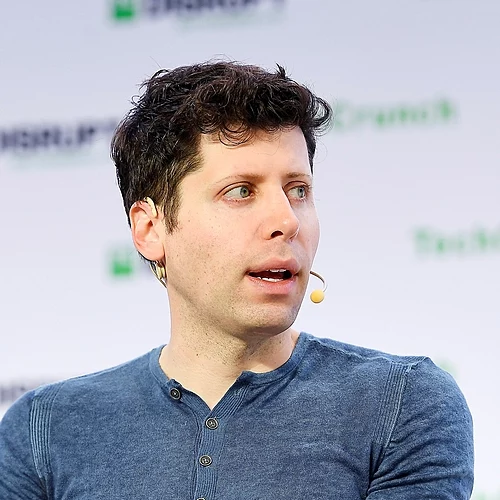
NextFin News - Sam Altman sat down with Pantera Capital’s Stateful team during World’s Lift Off event in San Francisco to explain why a cryptographic proof of human becomes urgent as AI-generated content and agentic identities proliferate. The conversation, recorded at the Lift Off gathering on April 17, 2026, pairs Altman’s keynote remarks with a follow-up discussion about World ID’s purpose, design, and early traction.
The interview includes Pantera hosts Cosmo Jiang and Mason Nystrom, and combines Altman’s keynote statements from the Lift Off stage with a focused Q&A about use cases, scale, and the intersection of blockchain and AI.
Why proof of human matters now
Altman begins by noting the rapid pace of AI progress and the new problem it creates: an internet increasingly populated by machine-generated content and simulated identities. In his words, "AI has happened so much faster than I thought it was going to"
, and that speed makes a proof of human primitive especially vital. He describes a common user experience—uncertainty about whether one is interacting with a person or an AI—and positions World ID as a response to that uncertainty: a way to ensure that the internet remains, —in its core interactions—, about people.
World ID: a privacy-preserving proof of human
Altman lays out the aims of World ID as a cryptographic, verifiable, and censorship-resistant layer that proves a human is behind an interaction without revealing private details. He frames the effort as intentionally human-centered: "Our goal is to make World ID be this new proof of human for the internet."
He emphasizes that this must be done in a privacy-preserving manner and celebrates the protocol’s progress and adoption over the prior year.
Blockchain and AI: complementary roles
Asked how blockchain and AI intersect, Altman rejects the idea they are in competition. He argues AI will lift other technologies and that blockchain provides a good substrate for the cryptographic guarantees proof of human requires. He points to agentic commerce as a concrete area where agents will need to move money and interact in provable ways, describing payments between agents as one of the things he’s personally most excited about.
Concrete use cases Altman highlights
Altman lists multiple domains where proof of human can be applied. Advertising is the largest market he names: with the web flooded by AI-generated impressions, advertisers will value verifiable human impressions more highly. He illustrates this by suggesting verified-human impressions could command meaningful CPM premiums. He also names dating apps as an immediate consumer use case—helping prevent catfishing—and government services as a critical public-sector application where benefits and services must be delivered to verified humans. In discussion of enterprise adoption, he notes partnerships and interest from platforms looking to integrate proof of human for practical workflows.
Identity as a layered, extensible primitive
Altman describes World ID not as a single static credential but as a substrate upon which other credentials can be appended. He suggests that once a human identity is verified, it can be tied to additional attestations—driver’s licenses, educational credentials, employment verifications—so that digital identity begins to mirror many of the verifications we take for granted in the physical world. As he summarizes, "you can start to tie it to other credentials"
, expanding the ways society verifies and trusts individuals online.
Agentic commerce and the human in the loop
Far from opposing agentic automation, Altman argues proof of human accelerates legitimate agentic commerce by ensuring agents can be cryptographically tied to a human operator when required. He explains there are scenarios where bots are fine, but there are also many where having a human in the loop or at least verifiably behind an agent is essential. This capability, he says, allows agentic flows to scale while preserving accountability.
Scale, economics, and early traction
Altman discusses scale in concrete terms: the immediate addressable market is the roughly four billion people with smartphones. He reports World’s early user base numbers—millions of verified humans—and projects the primitive could scale over years to reach a significant fraction of the internet. He sketches a simple economic framing, suggesting a per-user value on the order of a few dollars annually could yield very large protocol cash flows over time. On adoption, he points to enterprise announcements and integrations with major platforms as signs that the moment for digital identity has arrived.
Adoption and partnerships
During the interview Altman highlights a wave of announced integrations with well-known platforms and enterprises, indicating real-world demand. He stresses that major consumer and enterprise services are beginning to see the value of verifying human participants and that these partnerships are bringing the primitive into everyday product flows.
Closing remarks
Altman returns to the founding intuition behind World: as AI creates abundance, the internet needs a scarcity primitive that insists on human authenticity. He reiterates a simple theme from the conversation: preserving humans as the primary focus of online systems is both necessary and achievable through cryptographic, privacy-preserving verification.
References and further viewing
Interview audio and episode page: Stateful — Sam Altman: Proof of Human in the Age of AI (Pantera Capital).
Event information and World Lift Off details: World — Lift Off and World ID (Tools for Humanity).
Coverage of the Lift Off keynote and product announcements: World ID expands its ‘proof of human’ vision for the AI era — Computerworld.
Explore more exclusive insights at nextfin.ai.


