
 Everything About AI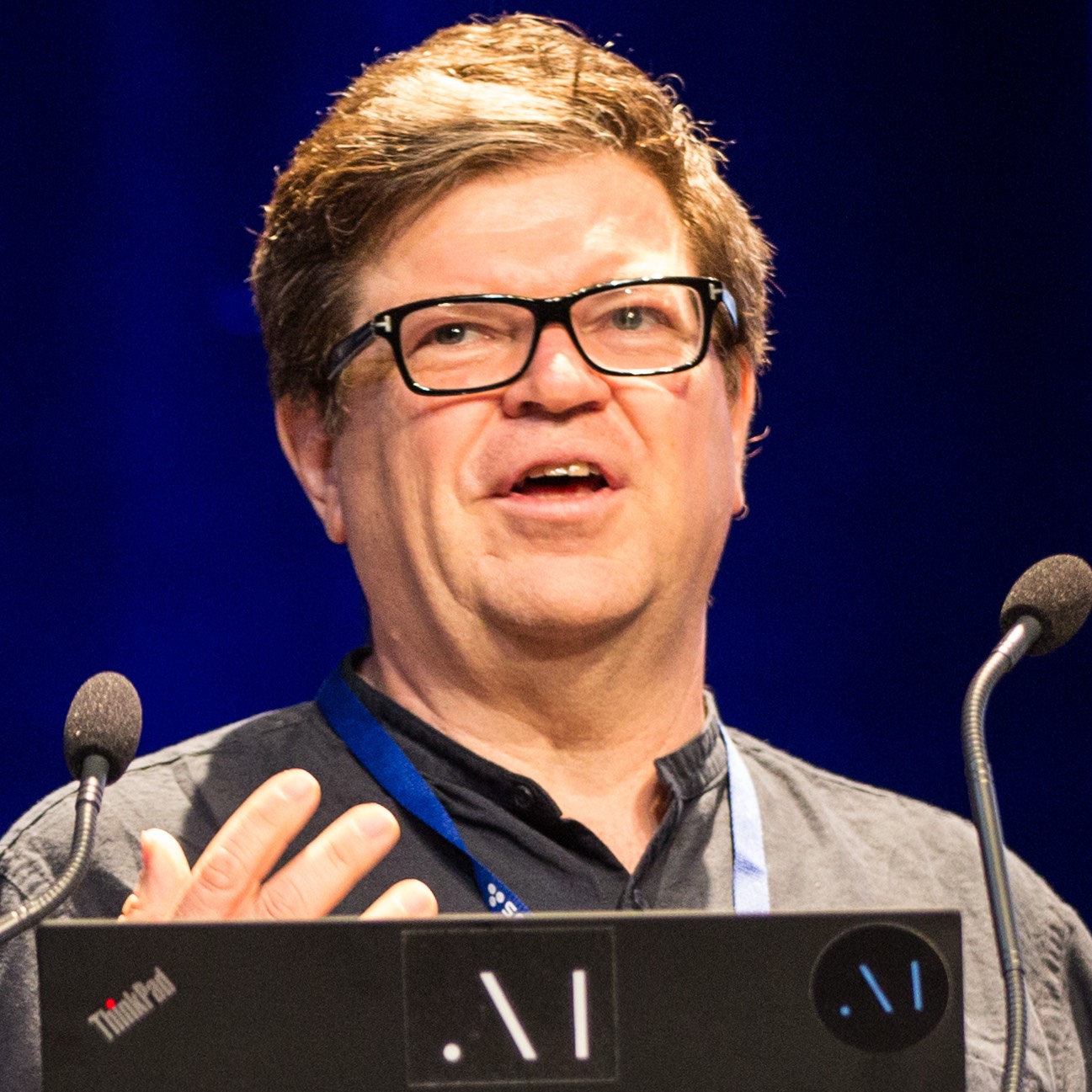

Tom Mitchell’s wide-ranging interview with Yann LeCun was published by the Stanford Digital Economy Lab in late February 2026. The conversation brings together LeCun’s personal history, early experiments and engineering achievements with his view of the technical and social forces that shaped—and continue to shape—modern machine learning. The episode lists Tom Mitchell as host and Yann LeCun as guest; a precise recording date and on-site location are not specified in the episode metadata.
How he first became interested in learning machines
LeCun describes an early fascination with intelligence and recounts a formative encounter with the perceptron literature. He explains that as an engineering student in the early 1980s he was captivated by a debate transcript about language and learning, which led him to hunt down older literature on learning machines:
“I was always fascinated by the question of intelligence... I stumbled on a book which was the transcription of a debate between Chomsky and Jean Piaget... I read this and I was fascinated by the idea that people had worked on learning machines.”
He recalls finding most Western research dormant at the time and discovering a continuing line of work in Japan; that motivated his graduate work and early independent projects in neural networks and computational neuroscience.
Early algorithms and the origin of backprop-like ideas
LeCun says that reading the 1960s literature convinced him a training method for multi-layer networks was missing, and that he developed an early target-propagation style algorithm while still a student:
“I figured around 1982... there had to be some sort of way of training those multi-layer nets by kind of propagating some signal backwards and so I came up with an algorithm... you could think of it as an early version of that.”
He recounts presenting early results at summer schools and connecting with leading researchers—encounters that anchored him in the emerging connectionist community.
Convolutional networks, Bell Labs and real-world products
Explaining the genesis of convolutional architectures, LeCun points to inspiration from neuroscience and earlier Japanese models. He describes building multi-layer local-connection networks, implementing weight sharing and training them on practical tasks at Bell Labs. He emphasizes rapid progress on character recognition and subsequent industry interest:
“I started turning the crank on convolutional nets and got super good results... within two months we were beating other results on the zip code data set. That work attracted... development groups at Bell Labs who said we can use this for products.”
He also notes the institutional and IP complications that followed AT&T’s corporate reorganizations and the later expiry (2007) of patents related to convolutional nets.
Regularization ideas and structured prediction
LeCun credits colleagues for innovations such as tangent-prop (regularizing invariances) and explains his group’s work on structured prediction—methods for training systems that must output sequences or structured objects when segmentation is unknown:
“Patrice Simard had this idea... you could regularize neural nets by telling them the output should not change when I modify the input in a particular way... we implemented this and it improved performance.”
He describes the practical deployment of structured-prediction techniques for check reading and other industrial applications.
The deep-learning revival: community, workshops and renaming
LeCun recounts the late-2000s effort to rebuild a community around multi-layer networks and how he, Geoffrey Hinton and Yoshua Bengio rebranded the field as “deep learning” to broaden and refresh interest. He highlights a pivotal 2007 workshop that he and colleagues organized when broader conferences were not yet receptive:
“We organized a pirate workshop that was funded by CIFAR and it was extremely successful... it marked the real start of the rebirth of the deep learning community.”
He emphasizes that both technical and social dynamics shaped the turn back to neural approaches, and that evidence eventually overcame skepticism.
Key technical enablers and milestones
LeCun lists the developments he sees as most consequential to the field’s progress, describing both engineering tools and algorithmic ideas:
“One big thing was automatic differentiation becoming a universal tool—PyTorch really generalized that. Residual networks in 2015 were another huge step... and more recently self-supervised learning for images and text and the transformer family for language.”
He explains why residual connections (ResNet) solved optimization issues that previously limited depth, and why autodiff and high-quality open platforms transformed how research is done.
FAIR, open research and industry influence
LeCun describes joining Facebook/Meta to build FAIR under three conditions—open research, staying in New York, and keeping his NYU position—and outlines FAIR’s impact on both the company and the broader research ecosystem. He highlights PyTorch and many open-source contributions as major outputs:
“I was given the opportunity to create a research lab from scratch... PyTorch is probably the biggest of all because it’s the software platform for research in deep learning that is dominant now.”
He also notes FAIR’s role in shaping company capabilities and the research community through widely used open projects.
Self-supervised learning, transformers and the rise of LLMs
LeCun summarizes the shift to prediction-based, self-supervised objectives and the architectural innovations that made large-scale language models practical. He outlines a sequence of developments—from sequence-to-sequence LSTMs to attention mechanisms and the transformer—that enabled scalable pretraining and ultimately LLMs:
“Self-supervised learning basically is the present and the future... transformers and then decoder-only next-token prediction… that turned out to be more scalable and gave us LLMs.”
He cautions that generative next-token prediction works well for language but is not a universal solution for all sensorimotor domains.
Critique of reinforcement learning and the case for learned world models
LeCun is critical of reinforcement learning’s sample inefficiency and argues that learning world models and planning in representation space is a more promising path for sample-efficient, adaptable agents. He uses a metaphor—intelligence as a cake—to place self-supervised learning at the core, supervised learning as icing, and reinforcement learning as a small, inefficient cherry:
“If intelligence is a cake, the bulk of the cake is self-supervised learning... the cherry on the cake is reinforcement learning. It’s so inefficient because the feedback is extremely poor.”
He describes his research focus on building learned, hierarchical world models that allow planning and causal reasoning, and he gives the architecture-level name JEPA (Joint Embedding Predictive Architecture) for systems that predict in abstract representation space rather than at raw-sensor detail:
“You should not predict every detail in pixel space... learn abstract representations and make predictions in that representation space—learn world models and then use planning.”
Hierarchy, time and JEPA’s approach to prediction
On how to handle time and temporal prediction, LeCun stresses hierarchical abstractions: short-term predictions can be accurate in detailed representation, while long-term predictions require progressively more abstract state representations. He explains JEPA’s motivation and advantages for prediction and planning:
“The longer term a prediction you want to make the more abstract the representation within which you make the prediction needs to be... learn abstract representations, make predictions there, and condition them on actions for planning.”
Closing observations
The interview closes with LeCun reiterating his conviction that representation learning, hierarchy and prediction are central to future progress. He frames the immediate future around self-supervised methods and learned world models, and emphasizes that many of the field’s past turns were the result of both technical evidence and social dynamics.
References
Podcast episode: Machine Learning: How Did We Get Here? (Apple Podcasts).
Stanford Digital Economy Lab program page: Q&A | Demystifying Machine Learning with Tom Mitchell (Stanford Digital Economy Lab, February 26, 2026).
Podcast pages: A University and Corporate Perspective with Yann LeCun (Amazon Music).
Explore more exclusive insights at nextfin.ai.
