
 Everything About AI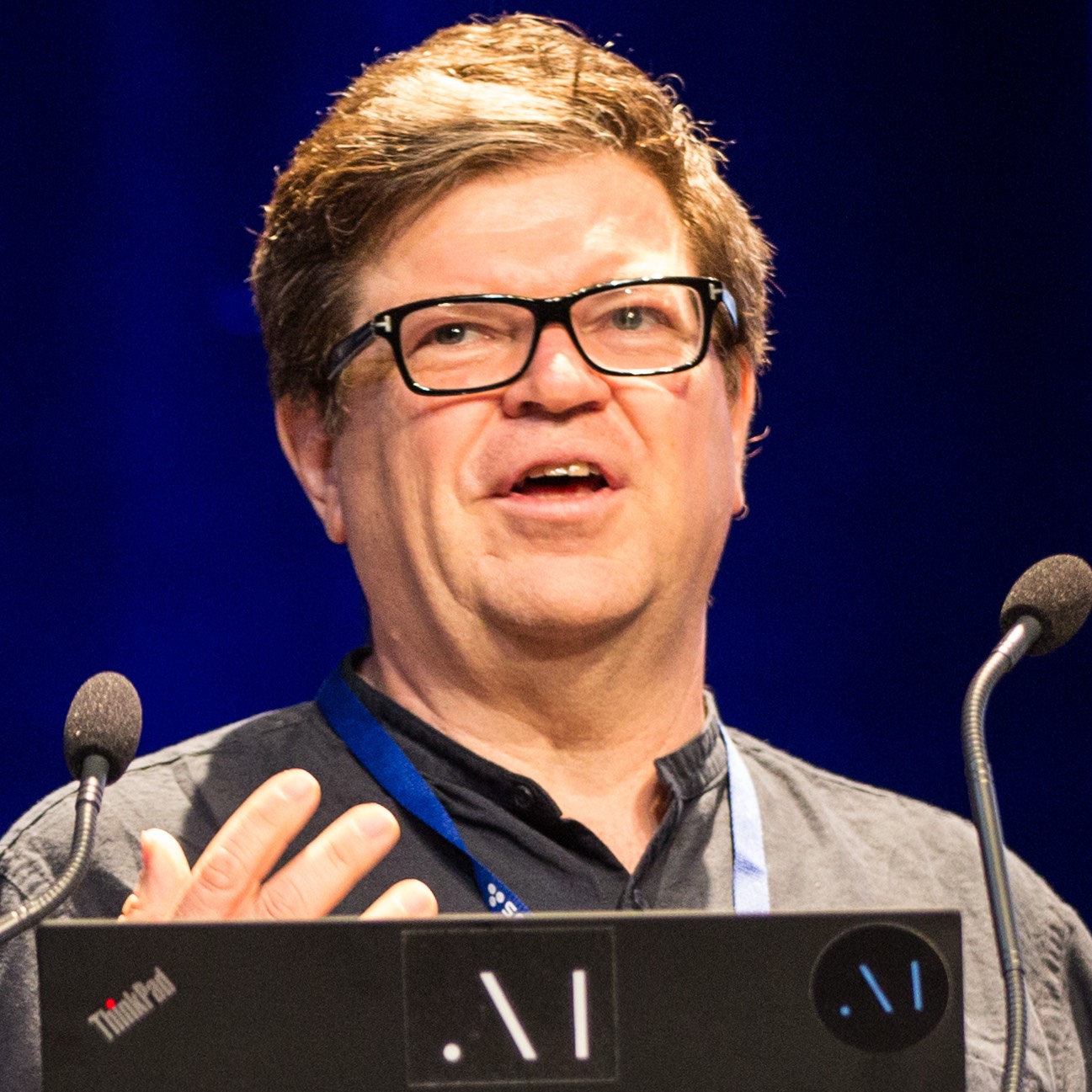

This interview, conducted as an extended video conversation between Yann LeCun and host Nitin Dua, presents LeCun’s reflections on his career, the technical choices that shaped modern deep learning, and the motivations that keep him working today. The discussion ranges from early experiments in machine perception to his current role as executive chairman of AMI Labs and his views on science, religion and causal reasoning. The precise date of the on-camera conversation is not confirmed in the available metadata; the material in the interview situates it after LeCun’s transition out of his full-time role at Meta and as he pursues work at AMI Labs.
LeCun speaks from a long professional arc — industry research at Bell Labs and AT&T, a professorship beginning in 2003, leadership at Meta’s research organization, and the founding of Advanced Machine Intelligence (AMI) Labs — and the interview foregrounds the ideas and choices that guided him through those stages.
Mission and what keeps him working
LeCun describes his life mission as threefold. He frames the first aim as a scientific one: "discovering the mysteries of intelligence." The second aim is practical and engineering-oriented: building systems to test and verify hypotheses about intelligence. The third aim is impact: taking technologies into the world so they benefit society. As he put it, "Discovering the mysteries of intelligence, which is a scientific question. And the best way to do this is to build intelligent systems."
He explains that the engineering effort is a way to "verify that the hypotheses you made actually are actually true."
Choosing long-term problems and the role of conceptual advances
Repeatedly, LeCun emphasises the need to pick the right problems — those that will produce significant, long-term progress. He contrasts three kinds of contributions — mathematics, implementation and the conceptual middle ground — and identifies his own focus as "perceptual advances" or conceptual progress that directs the field. He says this work is about deciding "what is the right thing to work on, what is going to work, what is going to make you work towards significant progress which may be very long term."
Early focus on perception and the origins of convolutional nets
Tracing his early research choices, LeCun explains why he worked on character recognition in the 1980s: it was the practical perception problem that had accessible data and could demonstrate machine learning applied to real-world input. He notes the technological constraints of the time — no easy way to capture images with a camera and a computer — and how available industrial scanners and taped datasets made character recognition a tractable example. He stresses that his interest was not in character recognition per se but in making machines learn: "I never had any interest in character recognition. What I was after was getting machines to learn."
That line of work, informed by biological inspiration, led to convolutional networks and hierarchical feature learning, and he points out that those early results were actually deployed in practical applications like check-reading systems in the 1990s.
Career path: industry, academia, and dual affiliation
LeCun recounts a career that mixed long stretches in industrial research labs (Bell Labs, AT&T Labs, NEC Research) with academia, becoming a professor in 2003 at age 43 and later taking a leadership role at Meta in 2013. He describes the combination of industry and university positions as complementary: maintaining a foot in both worlds was "really very fruitful." Regarding his current role, he explains that at AMI Labs he serves as executive chairman rather than CEO because he is more interested in scientific leadership and strategy than operational management: "I'm not the CEO because I'm not an operational person and not a particularly good manager... I'm more into... science and technology, strategy and direction, scientific leadership."
Why continue working at 65: fulfillment and responsibility
On the question of age and retirement, LeCun acknowledges family suggestions that he retire, but he insists the work remains fulfilling and important. He describes having fresh research avenues and new directions to pursue and says that despite his wife's urging to retire he feels compelled to press forward: "Despite the fact that my wife wants me to retire... I just feel I have to kind of push this forward."
He emphasises that recent progress in building AI systems that can understand the real world makes it time to "go into high gear" and try to make those approaches applicable across domains like biomedicine and industry.
On scientific method, humility and avoiding self-deception
LeCun returns multiple times to the theme of intellectual honesty and the need to avoid fooling ourselves. He characterises the scientific method as a systematic way to use empirical evidence while guarding against personal biases and preconceived ideas. He says arriving at the awareness that one can fool oneself is a productive state: "We are the easiest one to fool ourselves. And if we can start seeing that trap... operate with that consciousness, I think it's a wonderful place to be."
Views on religion, causal inference and explanation
Speaking as a self-described rationalist and atheist, LeCun links human shortcomings in causal inference to the historical development of religious explanations. He outlines causal inference as the task of identifying causes from observed phenomena, notes that humans (particularly children) often get causality backwards, and offers a provocative statement: "If humans were so good at causal inference, religion would not exist,"
arguing that religion often attributes wrong causes to observed events and that science progressively replaces such attributions with better causal models. He qualifies the point by acknowledging layers and perspectives in the conversation, but he frames the broader intellectual history as a push to replace mystical explanations with mechanistic understanding.
On what he seeks from collaborators and talent
LeCun is candid about encountering colleagues and students who are stronger than he is in particular technical domains — theory, mathematics, coding — and he describes that as humbling and desirable. He says he hires or collaborates with people who exceed him in skill and values working with those individuals: "If you could have someone like that, you want to work with those people."
On translating research into real-world impact
Finally, LeCun re-states that research can remain an intellectual endeavor through papers and demonstrations or be pushed toward broader impact via technology transfer, industry partnerships or startups. This is the third limb of his mission: ensuring that advances in understanding intelligence also have positive, practical applications in the world.
References and related links:
Yann LeCun’s AMI Labs fundraising and related coverage: TechCrunch, Mar 9, 2026; Forbes, Mar 12, 2026.
Background on Yann LeCun: Yann LeCun — Wikipedia.
Host and platform: the conversation appears in video format hosted by interviewer Nitin Dua (video title and transcript provided alongside this article).
Explore more exclusive insights at nextfin.ai.
